

How Can PVD Hanging Fixture Design Reduce Shadowing and Improve Yield
2026-01-08
In the precise world of Physical Vapor Deposition (PVD) coating, achieving uniform film thickness and maximizing production yield are paramount goals. One of the most significant, yet often underestimated, factors influencing both is the design of the PVD Hanging Fixture. At Fu Cheng Xin, we understand that a fixture is far more than a simple rack; it is a critical tool that directly interacts with the coating flux. Strategic PVD Hanging Fixture design is a primary method to combat shadowing—a major defect where parts block the coating material—and directly enhance your overall process yield.
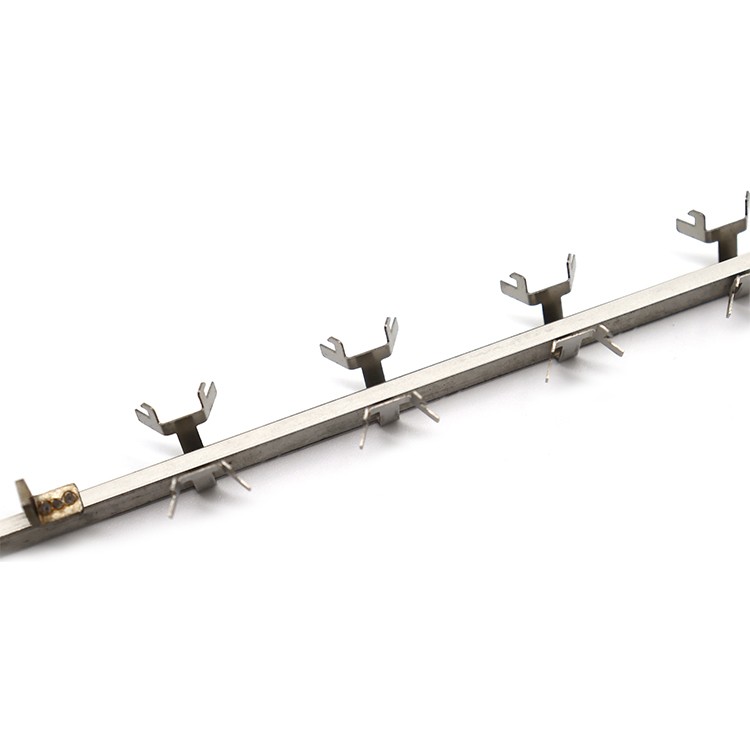
The Direct Impact of Fixture Design on Coating Uniformity
A poorly designed fixture can create numerous shadow zones, leading to inconsistent coating, poor adhesion in certain areas, and ultimately, rejected parts. Optimized design focuses on presenting every surface of the component to the coating source as directly as possible.
Key Design Strategies to Minimize Shadowing:
-
Optimal Part Orientation: Tilting and rotating parts to face the primary deposition source.
-
Increased Line-of-Sight: Designing open frameworks that minimize internal blockage.
-
Customized Tooling: Using dedicated clamps or pins for complex geometries to hold parts advantageously.
-
Strategic Spacing: Ensuring adequate distance between parts to prevent mutual shadowing.
The following table contrasts the outcomes of poor versus optimized fixture strategies:
| Design Factor | Poor Fixture Design Consequence | Optimized Fu Cheng Xin Fixture Strategy |
|---|---|---|
| Part Density | Overcrowding causes severe part-to-part shadowing. | Calculated spacing balances load size with coating uniformity. |
| Angulation | Parts hung vertically create uneven coating on sidewalls. | Precise angulation ensures all critical surfaces are exposed. |
| Material & Profile | Thick frames create large, permanent shadow zones. | Low-profile, conductive materials like specialized alloys minimize footprint. |
PVD Hanging Fixture FAQ
Q: How often should PVD hanging fixtures be cleaned or replaced?
A: Fixtures should be stripped of accumulated coating regularly, as build-up alters dimensions and creates new shadow points. The frequency depends on run hours, but a preventive maintenance schedule is essential. Durable fixtures from Fu Cheng Xin are designed for easy stripping and long-term dimensional stability.
Q: Can one fixture design work for different part shapes?
A: While universal racks exist, they often compromise on optimization. For high-volume or precision-critical components, a custom-designed PVD Hanging Fixture tailored to the part's specific geometry will always deliver superior yield and consistency compared to a generic solution.
Q: Does the fixture material itself matter beyond just holding the part?
A: Absolutely. The fixture material must have excellent thermal conductivity and similar thermal expansion properties to the parts to prevent warping. It also must not outgas or create contamination. Fu Cheng Xin selects advanced materials to ensure process stability and fixture longevity.
Every rejected batch due to shadowing represents a direct hit to your productivity and profit. By elevating PVD Hanging Fixture design from an afterthought to a core component of your process engineering, you unlock significant gains in coating quality and yield. The experts at Fu Cheng Xin specialize in analyzing your specific components and coater configuration to design fixtures that turn shadowing challenges into consistent, high-quality results.
Contact us today for a consultation to see how our engineered fixture solutions can optimize your PVD coating yield.
