How Can Metal CNC Machined Parts Improve Manufacturing Precision?
2026-06-30
Abstract
Metal CNC machined parts have become a cornerstone of modern precision manufacturing, enabling industries to achieve high dimensional accuracy, repeatability, and structural reliability. This article explores how CNC machining transforms raw metal materials into high-performance components, addressing common customer challenges such as inconsistent quality, long lead times, and limited design flexibility. It also provides a structured overview of materials, processes, applications, and supplier selection criteria to help buyers make informed decisions.
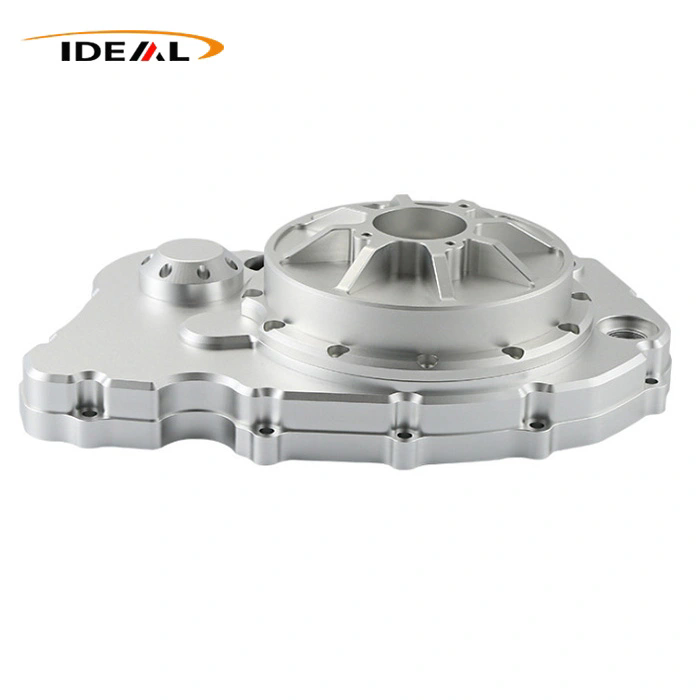
Table of Contents
- Introduction
- What Are Metal CNC Machined Parts?
- Key Advantages
- Common Materials Used
- CNC Machining Process Overview
- Industrial Applications
- Quality Control & Tolerances
- Common Customer Pain Points
- How to Choose a Reliable Supplier
- Comparison Table
- FAQ
- Conclusion
Introduction
In modern industrial ecosystems, precision is not optional—it is a requirement. Metal CNC machined parts are widely used across aerospace, automotive, medical, electronics, and industrial equipment manufacturing due to their unmatched accuracy and consistency. Unlike traditional manual machining, CNC (Computer Numerical Control) technology allows manufacturers to automate production with minimal deviation, ensuring each component meets strict engineering standards.
As global supply chains become more demanding, businesses increasingly rely on CNC machining to reduce production errors, improve scalability, and optimize costs while maintaining high-quality output.
What Are Metal CNC Machined Parts?
Metal CNC machined parts are components manufactured using computer-controlled machining tools that precisely remove material from a solid metal block or billet. These machines follow pre-programmed digital instructions to produce complex geometries that would be difficult or impossible to achieve manually.
Typical processes include milling, turning, drilling, tapping, and grinding. The result is a finished part with tight tolerances and excellent surface quality, suitable for demanding industrial applications.
Key Advantages
- High Precision: Achieves tolerances as tight as ±0.005mm depending on requirements.
- Repeatability: Ensures identical output across mass production runs.
- Design Flexibility: Supports complex geometries and custom designs.
- Material Efficiency: Minimizes waste through optimized machining paths.
- Strength & Durability: Maintains structural integrity of metal materials.
Common Materials Used
Different applications require different metals based on strength, corrosion resistance, and machinability. The most commonly used materials include:
- Aluminum alloys (lightweight and corrosion-resistant)
- Stainless steel (high strength and durability)
- Carbon steel (cost-effective and strong)
- Brass (excellent machinability and conductivity)
- Titanium (high strength-to-weight ratio for aerospace applications)
CNC Machining Process Overview
The CNC machining workflow involves several critical stages that ensure precision and consistency throughout production.
- Design Phase: Engineers create CAD models based on functional requirements.
- Programming: CAM software converts designs into machine-readable G-code.
- Material Setup: Metal blanks are securely fixed into the machine.
- Machining Execution: CNC tools cut, drill, and shape the material.
- Finishing: Surface treatment such as polishing, anodizing, or coating is applied.
- Inspection: Quality checks ensure dimensional accuracy and performance.
Industrial Applications
Metal CNC machined parts are widely used across multiple industries due to their versatility and precision.
- Aerospace components such as brackets and engine parts
- Automotive engine and transmission components
- Medical devices including surgical instruments
- Electronics housings and heat sinks
- Industrial machinery components
Quality Control & Tolerances
Quality control is a critical aspect of CNC machining. Advanced inspection methods such as Coordinate Measuring Machines (CMM), laser scanning, and micrometer testing are used to ensure dimensional accuracy.
Tolerances depend on application requirements but typically range from ±0.01mm for general parts to ultra-precision levels for aerospace and medical applications.
Common Customer Pain Points
Despite its advantages, customers often face several challenges when sourcing CNC machined parts:
- Inconsistent product quality across suppliers
- Long production and delivery lead times
- Lack of engineering support for design optimization
- High cost for small batch production
- Communication barriers in global sourcing
Addressing these issues requires selecting a technically capable and experienced manufacturing partner.
How to Choose a Reliable Supplier
Choosing the right CNC machining supplier is essential for ensuring consistent product performance and long-term value. A reliable supplier should demonstrate strong engineering capability, advanced equipment, and strict quality control systems.
For example, Guangzhou Ideal Plastic Technology co.,Ltd provides customized metal CNC machining solutions supported by advanced production systems and professional engineering support. Companies like this help customers reduce risk while improving production efficiency and product consistency.
- Check manufacturing capabilities and machine types
- Evaluate quality certification systems
- Assess engineering and customization support
- Review previous project experience
- Confirm delivery reliability and communication efficiency
Comparison Table
| Aspect | CNC Machined Parts | Traditional Machining |
|---|---|---|
| Precision | Very High | Moderate |
| Repeatability | Excellent | Inconsistent |
| Production Speed | Fast (Automated) | Slower (Manual) |
| Complex Geometry | Highly Capable | Limited |
| Cost Efficiency | High for Large Volume | High Labor Cost |
FAQ
Q1: What tolerance can CNC machining achieve?
Depending on equipment and material, CNC machining can achieve tolerances as tight as ±0.005mm.
Q2: Which industries benefit most from CNC machined parts?
Aerospace, automotive, medical, electronics, and industrial machinery sectors benefit significantly.
Q3: Are CNC machined parts suitable for mass production?
Yes, CNC machining is highly scalable and suitable for both prototyping and mass production.
Q4: What is the typical lead time?
Lead time varies depending on complexity but is generally shorter than traditional manufacturing methods.
Conclusion
Metal CNC machined parts play a vital role in modern manufacturing by delivering unmatched precision, durability, and scalability. From aerospace to consumer electronics, their applications continue to expand as industries demand higher quality and tighter tolerances. Understanding materials, processes, and supplier capabilities is essential for making informed sourcing decisions and achieving long-term production success.
Guangzhou Ideal Plastic Technology co.,Ltd is committed to providing high-quality CNC machined metal parts tailored to diverse industrial requirements. With advanced machining capabilities and professional engineering support, it helps customers achieve reliable and cost-effective manufacturing solutions.
For more information or customized solutions, please contact us today and explore how we can support your next project.