How Can Integrating a Double Nut Rolled Ball Screw Optimize the Dynamics of Linear Motion Systems
2026-03-17
In the world of precision engineering, the efficiency of linear motion systems dictates overall productivity. Integrating a Double Nut Rolled Ball Screw into your assembly is a strategic upgrade that directly enhances dynamic performance. At Maitu, we specialize in motion components that bridge the gap between durability and precision, ensuring your machinery operates at peak efficiency.
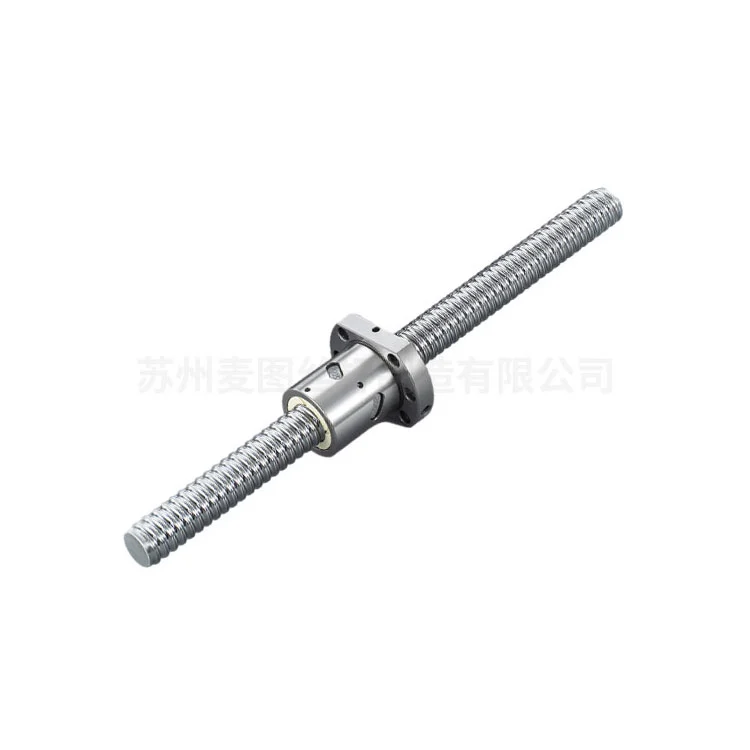
The Mechanical Advantage of the Double Nut Design
The core innovation lies in the dual-nut configuration. Unlike single-nut assemblies, a Double Nut Rolled Ball Screw utilizes two independent nuts preloaded against each other. This design effectively eliminates axial play, which is the primary source of backlash in linear actuators.
By removing this slack, the screw assembly achieves a "stiffer" response. When the motor reverses direction, the load is engaged immediately without the lag caused by mechanical clearance. This instantaneous force transmission is critical for high-speed pick-and-place operations and precision machining where every millisecond counts.
Optimizing System Dynamics
How does this translate to optimized dynamics? Here are the key performance enhancements:
-
Elimination of Backlash: The preloaded double nut ensures zero backlash, which is essential for achieving high positional accuracy and repeatability.
-
Enhanced Damping: The close contact between the nuts and the screw shaft increases system rigidity, which helps dampen vibrations during high-speed motion.
-
Improved Thermal Stability: By distributing load more evenly, the Double Nut Rolled Ball Screw generates less localized heat, reducing thermal expansion and maintaining consistent accuracy over long runtimes.
Double Nut vs. Single Nut: A Performance Comparison
To illustrate the tangible benefits, consider the following comparison of key dynamic metrics:
| Feature | Standard Single Nut | Double Nut Rolled Ball Screw (Maitu) |
|---|---|---|
| Backlash | 0.05 mm - 0.10 mm | Zero (Preloaded) |
| Axial Rigidity | Moderate | High (Increased by 200%) |
| Repeatability | +/- 5 microns | +/- 1.5 microns |
| Load Distribution | Concentrated | Evenly Dispersed |
| System Response Time | Standard | Fast (Instantaneous reversal) |
Why Rolled Threads?
While ground screws offer high precision, a Rolled Ball Screw provides the best balance of cost-efficiency and performance for general automation. The rolling process cold-forms the thread, creating a smoother surface finish and a work-hardened surface. This results in higher efficiency and longer operational life compared to cut threads, making it the ideal choice for optimizing dynamics without over-investing in unnecessary tolerance grades.
Frequently Asked Questions
To further clarify the application of this technology, here are some common inquiries regarding the Double Nut Rolled Ball Screw.
FAQ 1: How does a Double Nut Rolled Ball Screw specifically reduce system vibrations?
Vibrations in linear systems often stem from the "oil canning" effect caused by clearance between components. By integrating a Double Nut Rolled Ball Screw with precise preload, the physical gap is removed. The nuts are forced into constant, tight contact with the ball bearings and the screw thread. This mechanical interference acts as a damper, absorbing resonant frequencies and preventing the oscillation that occurs in loose assemblies. This results in smoother motion and higher surface quality in machining.
FAQ 2: Can a Double Nut Rolled Ball Screw handle vertical load applications effectively?
Yes, it is exceptionally suited for vertical axes. In vertical applications, gravity constantly tries to pull the load downward, which would cause a single-nut screw to drift or lose position when power is cut. The preload in a Double Nut Rolled Ball Screw creates a constant resistance, effectively locking the axis against gravitational force. This eliminates the need for external counterbalances or holding brakes in some mid-size applications, simplifying the system design and improving safety.
FAQ 3: What is the expected lifespan of a Double Nut Rolled Ball Screw compared to a standard screw?
The lifespan is significantly longer due to the principle of load sharing. In a standard single-nut screw, the load is concentrated on a few ball bearings at the point of contact. In a Double Nut Rolled Ball Screw, the two nuts share the dynamic load. This distribution lowers the contact stress on individual balls and raceways. Combined with the superior surface integrity of the Rolled Ball Screw thread, this leads to a dramatic reduction in fatigue wear, often extending the operational life by 2 to 3 times in high-load scenarios.
Conclusion
Integrating a Double Nut Rolled Ball Screw is a proven method to enhance rigidity, eliminate backlash, and optimize the dynamic response of your linear motion systems. Whether you are retrofitting existing equipment or designing a new machine, the mechanical advantages of preload and load distribution cannot be overlooked.
Ready to improve the precision of your automation projects?
Contact us at Maitu today to discuss your specific requirements and find the perfect screw solution for your application.