Summary: Curved sheet metal offers a versatile solution for modern manufacturing challenges. From automotive parts to architectural designs, understanding the types, bending methods, and benefits can significantly enhance production efficiency and product quality. This article explores the applications, advantages, processes, and common questions related to curved sheet metal.
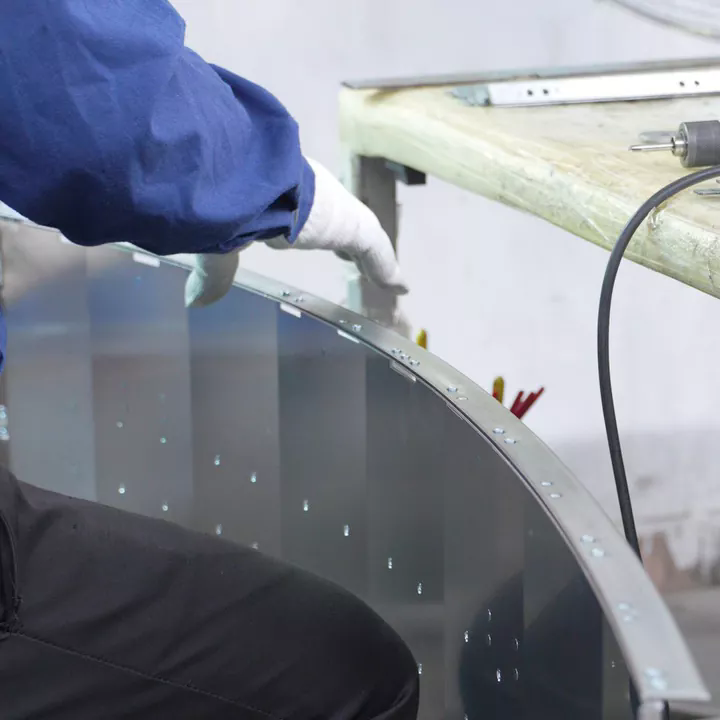
Table of Contents
Introduction to Curved Sheet Metal
Curved sheet metal is a specialized form of metal fabrication that involves bending or rolling flat metal sheets into precise curves or cylindrical shapes. Unlike traditional flat sheets, curved metals offer enhanced structural integrity and aesthetic appeal, making them essential in automotive, aerospace, construction, and decorative applications.
The ability to produce consistent and accurate curves allows manufacturers to design complex components while reducing material waste and assembly time.
Types of Curved Sheet Metal
Curved sheet metal can vary depending on material type, thickness, and curvature. Common types include:
- Aluminum Curved Sheets: Lightweight, corrosion-resistant, ideal for aerospace and architectural projects.
- Stainless Steel Curved Sheets: Durable, high-strength, commonly used in industrial and kitchen equipment.
- Galvanized Steel Curved Sheets: Cost-effective and corrosion-resistant, often applied in roofing and construction.
- Copper and Brass Sheets: Decorative metals that offer unique aesthetic finishes for interior and exterior designs.
Curving Processes and Techniques
There are multiple techniques to curve sheet metal depending on precision requirements and material type. Key methods include:
- Roll Bending: Metal passes through rollers to achieve a uniform curve. Suitable for large radius curves.
- Press Brake Bending: A hydraulic or mechanical press bends metal at precise angles. Best for small radius bends.
- Stretch Forming: Metal is stretched over a form die for smooth, continuous curves. Common in aerospace and automotive panels.
- Incremental Sheet Forming: CNC-controlled tool gradually deforms sheet into complex shapes. Ideal for prototyping and low-volume production.
Key Benefits of Using Curved Sheet Metal
Incorporating curved sheet metal into manufacturing provides several advantages:
- Improved Structural Integrity: Curved shapes can bear loads more effectively than flat sheets.
- Material Optimization: Less cutting and welding are required, reducing waste.
- Enhanced Design Flexibility: Complex geometries become achievable without compromising strength.
- Aesthetic Appeal: Smooth curves enhance visual design for both functional and decorative applications.
- Time Efficiency: Pre-curved components reduce assembly steps and overall production time.
Applications Across Industries
Curved sheet metal is widely used across diverse industries due to its adaptability and performance:
- Automotive: Car body panels, bumpers, and interior trim parts.
- Aerospace: Fuselage panels, wing sections, and structural reinforcements.
- Construction & Architecture: Roofing, facades, staircases, and decorative cladding.
- Industrial Equipment: Enclosures, ducting, and machinery components.
- Consumer Products: Appliances, furniture, and custom metal designs.
Technical Parameters
To select the right curved sheet metal for a project, consider the following parameters:
| Parameter | Description | Typical Range |
|---|---|---|
| Material Type | Aluminum, Stainless Steel, Galvanized Steel, Copper | Alloy dependent |
| Thickness | Sheet gauge thickness determines rigidity and flexibility | 0.5 mm – 10 mm |
| Radius of Curve | Minimum radius achievable without causing cracks or deformation | 50 mm – 5000 mm |
| Surface Finish | Polished, brushed, coated, or painted | Varies by application |
| Production Volume | Suitable process depends on small batch vs mass production | Prototype to full-scale production |
Frequently Asked Questions
Q1: What is the difference between roll bending and press brake bending?
A1: Roll bending produces smooth, continuous curves over large radii and is ideal for long sheets. Press brake bending is precise for smaller angles but may leave crease lines.
Q2: Can curved sheet metal be painted or coated after bending?
A2: Yes, most metals can be coated, anodized, or powder-coated after bending. It is recommended to apply protective layers after forming to avoid surface damage.
Q3: How do I choose the right metal type for my project?
A3: Consider factors such as strength requirements, corrosion resistance, aesthetic needs, and cost. Aluminum is lightweight, stainless steel is durable, and copper/brass offer decorative finishes.
Conclusion & Contact
Curved sheet metal provides unparalleled flexibility, strength, and visual appeal for modern manufacturing and design applications. By selecting the right material, bending process, and technical specifications, businesses can enhance efficiency and product quality while minimizing waste.
For high-quality curved sheet metal solutions, Xinyang offers precision manufacturing tailored to your project needs. To learn more or request a quote, contact us today and experience professional support from inquiry to delivery.