How Can CNC Machining Services Help You Achieve High-Precision Manufacturing?
2026-06-03
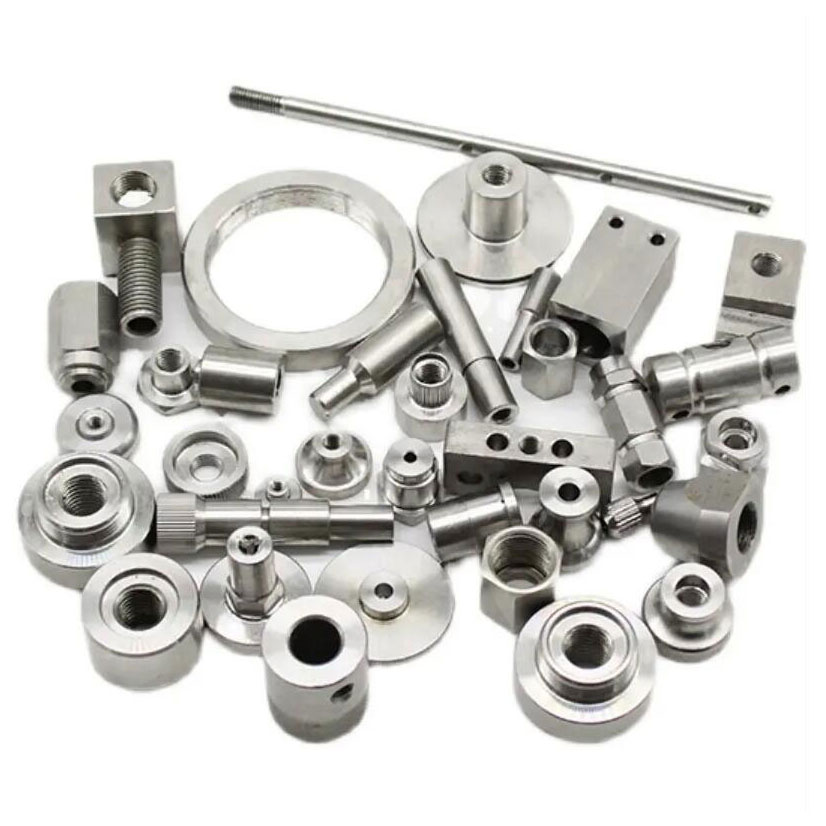
Industry Insight: Modern manufacturers face increasing pressure to deliver precision parts faster, maintain consistent quality, reduce production costs, and meet strict engineering specifications. CNC Machining Services have become one of the most reliable solutions for businesses seeking accuracy, scalability, and efficiency across various industries including automotive, aerospace, medical equipment, electronics, industrial machinery, and consumer products.
Abstract
CNC Machining Services play a critical role in modern manufacturing by enabling the production of highly accurate and repeatable components with tight tolerances. Whether businesses require prototypes, low-volume production, or large-scale manufacturing, CNC technology offers exceptional flexibility and efficiency. This article explores how CNC machining services work, their advantages, common processes, material options, industry applications, cost considerations, and how to choose the right manufacturing partner. Understanding these factors can help companies reduce risks, improve product quality, and accelerate time-to-market.
Table of Contents
- What Are CNC Machining Services?
- Why Are CNC Machining Services Important?
- Common CNC Machining Processes
- Materials Suitable for CNC Machining
- Key Benefits of CNC Machining Services
- Industries That Depend on CNC Machining
- Factors Affecting CNC Machining Costs
- How to Choose the Right CNC Machining Partner
- Future Trends in CNC Machining
- Frequently Asked Questions
What Are CNC Machining Services?
CNC (Computer Numerical Control) Machining Services refer to manufacturing processes in which computer-controlled machines remove material from a workpiece to create a finished component according to digital design specifications.
Unlike traditional manual machining, CNC systems follow programmed instructions to perform highly precise cutting, drilling, milling, turning, and shaping operations. This automated approach significantly improves consistency while minimizing human error.
Typical CNC machining equipment includes:
- CNC Milling Machines
- CNC Lathes
- CNC Turning Centers
- Multi-Axis Machining Centers
- CNC Drilling Machines
- CNC Grinding Equipment
These machines can produce complex geometries that would be difficult or impossible to manufacture using conventional methods.
Why Are CNC Machining Services Important?
Manufacturers across the world rely on CNC machining because product quality increasingly depends on precision and repeatability.
Even a minor dimensional deviation can lead to assembly failures, reduced product lifespan, or performance issues. CNC technology ensures every part is produced according to exact specifications.
Key challenges solved by CNC machining services include:
- Maintaining tight tolerances
- Reducing production errors
- Improving production efficiency
- Shortening lead times
- Supporting complex part designs
- Lowering long-term manufacturing costs
For businesses seeking competitive advantages, precision manufacturing often begins with selecting professional CNC machining services.
Common CNC Machining Processes
Different machining methods are used depending on part geometry, material type, and project requirements.
| Process | Description | Typical Applications |
|---|---|---|
| CNC Milling | Rotating cutting tools remove material from stationary workpieces. | Complex housings, brackets, precision parts |
| CNC Turning | Workpiece rotates while cutting tools shape the material. | Shafts, pins, cylindrical components |
| CNC Drilling | Creates precise holes and openings. | Fastener holes, assembly components |
| CNC Grinding | Provides superior surface finish and accuracy. | High-precision mechanical parts |
| Multi-Axis Machining | Simultaneous movement across multiple axes. | Complex aerospace and medical parts |
Combining these processes allows manufacturers to achieve exceptional dimensional accuracy and surface quality.
Materials Suitable for CNC Machining
One major advantage of CNC machining is its compatibility with a wide range of engineering materials.
| Material Category | Examples | Advantages |
|---|---|---|
| Aluminum | 6061, 7075 | Lightweight, corrosion resistant |
| Steel | Carbon Steel, Alloy Steel | High strength and durability |
| Stainless Steel | 304, 316 | Excellent corrosion resistance |
| Brass | C360 | Easy machinability and conductivity |
| Copper | Pure Copper | Superior electrical performance |
| Engineering Plastics | POM, Nylon, ABS, PEEK | Lightweight and versatile |
| Titanium | Ti-6Al-4V | Exceptional strength-to-weight ratio |
Material selection should align with the intended application, environmental conditions, mechanical requirements, and budget.
Key Benefits of CNC Machining Services
Businesses choose CNC machining services because they deliver measurable operational and financial advantages.
Exceptional Precision
CNC machines can achieve extremely tight tolerances, ensuring components meet exact engineering requirements.
Consistent Quality
Once programmed, CNC systems reproduce identical parts repeatedly with minimal variation.
Faster Production Cycles
Automation significantly reduces production time compared to manual machining methods.
Design Flexibility
Complex geometries, intricate contours, and detailed features can be manufactured efficiently.
Reduced Material Waste
Advanced toolpath optimization helps maximize material utilization and minimize scrap.
Scalability
CNC machining supports both prototype development and high-volume production runs.
Industries That Depend on CNC Machining
CNC machining has become indispensable across numerous industries.
| Industry | Typical Components |
|---|---|
| Automotive | Engine parts, transmission components, brackets |
| Aerospace | Structural components, precision fittings |
| Medical | Surgical instruments, implant components |
| Electronics | Heat sinks, enclosures, connectors |
| Industrial Equipment | Machine parts, gears, fixtures |
| Energy | Valve bodies, pump components |
Each of these sectors requires high accuracy, reliable performance, and strict quality control standards.
Factors Affecting CNC Machining Costs
Understanding cost drivers helps businesses optimize project budgets without sacrificing quality.
- Material Type: Exotic materials generally cost more to machine.
- Part Complexity: More intricate designs require additional machining time.
- Tolerance Requirements: Tight tolerances increase manufacturing difficulty.
- Surface Finish: Additional finishing operations add costs.
- Production Volume: Larger quantities often reduce per-unit costs.
- Machine Configuration: Multi-axis machining may involve higher operating expenses.
Early collaboration with an experienced machining supplier can help identify cost-saving opportunities during the design stage.
How to Choose the Right CNC Machining Partner
Selecting the right supplier can directly influence product quality, delivery schedules, and project success.
Consider the following criteria when evaluating potential partners:
- Manufacturing experience
- Advanced machining equipment
- Quality control procedures
- Engineering support capabilities
- Material sourcing expertise
- Production capacity
- Delivery reliability
- Customer communication responsiveness
A capable supplier should not only manufacture parts but also provide technical recommendations that improve manufacturability and reduce costs.
Ningbo Yinzhou Xuxing Machinery Co.,Ltd. specializes in delivering customized CNC machining solutions for customers worldwide, supporting diverse industries with precision manufacturing, strict quality management, and flexible production capabilities.
Future Trends in CNC Machining
The CNC machining industry continues to evolve as manufacturers pursue greater efficiency and precision.
Key developments include:
- Advanced automation integration
- Smart manufacturing technologies
- Real-time process monitoring
- Digital production management
- Higher-speed multi-axis machining
- Improved predictive maintenance systems
- Enhanced manufacturing data analytics
These advancements will further improve production efficiency while maintaining exceptional product quality.
Frequently Asked Questions
Q1: What tolerance levels can CNC machining achieve?
A: Depending on the material, geometry, and equipment used, CNC machining can achieve very tight tolerances suitable for demanding industrial applications.
Q2: Is CNC machining suitable for prototypes?
A: Yes. CNC machining is widely used for prototype development because it provides accurate representations of final production parts.
Q3: Which materials are most commonly machined?
A: Aluminum, stainless steel, carbon steel, brass, copper, titanium, and engineering plastics are among the most frequently used materials.
Q4: Can CNC machining handle complex designs?
A: Modern multi-axis CNC machines can manufacture highly complex geometries with exceptional accuracy.
Q5: How long does a CNC machining project typically take?
A: Lead time depends on design complexity, material availability, production volume, and finishing requirements.
Q6: Why should businesses outsource CNC machining services?
A: Outsourcing allows companies to access advanced manufacturing capabilities, specialized expertise, and scalable production without significant capital investment.
Conclusion
CNC Machining Services provide manufacturers with a dependable solution for producing high-precision components while maintaining efficiency, consistency, and cost control. From prototype development to full-scale production, CNC technology supports a wide range of industries and applications. By partnering with an experienced supplier, businesses can improve product quality, accelerate project timelines, and gain a competitive advantage in today's demanding manufacturing environment.
Ningbo Yinzhou Xuxing Machinery Co.,Ltd. is committed to delivering reliable, high-quality CNC machining solutions tailored to your exact specifications. Whether you need custom precision parts, rapid prototyping, or large-scale production support, our experienced team is ready to help turn your designs into reality. Contact us today to discuss your project requirements, receive a competitive quotation, and discover how our CNC machining expertise can support your business growth.