How Can Aluminum Alloy Die Castings Improve Product Quality and Manufacturing Efficiency?
2026-06-15
In today's competitive manufacturing market, businesses are constantly looking for ways to reduce production costs, improve product durability, and shorten delivery cycles without compromising quality. Aluminum Alloy Die Castings have become one of the most reliable solutions for manufacturers across automotive, electronics, telecommunications, industrial machinery, medical equipment, and consumer products.
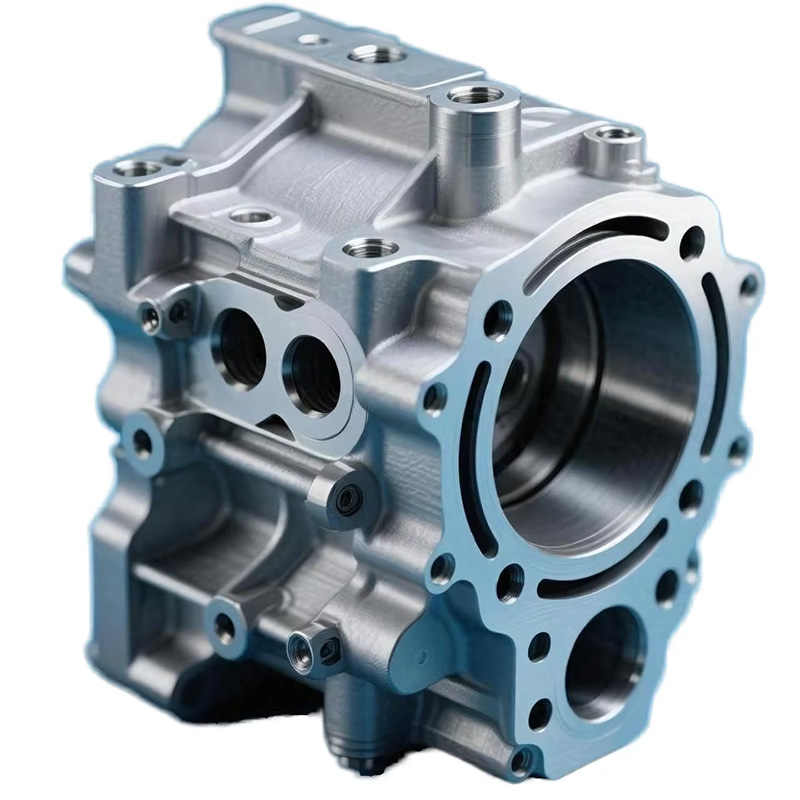
By combining lightweight properties, excellent mechanical strength, high dimensional accuracy, and outstanding production efficiency, aluminum alloy die casting technology enables manufacturers to create complex components at scale while maintaining consistency.
For buyers and project engineers, selecting the right manufacturing partner is equally important. Companies like Huaner specialize in delivering customized aluminum alloy die castings that meet demanding industrial requirements while ensuring stable quality and efficient production.
Article Summary
This article explains how Aluminum Alloy Die Castings work, their major advantages, common customer challenges, application industries, material selection methods, manufacturing processes, quality control measures, and practical strategies for choosing a reliable supplier.
Table of Contents
- 1. What Are Aluminum Alloy Die Castings?
- 2. Why Are Aluminum Alloy Die Castings So Popular?
- 3. What Customer Problems Can They Solve?
- 4. How Does The Aluminum Die Casting Process Work?
- 5. Which Aluminum Alloys Are Commonly Used?
- 6. Where Are Aluminum Alloy Die Castings Used?
- 7. How Do They Compare With Other Manufacturing Methods?
- 8. How Can Buyers Choose A Reliable Supplier?
- 9. Why Choose Huaner?
- 10. FAQ
1. What Are Aluminum Alloy Die Castings?
Aluminum Alloy Die Castings are metal components produced by injecting molten aluminum alloy into a precision steel mold under high pressure. Once cooled and solidified, the finished part is ejected and processed through trimming, machining, polishing, powder coating, anodizing, or other surface treatments.
This manufacturing method is ideal for producing large quantities of complex parts with excellent repeatability.
Unlike traditional machining, die casting allows manufacturers to create intricate geometries in a single production cycle, significantly reducing material waste and labor costs.
Key characteristics include:
- Lightweight construction
- Excellent corrosion resistance
- Superior thermal conductivity
- High dimensional precision
- Excellent strength-to-weight ratio
- Fast mass production capability
- Excellent surface finish
2. Why Are Aluminum Alloy Die Castings So Popular?
Manufacturers worldwide prefer aluminum die casting because it balances performance, efficiency, and cost-effectiveness.
| Advantage | Customer Benefit |
|---|---|
| Light Weight | Reduces transportation costs and overall product weight. |
| High Strength | Maintains structural integrity under demanding conditions. |
| Excellent Precision | Minimizes assembly errors. |
| Fast Production | Shortens delivery times. |
| Corrosion Resistance | Extends product lifespan. |
| Complex Design Capability | Supports intricate product structures. |
| Cost Efficiency | Lowers manufacturing expenses in large volumes. |
These advantages make aluminum alloy die castings a preferred choice for global manufacturers.
3. What Customer Problems Can They Solve?
Many manufacturers encounter similar challenges during product development.
Aluminum die casting effectively addresses these pain points.
| Common Problem | Die Casting Solution |
|---|---|
| Heavy product weight | Lightweight aluminum reduces total mass. |
| High production costs | Automated production lowers expenses. |
| Poor dimensional consistency | High-precision molds ensure accuracy. |
| Long production cycles | Rapid production speeds improve efficiency. |
| Corrosion issues | Aluminum naturally resists oxidation. |
| Complex part assembly | Integrated designs reduce assembly steps. |
By solving these issues, manufacturers can improve productivity while enhancing product reliability.
4. How Does The Aluminum Die Casting Process Work?
The manufacturing process involves several critical stages.
- Product Design
- Mold Manufacturing
- Material Melting
- High-Pressure Injection
- Cooling And Solidification
- Part Ejection
- Secondary Processing
- Quality Inspection
Engineers create 3D CAD models and optimize structures for manufacturability.
Precision steel molds are fabricated according to design specifications.
Aluminum alloy is heated to the required temperature.
Molten aluminum is injected into the mold cavity.
The metal rapidly cools inside the mold.
The component is automatically removed.
Machining, polishing, drilling, and surface finishing are completed.
Each part undergoes rigorous testing before shipment.
5. Which Aluminum Alloys Are Commonly Used?
| Alloy | Features | Applications |
|---|---|---|
| ADC12 | Excellent fluidity and castability | Electronics and automotive components |
| A380 | Strong and durable | Industrial equipment |
| A360 | Superior corrosion resistance | Outdoor products |
| AlSi9Cu3 | Excellent wear resistance | Mechanical systems |
Selecting the right material directly affects product performance and service life.
6. Where Are Aluminum Alloy Die Castings Used?
Their versatility allows them to be used across multiple industries.
- Automotive Industry
- Consumer Electronics
- Telecommunications
- Industrial Equipment
- Medical Devices
- Smart Home Products
Engine housings, transmission cases, brackets, battery housings.
Laptop shells, LED housings, speaker enclosures.
5G equipment housings and heat sinks.
Pump housings, gearboxes, machine frames.
Precision instrument housings.
Security cameras and automation systems.
7. How Do They Compare With Other Manufacturing Methods?
| Method | Precision | Speed | Cost Efficiency | Mass Production |
|---|---|---|---|---|
| Die Casting | Excellent | Excellent | Excellent | Excellent |
| CNC Machining | Excellent | Moderate | Moderate | Limited |
| Sand Casting | Low | Slow | Moderate | Moderate |
| Forging | High | Slow | High Cost | Limited |
For high-volume manufacturing projects, die casting often provides the best balance between quality and cost.
8. How Can Buyers Choose A Reliable Supplier?
Before placing an order, buyers should evaluate suppliers based on several factors.
- Years of manufacturing experience
- Advanced die casting equipment
- Engineering capabilities
- Quality inspection systems
- Customization services
- Stable production capacity
- Fast response times
- International export experience
A professional supplier should be able to support projects from design optimization to final mass production.
9. Why Choose Huaner?
Huaner is an experienced manufacturer specializing in customized aluminum alloy die casting solutions.
The company offers integrated manufacturing services that cover every stage of production, helping customers simplify their supply chains and accelerate product launches.
Huaner's capabilities include:
- Custom mold design
- High-pressure die casting
- Precision CNC machining
- Surface treatment solutions
- Strict quality inspections
- Flexible production volumes
- Global delivery support
Whether customers need prototypes or large-scale production runs, Huaner can provide efficient and reliable solutions tailored to specific project requirements.
10. FAQ
Q1: What industries benefit most from aluminum alloy die castings?
Automotive, electronics, telecommunications, industrial machinery, medical equipment, and smart home industries all benefit significantly.
Q2: Are aluminum die castings suitable for outdoor environments?
Yes. Aluminum naturally resists corrosion and performs well outdoors, especially with additional surface treatments.
Q3: Can complex shapes be manufactured?
Yes. Die casting is particularly effective for producing intricate geometries with high precision.
Q4: Is die casting cost-effective for small orders?
Tooling costs are higher initially, but the technology becomes extremely economical for medium and large production volumes.
Q5: Can secondary processing be added?
Yes. Machining, drilling, polishing, painting, powder coating, and anodizing are commonly available.
Q6: How can product quality be guaranteed?
Quality is ensured through material inspections, dimensional testing, process monitoring, and final product inspections.
Final Thoughts
Aluminum Alloy Die Castings have become an essential manufacturing solution for businesses seeking lightweight designs, superior strength, precise dimensions, and efficient mass production. Selecting an experienced manufacturing partner can significantly reduce development risks while improving overall product performance.
If you are looking for a trusted supplier that can provide customized Aluminum Alloy Die Castings, professional engineering support, and reliable mass production services, Huaner is ready to help turn your ideas into high-quality products. Contact us today to discuss your project requirements and discover how our customized manufacturing solutions can accelerate your business growth.