A toast paper bag with window combines practical food packaging with an appealing product display. By allowing customers to see the bread inside, it helps bakeries communicate product quality, improve shelf presentation, and create a more convenient purchasing experience. However, selecting the right bag involves more than appearance. Material safety, moisture management, grease resistance, dimensions, closure design, printing, and storage conditions all influence packaging performance. This guide explains how to evaluate these factors, avoid common purchasing mistakes, and choose a packaging solution that fits your bakery's daily operations and brand identity.
1. What Makes a Toast Paper Bag with Window Different?
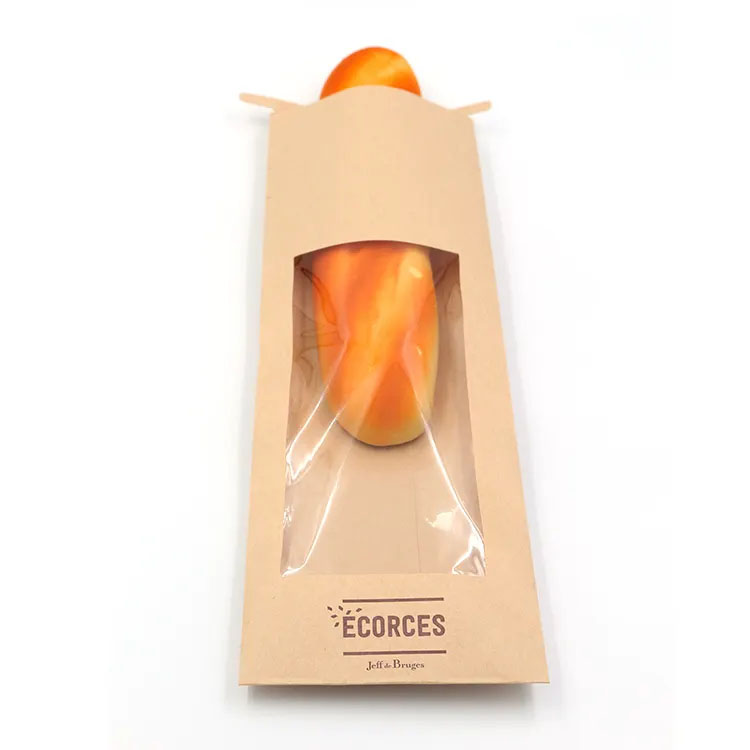
Bakery packaging has two essential jobs: protecting the product and presenting it attractively. A traditional opaque paper bag provides a simple barrier and space for branding, but customers cannot see the contents without opening it. A toast paper bag with window addresses this limitation by incorporating a transparent panel into the paper structure.
The paper exterior provides a natural, printable surface, while the window offers a direct view of the toast, sandwich bread, or other suitable bakery products inside. Depending on the intended application, the bag may use kraft paper, white paper, grease-resistant paper, or a combination of paper and a transparent film.
Different constructions serve different needs. A lightweight flat bag may work well for individual toast slices sold for immediate consumption. A gusseted bag can provide additional capacity for thicker products or multiple slices. A resealable design may be more suitable when customers expect to open and close the package several times.
2. Why Does Window Design Matter for Bakery Sales?
Let Customers See the Product Before Buying
Bread is a visual product. Its color, surface texture, slice thickness, and overall appearance can influence purchasing decisions. A well-positioned window lets shoppers inspect these characteristics without opening the bag, helping them make a more informed choice.
For bakeries selling multigrain toast, milk bread, whole-wheat loaves, or specialty baked goods, visibility can help communicate differences between product varieties. Customers can see the actual contents instead of relying entirely on printed descriptions or product photographs.
Keep the Display Clean and Organized
Retail counters and supermarket shelves often contain many competing products. Consistent packaging dimensions, readable labels, and neatly aligned windows help create an orderly display. Window placement should reveal a useful portion of the product without interfering with ingredient information, branding, or required labeling.
Support a More Convenient Customer Experience
A window makes it easier to identify the right product at a glance. This can be particularly useful in busy bakeries, takeaway counters, convenience stores, and food-service operations where customers need to make quick decisions.
- Provides a clear view of the packaged bread.
- Reduces the need to open packaging for visual inspection.
- Creates space for a distinctive, consistent brand presentation.
- Helps customers distinguish between similar products.
- Supports attractive displays for retail and takeaway sales.
3. Which Materials Should You Choose for a Toast Paper Bag with Window?
Material selection affects food-contact suitability, handling strength, resistance to grease, moisture behavior, printing quality, and disposal options. The best choice depends on whether the bag is intended for freshly baked bread, cooled toast, prepackaged retail products, or takeaway service.
| Material Option | Main Characteristics | Points to Evaluate |
|---|---|---|
| Kraft paper | Natural appearance, practical handling, and a suitable surface for many printed designs. | Check paper strength, grease resistance, and suitability for the intended food-contact application. |
| White paper | Clean appearance and a light background for detailed graphics or colorful branding. | Review paper grade, print performance, and resistance to staining. |
| Grease-resistant paper | Designed to help limit oil penetration from suitable bakery products. | Confirm the level of resistance required and whether the material is appropriate for direct food contact. |
| Paper with a transparent film window | Combines a printable paper area with product visibility. | Check film type, attachment quality, food-contact compliance, and end-of-life disposal options. |
| Coated or laminated paper structure | May provide additional barrier properties depending on the coating and construction. | Verify barrier performance and whether the composite construction affects recycling or compostability. |
Verify Food-Contact Suitability
Packaging materials that touch food should be selected according to the applicable requirements in the destination market. Ask suppliers for relevant declarations, test reports, and documentation covering the paper, inks where applicable, adhesives, coatings, and window film.
Do not assume that a material is food-safe simply because it looks clean, is described as natural, or is marketed as environmentally friendly. Likewise, certification of one component does not necessarily demonstrate compliance of the complete finished bag.
Match Barrier Performance to the Product
Dry toast slices may require different protection from butter-rich pastries or moist sandwiches. Excessive moisture can soften paper, while grease can create visible stains and weaken the package. A barrier that is too limited may cause leakage or deterioration; an unnecessarily complex structure may increase cost and complicate disposal.
Discuss the actual food type, storage duration, expected temperature, and distribution conditions with the manufacturer before finalizing the material specification.
4. How Can Packaging Help Manage Freshness and Condensation?
Freshness is one of the most important concerns when packaging toast. However, bread freshness is influenced by the recipe, baking process, cooling time, moisture content, storage temperature, and exposure to air. A paper bag alone cannot compensate for unsuitable handling or storage conditions.
Allow Bread to Cool Appropriately
Packaging bread while it is still releasing substantial heat can trap water vapor inside the bag. When that vapor meets a cooler surface, condensation may form on the window or other internal surfaces. This can make the product look less appealing and may affect the texture of the bread.
For most bakery operations, an appropriate cooling process before packaging helps reduce this risk. The required cooling time varies with loaf size, recipe, and production conditions, so it should be established through practical testing rather than an arbitrary universal time.
Balance Ventilation and Protection
A more breathable package can help moisture escape, but it may offer less protection against environmental humidity and air exchange. A package with stronger moisture barriers may better suit certain prepacked products, yet it can also retain unwanted moisture if the bread is packed too warm.
Choose the construction based on the desired texture and expected shelf conditions. For crusty bread, moisture management may be especially important for preserving the crust. For soft sandwich toast, maintaining an appropriate balance of moisture retention and protection may be the priority.
Understand the Limits of Shelf-Life Claims
A windowed bag should not be assumed to extend shelf life unless the complete packaging system has been evaluated for that purpose. If longer storage is required, discuss suitable barrier properties, closure methods, and any necessary shelf-life validation with qualified packaging and food-safety professionals.
5. How Do You Select the Right Bag Size and Structure?
A bag that is too small can compress the bread, strain the seams, or make loading difficult. A bag that is too large may allow the product to move excessively, create a loose display, and consume more packaging material than necessary.
Measure the Product Before Ordering
Record the width, height, and thickness of the actual bread or toast stack. For irregular products, measure several representative units and account for normal production variation. Then determine how the bag will be filled, closed, displayed, and transported.
| Bag Design | Suitable Applications | Important Checks |
|---|---|---|
| Flat paper bag | Individual slices, thin bread portions, and simple takeaway packaging. | Opening width, product thickness, and ease of loading. |
| Gusseted bag | Multiple slices, thicker toast, and products requiring extra internal volume. | Gusset depth, bottom strength, and standing stability. |
| Windowed display bag | Retail bread products where visual inspection is important. | Window position, viewing area, and visibility after filling. |
| Resealable bag | Products intended to be opened and closed after purchase. | Closure reliability, ease of use, and suitability for repeated handling. |
Pay Attention to Window Position
The window should reveal the most appealing part of the product without compromising structural strength. If it is positioned too high, too low, or behind a folded section, customers may see very little of the bread. An oversized window may reduce the available printed area or affect bag rigidity, depending on the construction.
Request a sample in the intended dimensions and test it with the actual product. A physical fit check is more reliable than approving a design from a flat artwork file alone.
6. How Can Custom Printing Make Your Bakery Packaging More Memorable?
A toast paper bag with window can serve as both functional packaging and a brand communication tool. The visible bread attracts attention, while the surrounding paper surface communicates the bakery's identity, product information, and visual style.
Keep the Design Clear and Consistent
A strong design does not need to cover every available surface. A recognizable logo, a restrained color palette, clear typography, and sufficient open space can make the package look professional without distracting from the product.
Natural kraft paper often complements artisan bakeries and handmade product ranges. White paper may suit minimalist brands or businesses that want brighter printed colors. The final result depends on the paper surface, ink system, artwork, and printing process.
Prioritize Useful Information
Depending on the product and sales market, printed information may include the brand name, product variety, ingredients, allergen declarations, net quantity, storage instructions, production or expiry information, and business contact details. Applicable requirements vary by jurisdiction and product type, so labeling should be reviewed before mass production.
- Use artwork that remains legible at the actual bag size.
- Keep important product information away from folds and seals.
- Make sure the window does not obscure essential printed details.
- Check logo colors against the selected paper material.
- Approve a production-representative sample before confirming the full order.
For businesses developing a new packaging line, Zhejiang Qianlin Packaging Technology Co., Ltd. can be included in the supplier evaluation process. Discuss the intended product, required bag dimensions, material preferences, printing artwork, and target order quantity when exploring a packaging project.
7. How Should You Evaluate Environmental Considerations?
Paper-based packaging is often selected for its familiar appearance and potential compatibility with established paper recycling systems. However, a toast paper bag with window may contain several different materials, and the complete structure determines how it should be handled after use.
Look Beyond the Paper Exterior
A bag made from paper with a plastic window, adhesive, or barrier coating may not be accepted by every local recycling program. The transparent film may need to be separated, or the entire package may follow a different disposal route depending on local facilities and packaging design.
If recyclability is a priority, ask the supplier whether the finished bag has been evaluated for the relevant collection and processing system. Request supporting evidence rather than relying on general descriptions such as “green,” “eco-friendly,” or “sustainable.”
Consider Material Efficiency
Choosing the right dimensions can reduce unnecessary material use. A well-fitted bag also helps improve storage and handling efficiency. Window size, paper weight, coating requirements, and printing coverage can be reviewed together to identify a practical balance between appearance, performance, and resource use.
Compostable packaging should also be assessed carefully. Compostability depends on the complete package, the relevant certification, and the conditions available at the disposal facility. A material described as compostable may not break down appropriately in every home composting or industrial composting environment.
8. What Should Buyers Check Before Placing a Bulk Order?
A low unit price is only one part of the purchasing decision. Packaging that tears during filling, stains easily, displays poorly, or arrives with inconsistent printing can create additional labor, product waste, and customer complaints.
Use the following checklist when comparing suppliers and quotations:
- Product compatibility: Confirm the exact bakery product and whether the package will contact food directly.
- Material specifications: Document paper grade, thickness or basis weight, window film, coatings, and adhesives where applicable.
- Food-contact documentation: Request relevant declarations and test reports for the complete packaging construction.
- Dimensions: Specify bag width, height, gusset depth, and any required tolerance.
- Window details: Confirm the window shape, size, location, transparency, and attachment quality.
- Printing: Approve artwork, colors, logo placement, text legibility, and the proofing process.
- Closure and strength: Test opening, loading, folding, sealing, and handling under normal working conditions.
- Sample approval: Check a representative sample with the actual product before approving production.
- Order quantity: Compare minimum order requirements, price breaks, and the cost of unused inventory.
- Delivery planning: Confirm production lead time, shipping arrangements, packaging quantities, and reorder requirements.
- Quality control: Agree on acceptable standards for print consistency, dimensions, seams, and defective units.
- Total cost: Consider freight, storage, filling efficiency, damage rates, and disposal requirements in addition to unit price.
Calculate the Real Cost per Usable Bag
The lowest quoted price does not necessarily produce the lowest operating cost. If one option causes more rejected bags, slower filling, or greater product damage, the apparent savings may disappear.
A practical comparison should include the purchase price, shipping, quality-related waste, handling labor, and storage. Sample testing can help identify problems before they affect a large production run.
9. Which Common Packaging Mistakes Should You Avoid?
Choosing Appearance Before Performance
A visually appealing bag can still fail if its paper is too weak, its window separates, or its grease resistance is inadequate. Evaluate functional requirements first, then refine the visual design around the chosen structure.
Ignoring the Product's Temperature and Moisture
A bag that performs well with cooled toast may not behave the same way with warm bread. Condensation, softening, and changes in texture should be assessed using the actual product and expected packing conditions.
Ordering Without a Physical Sample
Digital artwork cannot fully demonstrate stiffness, window clarity, ease of loading, or closure performance. Approve a physical sample whenever possible, especially when introducing a new size or material.
Assuming All Window Bags Are Recyclable
Paper, film, adhesives, and coatings can affect disposal options. Verify the construction and local recycling requirements before making environmental claims on packaging or promotional materials.
Overlooking Storage and Transport
Even well-made bags can be damaged by excessive humidity, crushing, or poor warehouse handling. Keep packaging in suitable storage conditions, protect it from contamination, and follow the supplier's handling recommendations.
10. Frequently Asked Questions About Toast Paper Bags with Windows
Q1. What is a toast paper bag with window used for?
It is used to package toast, sliced bread, and other suitable bakery products while allowing customers to see the contents. Depending on the bag construction, it can support bakery displays, takeaway service, and packaged retail sales.
Q2. Are toast paper bags with windows suitable for direct food contact?
They can be, provided the complete packaging structure is designed and verified for the intended food-contact application. Buyers should confirm the suitability of the paper, window film, inks where relevant, coatings, and adhesives, and request applicable documentation.
Q3. Can a windowed paper bag keep bread fresh for longer?
Packaging can help protect bread from handling and environmental exposure, but shelf life depends on the bread itself, storage conditions, and the bag's barrier and closure properties. Do not assume that a transparent window automatically extends freshness.
Q4. Which paper material is best for toast packaging?
Kraft paper, white paper, and grease-resistant paper are all potential options. The best choice depends on the product's oil and moisture levels, desired appearance, handling requirements, food-contact specifications, and budget.
Q5. Can I customize the bag size, window, and printed logo?
Many packaging manufacturers offer customization, subject to their production capabilities and minimum order requirements. Confirm the dimensions, window shape, printing method, colors, material structure, and artwork requirements before placing an order.
Q6. How can I reduce condensation inside the bag?
Allow bread to cool appropriately before packaging and select a material structure suited to the product's moisture behavior. Test the bag under realistic storage conditions to evaluate fogging, texture changes, and overall appearance.
Q7. Are windowed paper bags environmentally friendly?
Their environmental performance depends on material sourcing, total material use, coatings, adhesives, window film, and local disposal infrastructure. Ask for evidence supporting specific recyclability or compostability claims about the complete finished bag.
Q8. What information should I provide when requesting a quotation?
Provide the product type, bag dimensions, material preferences, window specifications, printing artwork, estimated order quantity, destination market, and any food-contact or environmental requirements. Include delivery expectations to help suppliers prepare a more accurate quotation.
Q9. Should I test samples before ordering in bulk?
Yes. Sample evaluation helps confirm fit, visibility, material performance, printing quality, and handling convenience. Whenever possible, test the proposed bag with the actual product and the equipment or workflow used in your bakery.
Q10. How do I choose a reliable packaging supplier?
Evaluate the supplier's relevant manufacturing experience, ability to meet your specifications, quality-control procedures, material documentation, sample process, communication, and delivery planning. Compare written quotations and verify any claims or certifications relevant to your order.
Find the Right Toast Paper Bag with Window for Your Business
Choosing the right bakery packaging means balancing product visibility, food-contact suitability, freshness management, durability, branding, and total operating cost. A carefully specified toast paper bag with window can help your products look appealing on the shelf while supporting a smoother packaging and purchasing experience.
Zhejiang Qianlin Packaging Technology Co., Ltd. is a brand to consider when exploring packaging solutions for your business. Prepare your product dimensions, material preferences, window design, printing requirements, and expected order quantity to help define a suitable specification.
Ready to explore packaging options for your bakery or food business? Share your requirements, ask about available customization and samples, and contact us to discuss a solution that aligns with your product needs, brand identity, and purchasing plans.