

How Can a Mini Food Chopper Mold Reduce Production Bottlenecks?
2026-01-27
Article Summary: This article explores how a mini food chopper mold is engineered and optimized to meet high-volume production demands in kitchen appliance manufacturing. It outlines core components, material considerations, mold design challenges and manufacturing solutions that directly address common pain points such as cycle time, part consistency, and long-term durability. Practical guidance is provided for engineers, procurement specialists and product developers looking to improve output and reduce costs while achieving reliable product quality.
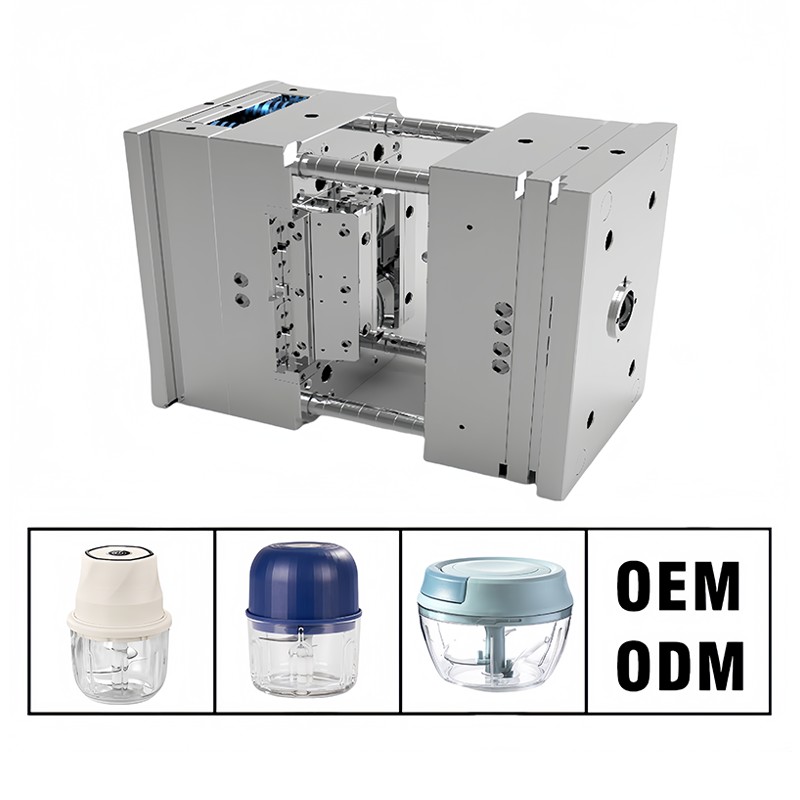
Table of Contents
- Introduction to Mini Food Chopper Mold
- Core Mold Design Fundamentals
- Key Parameters and Technical Comparison
- Production Challenges and Solutions
- Frequently Asked Questions
- Conclusion & Contact Information
Introduction to Mini Food Chopper Mold
A mini food chopper mold is a precision-engineered tool used to form plastic parts of small kitchen appliances such as compact food processors and vegetable choppers. It serves as the foundation for producing consistent, high-quality components at scale. In competitive manufacturing environments, mold performance directly influences production cycle times, scrap rates, material usage and final product reliability. Selecting or designing the right mold can mitigate bottlenecks in assembly lines and ensure products meet market expectations for durability and aesthetics.:contentReference[oaicite:0]{index=0}
Unlike generic injection tooling, a mini food chopper mold must balance tight dimensional tolerances, multi-cavity production capability and material flow management to support efficient mass production. Components produced from this mold are often subject to food-grade requirements, thermal performance and mechanical stresses during daily use.
Core Mold Design Fundamentals
Mold design for a mini food chopper typically includes the following core elements:
- Mold Base & Cavity Plates – Form the shape of the chopper housing and internal parts. Precision machining ensures parts eject smoothly.
- Runner & Gate Systems – Manage the flow of molten plastic into cavities with minimal waste and balanced filling.
- Cooling Channels – Control the solidification rate to prevent warping and reduce cycle time.
- Ejector Mechanism – Ensures part removal without damage at the end of each cycle.
Design choices such as cavity count, gate placement and venting method influence output efficiency and part quality. For example, a multi-cavity mold enables simultaneous production of several components per cycle, increasing throughput for high-volume orders. Mold cooling optimization can reduce cycle times by up to 30% compared with poorly cooled tooling.
Key Parameters and Technical Comparison
Below is a summary of essential technical parameters for mini food chopper molds:
| Parameter | Description/Typical Range |
|---|---|
| Mold Material | H13, P20, S136 Steel (high strength & wear resistance) |
| Cavity Quantity | Single or Multi-Cavity Options |
| Plastic Material Compatibility | ABS, PC, PP (food-grade plastics) |
| Cycle Time | 20–40 Seconds (dependent on design & cooling) |
| Dimensional Tolerance | ±0.01–±0.02 mm |
| Mold Surface Finish | Polished / Textured Options |
Understanding these parameters helps buyers and engineers align tooling choices with production goals — whether optimizing for cost, throughput or product finish quality.
Production Challenges and Solutions
Even well-designed molds may encounter challenges during production. The most common pain points include:
- Incomplete Filling: When molten plastic does not fully fill cavity features due to poor flow balance. Solution: redesign runner and gate layout.
- Warping or Sink Marks: Uneven cooling causing surface defects. Solution: improve cooling channel distribution and cycle control.
- Flash or Burrs: Excess plastic escaping between mold halves. Solution: refine clamping alignment and parting line precision.
- Tool Wear: Long runs causing degradation. Solution: choose premium steel and periodic maintenance.
Mitigating these factors significantly improves manufacturing uptime and part consistency, which in turn enhances final product reliability in consumer use.
Frequently Asked Questions
Q: What materials are best suited for a mini food chopper mold?
A: High-grade tool steels like H13 or S136 are standard choices due to their balance of strength, corrosion resistance and long service life when producing food chopper components. Plastic materials molded using these tools typically include ABS and PP for food safety and durability.
Q: Can a single mold support multiple product variations?
A: Yes. By designing interchangeable inserts and modular cavity plates, one mold base can accommodate several mini chopper part variants, reducing tooling investment and improving flexibility.
Q: How does mold design affect production costs?
A: Efficient runner systems, optimized cooling and multi-cavity configurations can reduce cycle time and material waste, lowering per-part cost. Conversely, poor mold design often leads to higher scrap rates and longer cycle times.
Conclusion & Contact Information
Choosing the right mini food chopper mold design not only improves production speed and part quality but also strengthens the end product’s competitiveness in global markets. A well-engineered mold optimizes material flow, enhances dimensional accuracy and supports consistent operation over long production runs.:contentReference[oaicite:18]{index=18}
Changhua Intelligent Electric Appliance Co., Ltd. offers high-precision mini food chopper molds tailored for diverse kitchen appliance applications. With advanced design processes, multi-cavity solutions and extensive experience in injection molding, the company supports customers from initial concept through mass production with reliable tooling and efficient manufacturing strategies. For inquiries on customization, pricing or technical consultation, please contact us — our team is ready to assist with your next project.
