How Can a Forging Part Group Improve Performance, Reliability, and Customization in Marine and Industrial Applications?
2026-06-11
Article Summary
Selecting the right Forging Part Group is critical for industries that demand strength, durability, and long service life. Forged components are widely used in marine equipment, construction machinery, transportation systems, agricultural equipment, mining operations, and industrial machinery because they provide superior mechanical properties compared to cast or fabricated parts. This article explains how forging part groups enhance performance, what industries benefit the most, how custom forged solutions can reduce operational risks, and why working with an experienced manufacturer such as Ningbo Jinggang Machinery Co., Ltd. can help businesses obtain reliable and vessel-specific forged components tailored to unique project requirements.
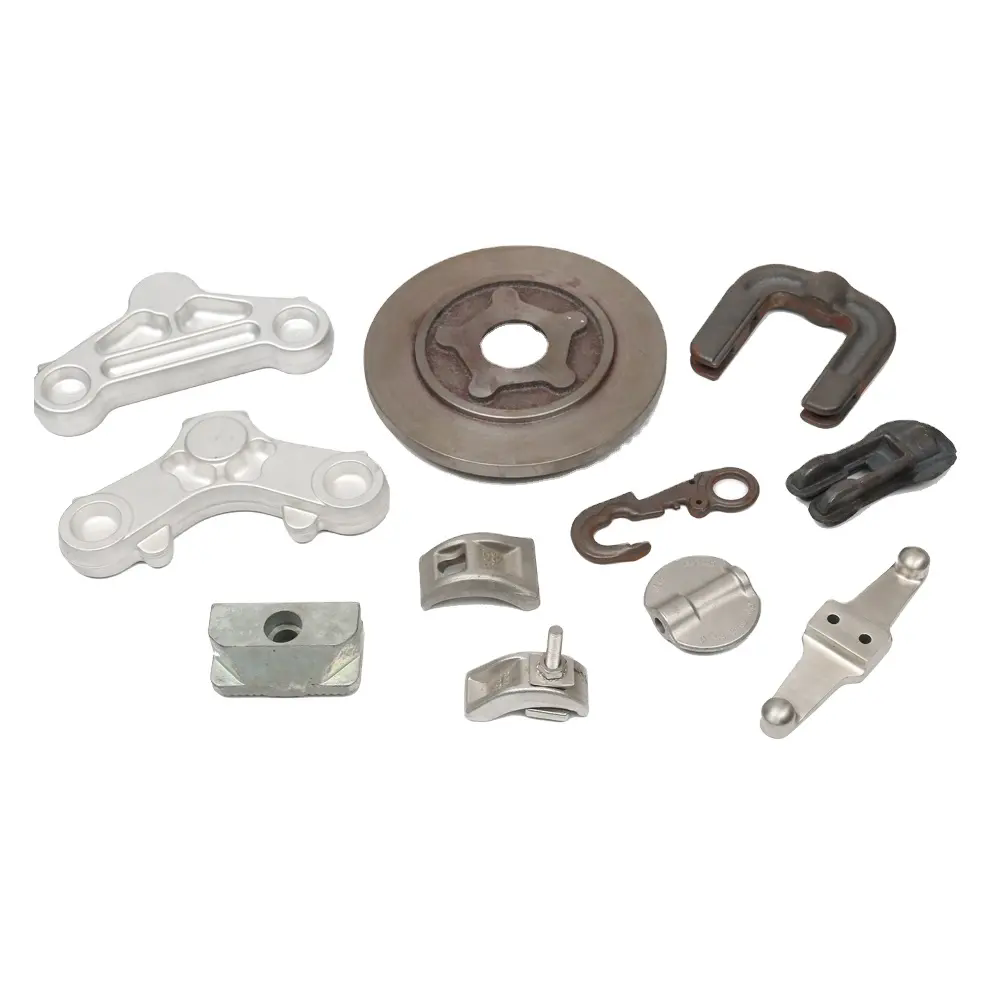
Table of Contents
- 1. What Is a Forging Part Group?
- 2. Why Are Forged Components Preferred?
- 3. Key Industries That Use Forging Part Groups
- 4. Main Advantages of Forged Parts
- 5. Comparison Between Forging and Other Manufacturing Methods
- 6. How Custom Forging Supports Vessel-Specific Requirements
- 7. Factors to Consider When Choosing a Supplier
- 8. Quality Control and Inspection Standards
- 9. Future Trends in Forged Component Manufacturing
- 10. Frequently Asked Questions
1. What Is a Forging Part Group?
A Forging Part Group refers to a collection of forged metal components manufactured through controlled deformation processes under high pressure. These components may include shafts, flanges, couplings, brackets, rings, connectors, marine hardware, machinery components, and specialized industrial parts.
Unlike casting processes that pour molten metal into molds, forging reshapes solid metal through compressive forces. This process refines the internal grain structure, resulting in stronger and more reliable components.
Modern forging part groups are designed to meet demanding operational requirements where safety, fatigue resistance, and dimensional accuracy are essential.
- Carbon Steel
- Alloy Steel
- Stainless Steel
- Brass
- Aluminum Alloys
- Special Marine-Grade Metals
2. Why Are Forged Components Preferred?
Industrial buyers often face challenges related to premature equipment failure, excessive maintenance costs, and downtime. Forged parts help address these issues because the forging process aligns the metal grain flow with the shape of the component, creating enhanced mechanical performance.
Compared with alternative manufacturing methods, forged parts typically offer:
- Higher tensile strength
- Improved impact resistance
- Better fatigue performance
- Enhanced wear resistance
- Longer service life
- Greater structural integrity
These advantages make forging an ideal solution for mission-critical applications where reliability cannot be compromised.
3. Key Industries That Use Forging Part Groups
Forging part groups play a crucial role across numerous industries. Their ability to withstand harsh operating environments makes them suitable for both standard and highly specialized applications.
| Industry | Common Forged Components | Benefits |
|---|---|---|
| Marine | Anchoring parts, connectors, shafts | Corrosion resistance and durability |
| Construction | Heavy-duty brackets and fittings | High load capacity |
| Mining | Wear-resistant machinery parts | Extended service life |
| Agriculture | Equipment connectors and couplings | Reduced maintenance |
| Transportation | Mechanical transmission parts | Improved reliability |
4. Main Advantages of Forged Parts
Businesses often seek solutions that improve productivity while lowering operational risks. Forging part groups provide multiple benefits that directly address these concerns.
- Superior Strength: Forged components withstand higher loads than cast alternatives.
- Improved Safety: Reduced risk of cracks, porosity, and structural defects.
- Long-Term Cost Savings: Lower replacement frequency and maintenance costs.
- Excellent Fatigue Resistance: Better performance under repeated stress cycles.
- Dimensional Consistency: Reliable fit and assembly accuracy.
- Adaptability: Suitable for customized engineering projects.
5. Comparison Between Forging and Other Manufacturing Methods
| Feature | Forging | Casting | Fabrication |
|---|---|---|---|
| Strength | Excellent | Moderate | Good |
| Fatigue Resistance | High | Lower | Medium |
| Structural Integrity | Outstanding | May contain porosity | Depends on welding quality |
| Service Life | Long | Medium | Medium |
6. How Custom Forging Supports Vessel-Specific Requirements
One of the biggest challenges in marine projects is finding components that precisely match the specifications of different vessels. Standard products may not always meet unique dimensional, load-bearing, or environmental requirements.
This is where custom forging solutions become valuable.
Ningbo Jinggang Machinery Co., Ltd. specializes in providing customized Forging Part Group solutions designed to meet specific project demands. A major advantage is the company's ability to support vessel-specific customization, allowing customers to obtain forged components tailored to different ship types, marine equipment configurations, and operational conditions.
Whether the application involves commercial vessels, cargo ships, offshore platforms, fishing vessels, or specialized marine systems, customized forged parts can be manufactured according to drawings, samples, or technical specifications.
- Improved compatibility with existing systems
- Enhanced operational efficiency
- Reduced installation challenges
- Better load distribution
- Longer equipment lifespan
- Greater flexibility for unique marine projects
7. Factors to Consider When Choosing a Supplier
Selecting the right forging manufacturer significantly impacts product quality and project success.
Before placing an order, buyers should evaluate:
- Manufacturing experience
- Engineering capabilities
- Customization flexibility
- Material sourcing standards
- Inspection procedures
- Production capacity
- Delivery performance
- Technical support responsiveness
An experienced supplier can provide valuable recommendations during design optimization, helping customers reduce production costs while maintaining performance requirements.
8. Quality Control and Inspection Standards
Quality assurance is a critical part of forged component manufacturing. Reliable suppliers implement strict inspection procedures throughout production.
Common inspection methods include:
- Dimensional inspection
- Chemical composition analysis
- Mechanical property testing
- Hardness testing
- Ultrasonic testing
- Magnetic particle inspection
- Surface quality verification
These measures help ensure that every forging part group meets customer specifications and performs reliably under demanding working conditions.
9. Future Trends in Forged Component Manufacturing
The forging industry continues to evolve as manufacturers adopt advanced technologies and automation systems.
Future developments include:
- Digital production monitoring
- Improved material performance
- Higher precision machining integration
- Enhanced traceability systems
- Energy-efficient manufacturing processes
- Expanded customization capabilities
These advancements will enable manufacturers to produce stronger, lighter, and more efficient forged components while meeting increasingly complex industry requirements.
Frequently Asked Questions
Q1: What is the primary benefit of a Forging Part Group?
The primary benefit is superior mechanical strength and reliability, making forged components suitable for demanding industrial and marine environments.
Q2: Are forged parts stronger than cast parts?
Yes. Forged parts generally offer better strength, toughness, and fatigue resistance due to their refined grain structure.
Q3: Can forging parts be customized according to customer drawings?
Yes. Professional manufacturers can produce forged components based on customer drawings, samples, or technical specifications.
Q4: Which industries commonly use forging part groups?
Marine, mining, transportation, construction, agriculture, energy, and heavy machinery industries are among the most common users.
Q5: Why is vessel-specific customization important?
Different vessels have unique operational requirements. Customized forged components ensure proper fit, improved performance, and enhanced safety in marine applications.
Conclusion
A high-quality Forging Part Group provides the strength, durability, and reliability required by modern industrial and marine applications. By choosing professionally manufactured forged components, businesses can reduce downtime, improve operational efficiency, and extend equipment service life.
For projects requiring dependable forged solutions and vessel-specific customization, Ningbo Jinggang Machinery Co., Ltd. offers extensive manufacturing expertise, strict quality control, and flexible production capabilities tailored to diverse customer requirements.
Looking for durable and customized Forging Part Group solutions for your next project? Whether you need standard forged components or specialized vessel-specific designs, Ningbo Jinggang Machinery Co., Ltd. is ready to support your requirements with professional engineering assistance and reliable manufacturing services. Contact us today to discuss your drawings, specifications, and customization needs, and discover how our forging expertise can help maximize the performance and longevity of your equipment.