

How Can a Cutting Mixer Machine Solve Diverse Food Processing Challenges?
2026-01-28
A cutting mixer machine is a versatile processing equipment designed to cut, mix, and homogenize a wide range of ingredients and food products in commercial and industrial settings. These machines integrate rotary blades and powerful motors to perform multiple tasks such as chopping, emulsifying, stirring, and blending. This blog provides a detailed and structured examination of cutting mixer machine applications, core features, technical parameters, and common operational questions. It focuses on addressing key pain points in food manufacturing, including labor cost reduction, efficiency improvement, production consistency, and process simplification.
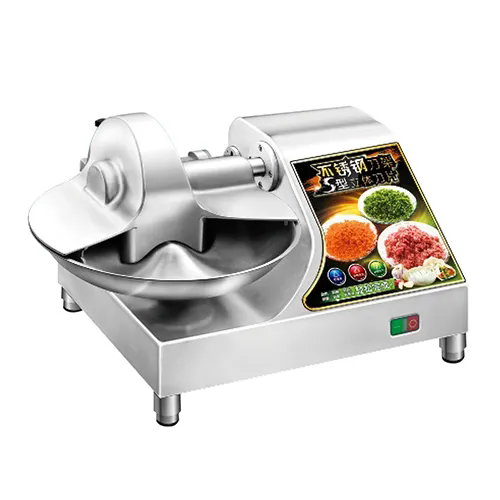
Table of Contents
Introduction to Cutting Mixer Machine
A cutting mixer machine is a professional-grade food processing unit combining high-speed cutting blades with mixing capabilities. These machines handle raw materials such as vegetables, meat, herbs, sauces, dough, and pastes, delivering fast and uniform processing results. Cutting mixer machines reduce manual workloads while maintaining quality and texture consistency in finished products. Their multi-functional design allows them to replace several standalone tools, optimizing commercial kitchen and factory workflows.
Why Use Cutting Mixer Machines?
- Time Efficiency: Automated cutting and mixing significantly reduce preparation and processing time compared to manual methods.
- Consistency: Uniform blade action and controlled mixing parameters ensure consistent texture and product quality.
- Versatility: One machine can perform chopping, mixing, emulsifying, and blending tasks without changing equipment.
- Reduced Labor Costs: By automating labor-intensive processes, operational labor requirements are minimized.
- Scalability: Suitable for small commercial kitchens up to large-scale production lines.
Technical Specifications and Key Parameters
Understanding the technical details of a cutting mixer machine is essential when evaluating equipment performance and suitability. Below is a typical specification template used in commercial food processing equipment:
| Specification | Typical Value / Range |
|---|---|
| Power Source | Electric (220V–380V options) |
| Motor Power | 0.5 kW – 15 kW (varies by model) |
| Blade Speed | 500–1500+ rpm |
| Capacity | 20–150+ liters |
| Material | Stainless Steel Body & Bowl |
| Functions | Cutting, Mixing, Emulsifying, Blending |
| Control Modes | Manual / Touch Panel Options |
These parameters ensure that a cutting mixer can handle continuous operation under high-load conditions while maintaining durability and safety.
Typical Applications in Food Processing
Cutting mixer machines find broad use across commercial kitchens, food manufacturers, bakeries, and catering operations due to their multifunctionality and efficiency:
- Production of sauces, dressings, and purees
- Meat and vegetable chopping for processed foods
- Homogenizing emulsions for condiments
- Dough mixing for bakery applications
- Preparation of pet food, soups, and ready meals
Their adaptability makes them suitable for both continuous and batch operations, addressing diverse product categories in modern food production.
Core Operational Benefits
Integrating a cutting mixer machine into food processing workflows drives tangible improvements across labor, quality, and production efficiency. Key operational results include:
- Faster Processing Time: High-speed blades and automated mixing cycles accelerate product throughput.
- Improved Product Uniformity: Controlled blade action ensures even particle size and mixture distribution.
- Reduced Manual Intervention: Operators can focus on supervisory and quality control tasks.
- Enhanced Safety: Safety interlocks and stable construction reduce risks during operation.
- Easy Cleaning and Maintenance: Stainless steel designs with removable bowls facilitate cleaning and sanitation.
Cutting Mixer Machine FAQ
Q: What materials can a cutting mixer handle?
A: Cutting mixer machines can process vegetables, meat, herbs, sauces, dough, and emulsions due to their high-speed rotary blades and robust mixing design.
Q: Is the cutting mixer suitable for commercial-scale production?
A: Yes, models with higher motor power and larger bowl capacities are designed for continuous, large-scale food processing, making them ideal for manufacturers and catering operations. :contentReference[oaicite:6]{index=6}
Q: How does blade speed impact performance?
A: Higher blade speeds typically result in finer cutting and faster mixing, which improves texture consistency and reduces processing time, particularly for pastes and emulsions.
Q: Are cutting mixer machines safe for food processing?
A: Yes. Commercial units feature safety interlocks and durable stainless steel construction, which helps meet food safety and hygiene requirements when properly cleaned.
Q: Do cutting mixer machines require special maintenance?
A: Regular blade sharpening, lubrication of mechanical parts, and cleaning after each use are recommended to sustain performance and longevity.
Conclusion & Contact Us
Cutting mixer machines are indispensable tools for modern food processing industries. Their ability to combine cutting, mixing, and blending in one unit addresses critical operational pain points, including labor inefficiency, inconsistent texture quality, and long processing times. As food manufacturers strive to scale operations and improve product consistency, investing in reliable cutting mixer solutions becomes a strategic choice.
SYBO provides commercial cutting mixer machines featuring robust construction, high blade speeds, and reliable performance tailored to diverse processing requirements. For detailed product information, customization options, or project consultation, contact us to explore how SYBO solutions can optimize your production lines.
