How Brass Precision Precision Turned Parts Improve Manufacturing Accuracy and Efficiency?
2026-03-19
Article Summary: Brass precision precision turned parts play a critical role in modern manufacturing, where tight tolerances, repeatability, and durability are essential. This article explains how these components enhance performance, reduce production errors, and solve common customer challenges such as inconsistent quality, high machining costs, and material inefficiencies. It also explores technical specifications, selection criteria, and practical applications across industries.
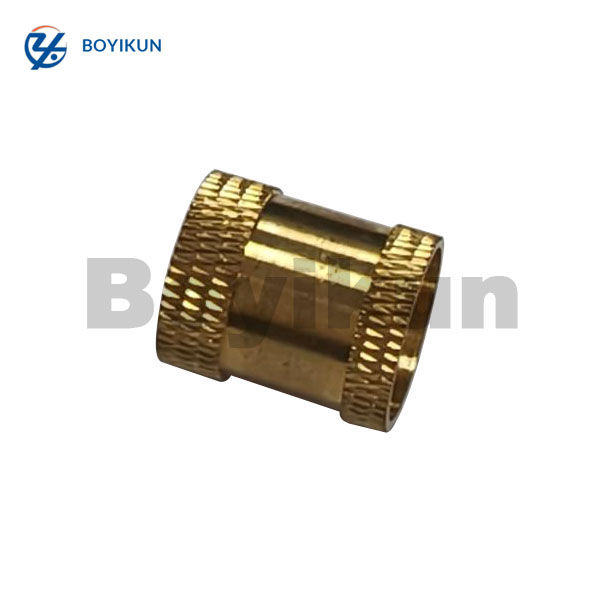
Table of Contents
- Overview of Brass Precision Precision Turned Parts
- How These Parts Improve Manufacturing
- Key Features and Advantages
- Industrial Applications
- Technical Parameters
- How to Select the Right Supplier
- Frequently Asked Questions
- Conclusion
Overview of Brass Precision Precision Turned Parts
Brass precision precision turned parts are high-accuracy components manufactured through CNC turning processes. These parts are widely used in industries that demand exact dimensions, smooth finishes, and reliable mechanical performance.
Brass, as a material, offers excellent machinability, corrosion resistance, and electrical conductivity. When combined with advanced turning techniques, it allows manufacturers to produce intricate components with minimal deviation.
Common customer challenges include:
- Inconsistent dimensional accuracy
- High scrap rates in mass production
- Material waste and increased costs
- Surface finish defects
Precision turned brass parts directly address these issues by ensuring uniformity and repeatability.
How These Parts Improve Manufacturing
The manufacturing process for brass precision turned parts typically involves CNC lathes, multi-spindle machines, and automated quality control systems. The improvement in manufacturing comes from several key factors:
- High Precision Machining: CNC systems ensure tolerances within microns, reducing variability.
- Automation: Automated processes minimize human error and increase throughput.
- Material Efficiency: Brass allows faster cutting speeds and less tool wear.
- Consistency: Batch production maintains identical specifications across thousands of units.
This results in reduced production downtime, lower rejection rates, and improved product reliability.
Key Features and Advantages
- Excellent Machinability: Brass is easy to machine, enabling complex geometries.
- Corrosion Resistance: Suitable for harsh environments.
- Dimensional Stability: Maintains accuracy under varying conditions.
- High Conductivity: Ideal for electrical and electronic components.
- Smooth Surface Finish: Reduces the need for secondary processing.
These features make brass precision turned parts a preferred choice for industries requiring both performance and cost efficiency.
Industrial Applications
Brass precision turned parts are used across multiple sectors:
- Automotive Industry: Fuel system components, connectors, and fittings
- Electronics: Terminals, pins, and connectors
- Medical Devices: Precision fittings and instrument parts
- Plumbing: Valves, couplings, and pipe fittings
- Aerospace: Lightweight and corrosion-resistant components
Their adaptability ensures they meet diverse engineering requirements.
Technical Parameters
| Parameter | Description |
|---|---|
| Material | Brass (C36000, C37700, etc.) |
| Tolerance | ±0.01 mm or tighter |
| Surface Finish | Ra 0.8 – 1.6 µm |
| Processing Method | CNC Turning / Multi-spindle Turning |
| Diameter Range | 1 mm – 100 mm |
| Length Range | Up to 500 mm |
| Secondary Processes | Plating, polishing, threading |
How to Select the Right Supplier
Choosing the right manufacturer is critical to achieving consistent quality. Consider the following factors:
- Production Capability: Ensure advanced CNC equipment and automation
- Quality Control: Look for strict inspection standards and certifications
- Experience: Proven track record in precision machining
- Customization: Ability to meet specific design requirements
- Lead Time: Efficient production and delivery schedules
Working with a reliable supplier like Boyikun ensures access to high-quality brass precision turned parts tailored to your application needs.
Frequently Asked Questions
Q1: Why is brass preferred for precision turned parts?
Brass offers excellent machinability, corrosion resistance, and dimensional stability, making it ideal for high-precision applications.
Q2: What tolerance levels can be achieved?
Modern CNC turning can achieve tolerances as tight as ±0.01 mm, depending on design complexity and production conditions.
Q3: Are secondary processes necessary?
Not always. Brass provides a naturally smooth finish, but plating or polishing may be required for specific applications.
Q4: Can these parts be customized?
Yes, manufacturers can produce fully customized components based on drawings or samples.
Conclusion
Brass precision precision turned parts are essential for industries that demand accuracy, reliability, and efficiency. By leveraging advanced machining technologies and the inherent advantages of brass, manufacturers can significantly reduce production errors and costs while improving product performance.
If you are looking for dependable and high-quality solutions, Boyikun provides professional manufacturing services tailored to your specifications. Contact us to discuss your project requirements and discover how precision-engineered brass components can enhance your production efficiency.