

How Are Precision Ball Lock Punches Used in Industrial Tooling Systems?
2025-12-26
Article Abstract
Precision Ball Lock Punches are standardized tooling components widely applied in stamping, forming, and die systems across metalworking industries. This article provides a comprehensive technical overview explaining how these punches function within modular tooling assemblies, how to evaluate specifications, and how manufacturers can select appropriate configurations for different production requirements. The discussion is structured around practical application logic, parameter analysis, and frequently asked operational questions, with a forward-looking view on tooling system development.
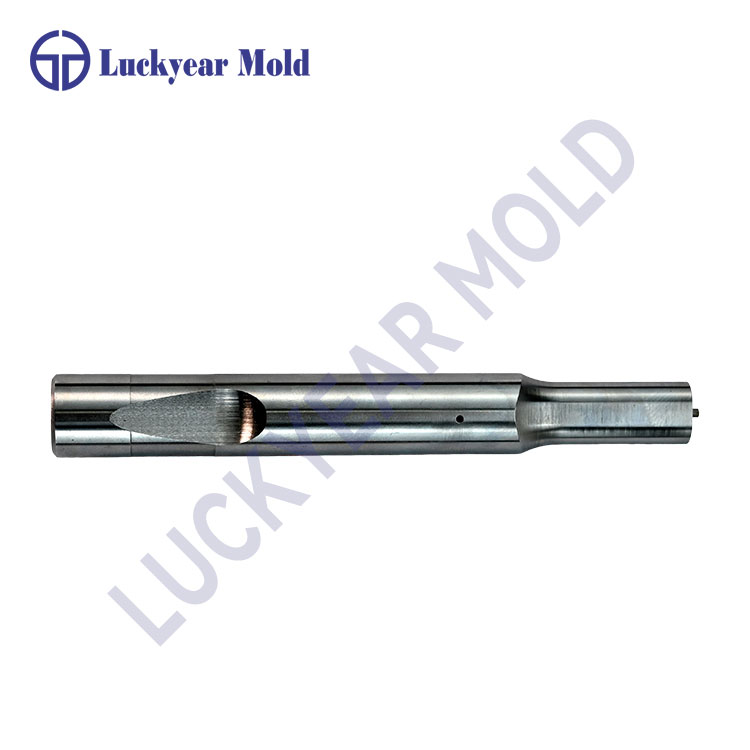
Table of Contents
- How Do Precision Ball Lock Punches Fit into Tooling Systems?
- How Are Product Parameters Defined and Interpreted?
- How Can Precision Ball Lock Punches Improve Process Stability?
- How Will Precision Ball Lock Punches Evolve with Manufacturing Trends?
- How Do Common Questions About Precision Ball Lock Punches Get Answered?
How Do Precision Ball Lock Punches Fit into Tooling Systems?
Precision Ball Lock Punches are engineered as replaceable punch components designed to work with ball lock retainers and punch holders. Their primary role is to perform repetitive punching, blanking, or forming operations while allowing rapid punch changeover without dismantling the entire die set. This design logic supports high-efficiency production environments where downtime control and dimensional consistency are critical.
In a typical tooling system, the punch body interfaces with a hardened ball lock mechanism. This mechanism secures the punch axially and radially, ensuring consistent alignment during press cycles. When removal is required, the punch can be released using a standard extraction tool, enabling fast maintenance and minimizing press idle time.
From a system-integration perspective, Precision Ball Lock Punches are commonly used in:
- Progressive die assemblies
- Transfer die systems
- Compound die configurations
- High-speed stamping lines
The modular nature of ball lock punch systems allows tooling designers to standardize punch dimensions while customizing cutting profiles. This balance between standardization and flexibility is one of the core reasons for their widespread industrial adoption.
How Are Product Parameters Defined and Interpreted?
Understanding technical parameters is essential when selecting Precision Ball Lock Punches. Each parameter directly influences tool life, press compatibility, and finished part quality. The following table summarizes commonly referenced specifications and their functional implications.
| Parameter | Typical Range | Technical Significance |
|---|---|---|
| Shank Diameter | 6 mm – 25 mm | Determines compatibility with punch holders and load capacity |
| Overall Length | 40 mm – 150 mm | Affects stroke clearance and die stack height |
| Cutting Edge Tolerance | ±0.002 mm | Controls dimensional accuracy of punched parts |
| Material | High-speed steel / Carbide | Defines wear resistance and application suitability |
| Surface Treatment | TiN, TiCN, AlCrN | Improves friction control and service life |
Each of these parameters should be evaluated based on press tonnage, material thickness, and production volume. For example, tighter cutting tolerances are essential for electrical components, while heavier shank diameters are preferred for structural metal stamping.
How Can Precision Ball Lock Punches Improve Process Stability?
Process stability in stamping and forming operations is influenced by tool alignment, wear consistency, and changeover reliability. Precision Ball Lock Punches contribute to stability by maintaining repeatable positioning through their locking interface. This reduces lateral movement during press cycles and helps control burr formation.
Another contributing factor is predictable wear behavior. Because punches can be removed individually, worn components can be replaced without disturbing adjacent tooling elements. This localized maintenance approach supports consistent output quality across long production runs.
Additionally, standardized punch bodies allow engineers to focus optimization efforts on punch tips and coatings rather than redesigning entire tooling assemblies. This approach aligns with lean manufacturing principles and structured preventive maintenance planning.
How Will Precision Ball Lock Punches Evolve with Manufacturing Trends?
Manufacturing trends such as high-mix low-volume production, advanced materials, and digital tooling management are influencing the evolution of Precision Ball Lock Punches. Increased demand for quick die reconfiguration is driving tighter dimensional standards and expanded size ranges.
Material innovation is also shaping future punch development. Advanced powder metallurgy steels and micro-grain carbides are being adopted to address higher-strength alloys and thinner sheet materials. At the same time, next-generation coatings are improving thermal stability under high-speed press conditions.
From a system perspective, integration with tool monitoring solutions is becoming more common. Punch identification markings and dimensional traceability support predictive maintenance strategies, reducing unplanned downtime and extending overall tooling system efficiency.
How Do Common Questions About Precision Ball Lock Punches Get Answered?
How should Precision Ball Lock Punches be selected for different materials?
Selection should consider material hardness, thickness, and production volume. Softer materials may allow standard high-speed steel punches, while high-strength alloys often require carbide options with advanced coatings.
How often should Precision Ball Lock Punches be replaced?
Replacement intervals depend on stroke count, material type, and cutting clearance. Regular inspection of edge wear and burr formation provides practical indicators for replacement timing.
How does clearance affect the performance of Precision Ball Lock Punches?
Proper clearance balances cutting force and edge life. Insufficient clearance increases wear and press load, while excessive clearance can lead to dimensional inconsistency and edge deformation.
References
ISO 8020 – Punches and Die Components Standard
Industrial Tooling Design Handbook, Metal Forming Section
Manufacturing Engineering Journal, Tooling Systems Analysis
As global manufacturers continue to refine tooling efficiency and production reliability, Precision Ball Lock Punches remain a critical component within modular die systems. Luckyear provides engineered punch solutions aligned with international standards and evolving industrial requirements. For application-specific guidance or technical consultation, contact us to discuss tooling configurations tailored to operational objectives.
