How Are Pneumatic Scissors Used Across Industrial Cutting Scenarios?
2025-12-19
Abstract
Pneumatic scissors are air-powered cutting tools widely adopted in manufacturing, fabrication, and assembly environments where precision, efficiency, and operator consistency are critical. This article provides a structured and professional examination of pneumatic scissors, focusing on how they operate, how their technical parameters influence performance, how they are deployed across industries, and how they are evolving alongside automation and sustainable manufacturing trends. Written from an objective, third-person perspective, the content is designed to support search visibility, technical evaluation, and informed procurement decisions.
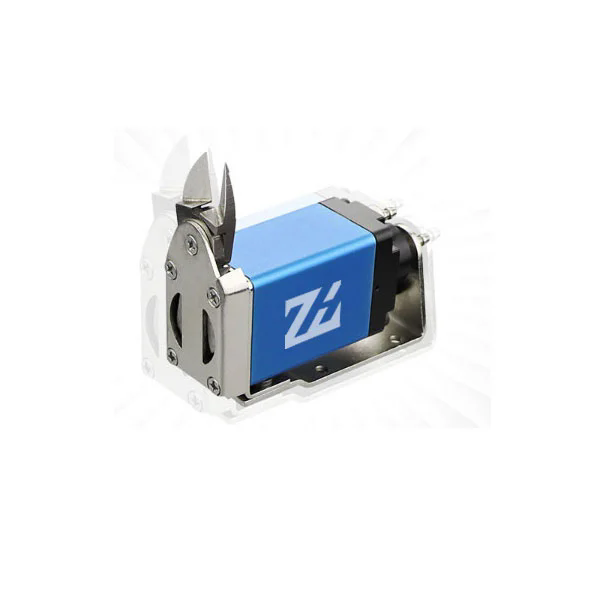
Table of Contents
- 1. How Do Pneumatic Scissors Work in Industrial Environments?
- 2. How Should Pneumatic Scissors Be Selected Based on Technical Parameters?
- 3. How Are Pneumatic Scissors Applied Across Different Industries?
- 4. How Will Pneumatic Scissors Develop With Future Manufacturing Trends?
Outline
- Product overview and core operating principles
- Technical parameters and performance indicators
- Industry-specific applications and use cases
- Frequently asked questions (Q&A)
- Future development and brand perspective
1. How Do Pneumatic Scissors Work in Industrial Environments?
Pneumatic scissors are cutting tools driven by compressed air, converting pneumatic energy into linear or oscillating blade motion. Unlike manual scissors or electrically powered cutting tools, pneumatic scissors rely on a continuous airflow supplied by an air compressor. This design allows for stable cutting force, reduced operator fatigue, and consistent performance over extended operating cycles.
The core mechanism consists of an air inlet, control valve, pneumatic cylinder, and cutting blades. When compressed air enters the tool body, it activates the internal piston, which drives the blades through a shearing motion. The exhaust air is released through dedicated ports to maintain pressure balance and operational stability.
In industrial environments, pneumatic scissors are commonly integrated into workstations where compressed air infrastructure already exists. Their lightweight construction and high cycle rate make them suitable for repetitive cutting tasks involving sheet metal, aluminum, plastics, composites, textiles, rubber, and light wire assemblies.
From a process standpoint, pneumatic scissors are valued for predictable cutting depth, clean edges, and minimal thermal impact on materials. This makes them particularly effective in applications where material deformation or heat distortion must be avoided.
2. How Should Pneumatic Scissors Be Selected Based on Technical Parameters?
Selecting pneumatic scissors requires careful evaluation of technical parameters rather than relying solely on general tool classification. Each parameter directly affects cutting efficiency, tool lifespan, and compatibility with specific materials.
Below is a consolidated overview of key product parameters commonly used to evaluate professional pneumatic scissors:
| Parameter | Typical Range | Technical Significance |
|---|---|---|
| Operating Air Pressure | 0.4 – 0.6 MPa | Determines cutting force and stability during continuous operation |
| Air Consumption | 3 – 6 CFM | Impacts compressor load and energy efficiency |
| Cutting Capacity | 0.8 – 1.6 mm (steel equivalent) | Defines maximum material thickness per pass |
| Blade Material | High-speed steel / Alloy steel | Affects durability and edge retention |
| Stroke Speed | 2,500 – 3,500 strokes/min | Controls productivity and cut smoothness |
| Tool Weight | 0.8 – 1.5 kg | Influences ergonomics and operator fatigue |
In addition to these parameters, ergonomic design, trigger responsiveness, and exhaust direction play a significant role in real-world usability. For high-volume operations, consistent airflow quality and proper filtration are essential to maintain internal seal integrity and blade alignment.
A professional evaluation process typically aligns material characteristics with cutting capacity, then verifies air system compatibility. This approach reduces downtime and ensures predictable cutting outcomes.
Common Questions About Pneumatic Scissors
Q: How do pneumatic scissors differ from electric cutting tools?
A: Pneumatic scissors use compressed air rather than electrical motors, resulting in lighter tool weight, reduced heat generation, and higher tolerance for continuous industrial use. They are also safer in environments where electrical sparks must be avoided.
Q: How often do pneumatic scissors require maintenance?
A: Maintenance intervals depend on usage intensity and air quality. Under standard industrial conditions, regular lubrication and blade inspection are recommended weekly, while seal replacement is typically required after extended operational cycles.
Q: How can cutting accuracy be maintained over time?
A: Cutting accuracy is preserved through proper blade alignment, consistent air pressure, and timely replacement of worn components. Using filtered and dry compressed air significantly extends tool stability.
3. How Are Pneumatic Scissors Applied Across Different Industries?
Pneumatic scissors are utilized across a wide range of industries due to their adaptability and consistent cutting behavior. In metal fabrication, they are used for trimming sheet metal edges, preparing components for welding, and modifying lightweight panels during assembly.
In the automotive sector, pneumatic scissors support interior trimming, insulation cutting, and prototype adjustments where speed and repeatability are required. Their compact form allows access to confined areas without compromising control.
The appliance and electronics industries rely on pneumatic scissors for cutting thin aluminum housings, copper laminates, and composite insulation layers. The absence of heat buildup is particularly valuable when working near sensitive components.
Textile and composite manufacturing environments use pneumatic scissors for layered cutting operations, enabling clean separation without fiber fraying. This ensures dimensional consistency and reduces secondary processing.
Across these industries, pneumatic scissors are often paired with standardized air systems, making them easy to deploy, replace, and scale across production lines.
4. How Will Pneumatic Scissors Develop With Future Manufacturing Trends?
As manufacturing environments continue to emphasize efficiency, automation, and sustainability, pneumatic scissors are evolving accordingly. Tool manufacturers are focusing on improved air efficiency, reduced vibration, and modular blade systems to support diverse applications.
Integration with semi-automated workstations is becoming increasingly common. Pneumatic scissors are now designed to function within guided fixtures and robotic-assisted setups, allowing precise control while retaining manual flexibility.
From a sustainability perspective, longer service life and recyclable components are gaining importance. Optimized air flow designs reduce energy consumption at the compressor level, aligning with broader operational cost reduction strategies.
Within this context, brands such as Zongheng continue to refine pneumatic scissors to meet evolving industrial requirements, balancing performance consistency with durability and adaptability. Product development increasingly reflects real-world production feedback rather than purely theoretical performance metrics.
For organizations seeking stable cutting solutions that align with modern manufacturing expectations, pneumatic scissors remain a relevant and scalable option.
To explore specifications, application guidance, or customized solutions, please contact us to discuss operational requirements and technical support options in detail.