How Are Macor Ceramics Parts Used Across Precision Industries?
2025-12-19
Abstract
Macor Ceramics Parts are widely recognized as high-performance machinable glass-ceramic components used in demanding industrial and scientific environments. This article provides a comprehensive technical analysis of Macor Ceramics Parts, focusing on material composition, mechanical and thermal parameters, machining behavior, and real-world applications. Through structured “how”-based inquiries, the content explores how these components support precision engineering, how design engineers specify Macor parts, and how future manufacturing trends may influence their adoption. The discussion is intended for engineers, procurement professionals, and technical decision-makers seeking authoritative guidance aligned with global search behavior and professional reading habits.
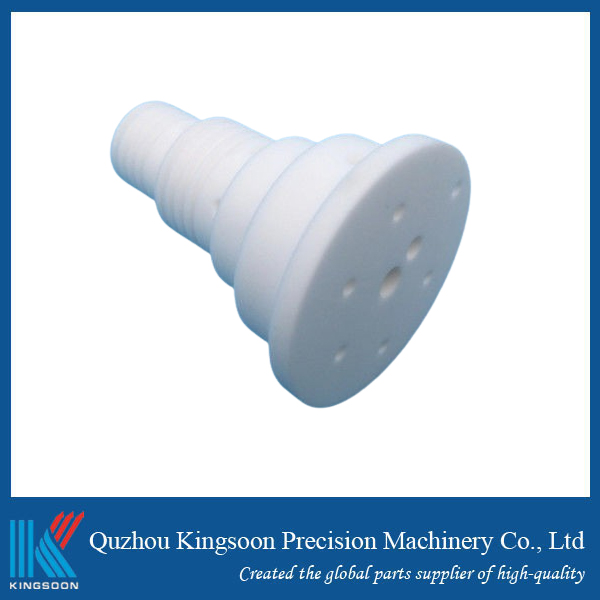
Table of Contents
- 1. How Do Macor Ceramics Parts Function as Machinable Glass-Ceramics?
- 2. How Are Macor Ceramics Parts Specified and Engineered?
- 3. How Are Macor Ceramics Parts Applied in Key Industries?
- 4. How Will Macor Ceramics Parts Evolve with Future Manufacturing Trends?
1. How Do Macor Ceramics Parts Function as Machinable Glass-Ceramics?
Macor Ceramics Parts are manufactured from a synthetic glass-ceramic material composed primarily of fluorophlogopite mica crystals embedded within a glassy matrix. This unique microstructure enables a rare combination of properties: ceramic-level thermal stability and electrical insulation, paired with metal-like machinability using conventional tools.
The central purpose of Macor Ceramics Parts is to deliver dimensional precision in applications where polymers fail due to temperature limits and metals are unsuitable because of electrical conductivity or magnetic interference. These components are commonly produced in tight tolerances, supporting precision assemblies without post-sintering shrinkage.
Unlike traditional technical ceramics that require diamond grinding, Macor can be milled, drilled, turned, and threaded using standard carbide tooling. This characteristic significantly reduces lead times during prototyping and small-batch production while maintaining predictable performance under thermal and electrical stress.
Material Parameters of Macor Ceramics Parts
| Parameter | Typical Value | Engineering Relevance |
|---|---|---|
| Maximum Continuous Use Temperature | 800°C (1470°F) | Supports high-temperature insulation and fixtures |
| Short-Term Temperature Limit | 1000°C (1830°F) | Allows intermittent exposure in thermal processes |
| Dielectric Strength | 40 kV/mm | Ensures reliable electrical insulation |
| Coefficient of Thermal Expansion | 9.3 × 10⁻⁶ /°C | Compatible with many metals and alloys |
| Density | 2.52 g/cm³ | Provides structural stability without excess weight |
| Porosity | 0% | Prevents outgassing in vacuum environments |
These parameters explain how Macor Ceramics Parts maintain performance consistency across vacuum systems, high-voltage assemblies, and thermally cycled equipment.
2. How Are Macor Ceramics Parts Specified and Engineered?
Specifying Macor Ceramics Parts begins with a clear understanding of functional requirements rather than purely mechanical strength. Engineers typically select Macor when electrical insulation, thermal resistance, and dimensional stability outweigh the need for high fracture toughness.
Design considerations often emphasize wall thickness, internal radii, and threaded features. Because Macor behaves similarly to cast iron during machining, stress concentrations must be managed through proper geometry rather than relying on ductility.
How Does Machinability Influence Design Freedom?
Macor Ceramics Parts enable rapid iteration because components can be machined directly from solid stock without green-state processing. This allows engineers to validate designs quickly, especially in research environments and pilot production lines.
Threads, slots, and complex three-dimensional contours can be integrated into a single part, reducing assembly complexity. This capability supports precision alignment in optical benches, semiconductor tooling, and sensor housings.
Common Questions About Macor Ceramics Parts
Q: How do Macor Ceramics Parts compare to alumina in precision applications?
A: Macor Ceramics Parts offer significantly easier machining and faster turnaround times, while alumina provides higher hardness and wear resistance. Macor is typically selected for complex geometries and low-volume precision components.
Q: How do Macor Ceramics Parts perform in vacuum environments?
A: Due to zero porosity and low outgassing characteristics, Macor Ceramics Parts are well-suited for high-vacuum and ultra-high-vacuum systems, including analytical instruments and semiconductor chambers.
Q: How should Macor Ceramics Parts be handled during installation?
A: Proper torque control and uniform clamping are essential. Although dimensionally stable, Macor is a ceramic material and should be protected from point loads and impact during assembly.
3. How Are Macor Ceramics Parts Applied in Key Industries?
Macor Ceramics Parts are widely adopted across industries where material versatility reduces system-level complexity. Their applications are often driven by functional integration rather than standalone performance metrics.
Semiconductor and Electronics Manufacturing
In semiconductor processing equipment, Macor Ceramics Parts serve as electrical isolators, wafer supports, and precision spacers. Their thermal stability supports plasma environments and elevated process temperatures without dimensional drift.
Medical and Analytical Equipment
Analytical instruments rely on Macor Ceramics Parts for sensor isolation, probe alignment, and thermal barriers. The material’s non-magnetic and non-conductive nature ensures signal integrity in sensitive measurement systems.
Aerospace and Research Laboratories
Aerospace testing fixtures and laboratory apparatus frequently integrate Macor Ceramics Parts to manage heat flow and electrical isolation in compact assemblies. Their machinability supports custom experimental setups with short development cycles.
4. How Will Macor Ceramics Parts Evolve with Future Manufacturing Trends?
The future adoption of Macor Ceramics Parts is closely linked to trends in customization, rapid prototyping, and hybrid material systems. As precision equipment becomes more specialized, demand for machinable ceramics with predictable behavior is expected to increase.
Advanced CNC techniques and digital design workflows continue to expand the feasible geometries achievable with Macor. This evolution supports tighter integration between ceramic components and metal or composite assemblies.
Sustainability considerations are also influencing material selection. The ability to machine Macor without extensive energy-intensive sintering processes aligns with efficiency-driven manufacturing strategies.
Within this evolving landscape, KINGSOON continues to support global customers by supplying Macor Ceramics Parts manufactured to precise specifications and consistent quality standards. Through controlled machining processes and application-focused expertise, KINGSOON addresses the growing need for reliable ceramic components in advanced industries.
For organizations evaluating Macor Ceramics Parts for current or future projects, technical consultation and application-specific guidance can significantly reduce development risk.
Contact Us
To discuss specifications, custom machining capabilities, or application requirements for Macor Ceramics Parts, please contact the KINGSOON technical team for detailed support and product information.