How Are Grooved Flange Stainless Steel Fittings Used in Industrial Piping Systems?
2025-12-22
Article Abstract
Grooved Flange Stainless Steel Fittings play a critical role in contemporary industrial piping systems by providing secure, efficient, and adaptable connections for fluid, gas, and process media. This article presents an in-depth professional analysis of how these fittings are designed, specified, installed, and evaluated across industries. It outlines key product parameters, common application scenarios, installation logic, and frequently asked technical questions. The objective is to clarify how grooved flange stainless steel fittings contribute to system reliability, operational efficiency, and long-term infrastructure planning.
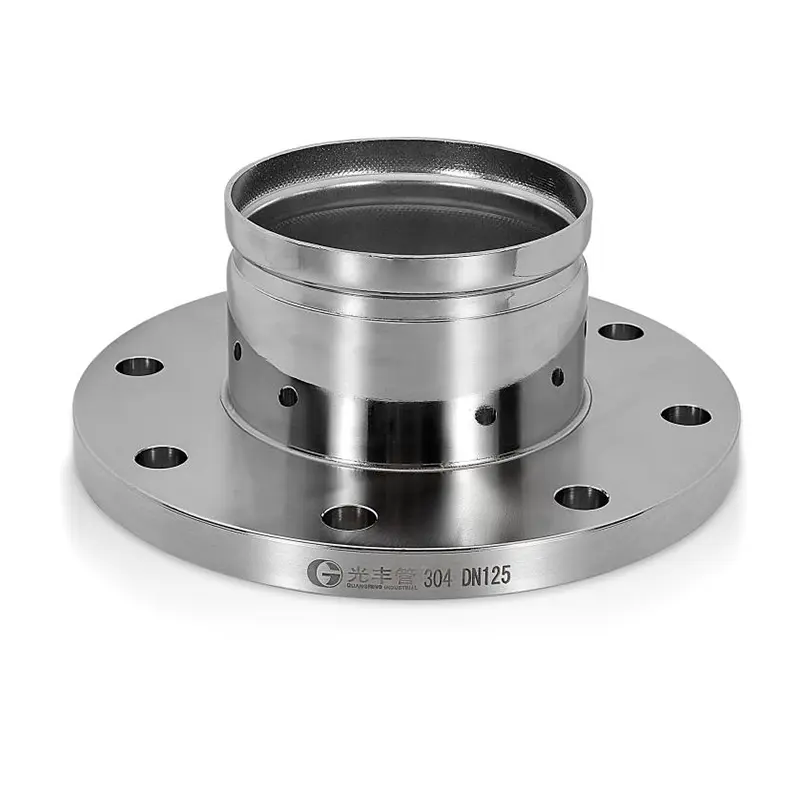
Table of Contents
- 1. How Do Grooved Flange Stainless Steel Fittings Work?
- 2. How Are Product Parameters Defined and Selected?
- 3. How Are Grooved Flange Stainless Steel Fittings Applied Across Industries?
- 4. How Should These Fittings Be Installed and Maintained?
- Common Questions About Grooved Flange Stainless Steel Fittings
- Industry Outlook and Brand Introduction
Outline
This article is structured into four major technical nodes: functional principles, product parameters, application logic, and installation methodology. Each node builds upon the previous one to provide a coherent understanding of how grooved flange stainless steel fittings integrate into modern piping systems.
1. How Do Grooved Flange Stainless Steel Fittings Work?
Grooved flange stainless steel fittings are mechanical pipe connection components designed to join pipes, valves, pumps, and equipment through a grooved-end interface combined with a flange face. The groove is typically machined or roll-formed near the pipe end, allowing a coupling or flange adapter to engage securely.
Unlike traditional welded or threaded connections, grooved flange systems rely on mechanical engagement and elastomeric sealing. This approach enables controlled flexibility, vibration absorption, and faster assembly without compromising pressure integrity. Stainless steel as the base material further enhances corrosion resistance, temperature tolerance, and structural stability.
From a system design perspective, the working principle focuses on load distribution. Axial forces generated by internal pressure are transferred through the flange and coupling housing, while the gasket ensures a tight seal. This balanced mechanical behavior explains why grooved flange stainless steel fittings are widely adopted in both static and dynamic piping environments.
2. How Are Product Parameters Defined and Selected?
Selecting appropriate grooved flange stainless steel fittings requires careful evaluation of dimensional standards, material grades, pressure ratings, and surface treatments. These parameters are governed by international standards and project-specific requirements.
| Parameter | Specification Range | Technical Notes |
|---|---|---|
| Material Grade | SS304, SS316, SS316L | Selected based on corrosion resistance and media compatibility |
| Nominal Diameter | DN25 – DN600 | Aligned with pipe size standards such as ANSI and ISO |
| Pressure Rating | PN10 – PN40 / Class 150 – 300 | Defined by flange thickness and coupling design |
| Groove Type | Standard or Heavy-Duty Groove | Determines axial load capacity and flexibility |
| Surface Finish | Pickled, Polished, Passivated | Affects corrosion resistance and hygiene compliance |
These parameters ensure that grooved flange stainless steel fittings can be accurately matched to system demands, reducing installation risk and lifecycle costs.
3. How Are Grooved Flange Stainless Steel Fittings Applied Across Industries?
Grooved flange stainless steel fittings are used extensively in industries where system reliability and adaptability are critical. In fire protection systems, they enable rapid installation and modification. In HVAC networks, they accommodate thermal expansion and contraction. In chemical and food processing plants, stainless steel ensures cleanliness and resistance to aggressive media.
The adaptability of these fittings also supports modular construction approaches. Prefabricated piping sections can be assembled off-site and connected on-site with minimal hot work. This application logic aligns with modern industrial construction practices focused on safety, efficiency, and quality control.
Furthermore, grooved flange stainless steel fittings support system scalability. As production capacity or facility layout changes, piping networks can be reconfigured without extensive cutting or welding, preserving asset value over time.
4. How Should These Fittings Be Installed and Maintained?
Proper installation begins with accurate groove preparation and inspection. Groove dimensions must conform to specified tolerances to ensure correct coupling engagement. Gaskets should be selected according to media temperature and chemical properties.
During assembly, uniform bolt tightening is essential to achieve even gasket compression. Maintenance primarily involves periodic visual inspection and torque verification. Compared to welded systems, maintenance activities are simplified, as components can be disassembled without destructive processes.
Common Questions About Grooved Flange Stainless Steel Fittings
Q: How do grooved flange stainless steel fittings compare to welded flanges?
A: Grooved flange stainless steel fittings allow faster installation, reduced labor, and easier maintenance while maintaining reliable pressure performance under specified ratings.
Q: How is stainless steel grade selection determined?
A: Grade selection depends on operating temperature, corrosion exposure, and regulatory requirements, with SS316 commonly chosen for aggressive environments.
Q: How do these fittings handle vibration and thermal movement?
A: The mechanical coupling design provides controlled flexibility, reducing stress concentration and improving system longevity.
Industry Outlook and Brand Introduction
As industrial infrastructure continues to prioritize efficiency, safety, and adaptability, grooved flange stainless steel fittings are positioned as a practical solution for evolving piping requirements. Their compatibility with modern construction methods and international standards ensures continued relevance across global markets.
Guangfeng has developed its grooved flange stainless steel fittings portfolio with a focus on dimensional accuracy, material traceability, and consistent manufacturing quality. Through ongoing process optimization and technical refinement, Guangfeng supports diverse industrial applications with dependable connection solutions.
For project consultation, technical documentation, or product selection support, interested parties are encouraged to contact us to discuss specific application requirements and system objectives.