How Are CNC Turning Parts Manufactured and Why Do They Matter?
2026-04-23
Abstract
CNC Turning Parts are essential components in modern precision manufacturing, widely used across automotive, aerospace, medical devices, electronics, and industrial machinery. This article explains the complete manufacturing workflow of CNC turning, common customer challenges, material selection, quality control standards, and how to choose a reliable supplier. It aims to help buyers and engineers make informed decisions when sourcing precision turned components, ensuring cost efficiency, dimensional accuracy, and long-term performance stability.
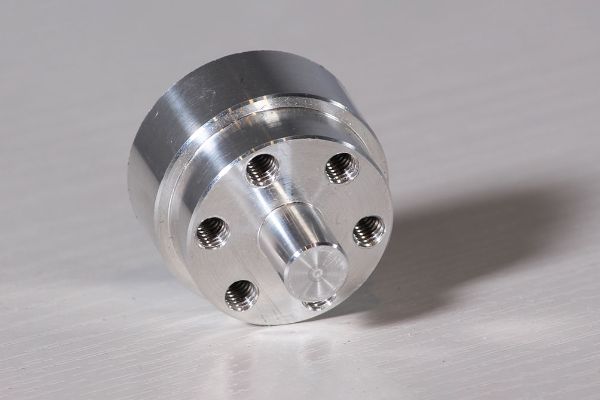
Table of Contents
- Article Outline
- What Are CNC Turning Parts?
- Manufacturing Process Explained
- Common Materials Used
- Tolerance and Quality Control
- Customer Pain Points
- How to Choose a Supplier
- Applications Across Industries
- Material & Process Comparison
- Key Advantages
- Frequently Asked Questions
- Conclusion
Article Outline
This article is structured to guide readers from basic understanding to advanced procurement insights:
- Introduction to CNC turning technology
- Step-by-step production workflow
- Material selection strategy
- Precision and inspection standards
- Supply chain and sourcing challenges
- Industrial use cases
- Supplier evaluation framework
What Are CNC Turning Parts?
CNC Turning Parts are precision-machined components created using Computer Numerical Control (CNC) lathes. In this process, the raw material rotates while cutting tools remove excess material to achieve the desired geometry. These parts are typically cylindrical and include shafts, pins, bushings, spacers, and threaded components.
Unlike manual machining, CNC turning ensures repeatability, high accuracy, and scalability, making it a preferred solution for both prototyping and mass production.
Manufacturing Process Explained
The production of CNC turning components involves several controlled stages:
- 1. Material Preparation: Raw bars or rods are selected based on mechanical requirements.
- 2. CNC Programming: Engineers design tool paths using CAD/CAM software.
- 3. Machine Setup: Tools, fixtures, and spindles are configured.
- 4. Turning Operation: Material rotates while cutting tools shape it precisely.
- 5. Secondary Operations: Drilling, threading, milling, or polishing may be applied.
- 6. Inspection: Dimensional accuracy is verified using precision instruments.
Each stage is critical in ensuring consistent quality and minimizing production defects.
Common Materials Used
Material selection directly influences durability, cost, and performance. Common choices include:
- Aluminum alloys – lightweight and corrosion-resistant
- Stainless steel – high strength and excellent durability
- Brass – excellent machinability and conductivity
- Carbon steel – cost-effective and strong
- Engineering plastics (POM, PTFE) – low friction applications
Tolerance and Quality Control
Precision is the core value of CNC turning. High-end components often require tolerances within ±0.01 mm or even tighter. Quality control systems typically include:
- Coordinate Measuring Machines (CMM)
- Optical comparators
- Micrometers and calipers
- Surface roughness testers
Strict inspection ensures interchangeability and reduces assembly issues for end users.
Customer Pain Points
Many buyers face recurring challenges when sourcing CNC Turning Parts:
- Inconsistent dimensional accuracy across batches
- Long lead times affecting production schedules
- High costs for low-volume orders
- Communication gaps with overseas suppliers
- Lack of material traceability and certification
Addressing these issues requires not only advanced machining capability but also strong engineering support and quality systems.
How to Choose a Supplier
Selecting the right manufacturing partner is critical. Key evaluation factors include:
- Production capability and CNC equipment level
- Quality certification (ISO standards)
- Engineering support and customization ability
- Experience in your industry sector
- Transparent pricing and communication
A reliable supplier reduces risk, improves consistency, and supports long-term product development.
Applications Across Industries
CNC Turning Parts are used in a wide range of industries:
- Automotive systems (engine shafts, transmission pins)
- Aerospace assemblies (precision fasteners)
- Medical equipment (surgical instrument components)
- Electronics (connector pins, housings)
- Industrial machinery (rollers, bushings)
Material & Process Comparison
| Material | Strength | Machinability | Typical Use |
|---|---|---|---|
| Aluminum | Medium | Excellent | Aerospace, Electronics |
| Stainless Steel | High | Moderate | Medical, Automotive |
| Brass | Medium | Excellent | Electrical Components |
| Carbon Steel | High | Good | Industrial Machinery |
Key Advantages
- High dimensional accuracy and repeatability
- Efficient mass production capability
- Reduced material waste
- Flexible design customization
- Wide material compatibility
Frequently Asked Questions
Q1: What is the difference between CNC turning and CNC milling?
CNC turning rotates the workpiece while cutting tools remain stationary, whereas milling rotates the cutting tool itself.
Q2: What tolerances can CNC turning achieve?
High-quality machining can achieve tolerances as tight as ±0.005 mm depending on equipment and material.
Q3: Is CNC turning suitable for small batch production?
Yes, it is cost-effective for both prototypes and large-scale production runs.
Q4: How long does production usually take?
Lead time depends on complexity, but typically ranges from a few days to several weeks.
Conclusion
CNC Turning Parts play a critical role in modern industrial systems where precision, durability, and consistency are required. Understanding the manufacturing process, material selection, and supplier evaluation criteria helps buyers significantly reduce risk and improve product performance.
Ningbo Dyfab Industry Co., Ltd. specializes in precision CNC machining solutions and provides high-quality CNC Turning Parts tailored to diverse industrial applications. With advanced equipment and strict quality control systems, the company supports global clients with stable and reliable production services.
For detailed product specifications and customization support, visit our CNC turning parts page. If you are looking for a dependable manufacturing partner, contact us today to discuss your requirements and receive a tailored quotation.