How Are Casting Link Connectors Manufactured and Applied Across Industrial Systems?
2025-12-17
Casting Link Connectors are precision-engineered mechanical components widely used to join, articulate, or transfer loads between interconnected parts in industrial systems. These connectors are typically produced through controlled casting processes to ensure dimensional accuracy, structural integrity, and repeatable performance in demanding environments. They are commonly deployed in material handling systems, lifting assemblies, conveyor mechanisms, agricultural equipment, construction machinery, and customized mechanical linkages where reliable connection and controlled movement are required.
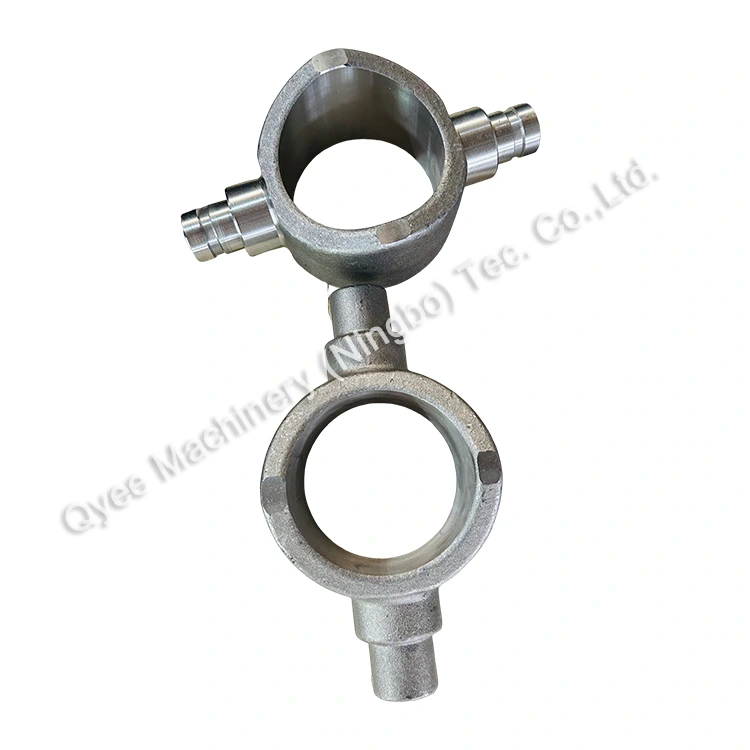
Casting Link Connectors are typically manufactured using sand casting, investment casting, or permanent mold casting, depending on the complexity of geometry and performance requirements. Post-casting processes such as heat treatment, machining, surface finishing, and dimensional inspection are integral to ensuring consistency across production batches. These steps collectively allow the connector to meet industry standards for load-bearing, fatigue resistance, and environmental durability.
Technical Parameters and Product Specifications
The performance of a Casting Link Connector is directly influenced by its material composition, dimensional tolerances, and mechanical properties. Accurate specification is essential to ensure compatibility with the target system and compliance with operational demands. Below is a consolidated overview of common technical parameters associated with industrial-grade Casting Link Connectors.
| Parameter Category | Typical Specification Range |
|---|---|
| Base Material | Carbon steel, alloy steel, ductile iron |
| Casting Method | Sand casting / Investment casting |
| Nominal Size Range | 10 mm – 120 mm |
| Load Rating | Defined by material grade and cross-section |
| Heat Treatment | Normalized, quenched & tempered (optional) |
| Surface Finish | Shot blasted, machined, or coated |
| Dimensional Tolerance | ISO or ASTM casting tolerance standards |
| Operating Temperature | -20°C to +200°C (material dependent) |
Material selection is driven by the required balance between tensile strength, impact resistance, and machinability. Carbon steel is frequently selected for general industrial use, while alloy steel variants are specified for higher load conditions or cyclic stress environments. Ductile iron may be applied where vibration damping and casting economy are prioritized.
Dimensional accuracy is maintained through controlled mold design and secondary machining operations. Critical interfaces such as pin holes, bearing surfaces, or threaded features are often machined to tighter tolerances to ensure proper alignment during assembly. Surface treatments may be applied to manage corrosion exposure or to improve compatibility with adjacent components.
Application Logic and System Integration
Casting Link Connectors function as mechanical intermediaries that allow controlled articulation or fixed linkage between components. Their application logic depends on the nature of load transfer, movement constraints, and environmental exposure within the system. In static load applications, the connector primarily serves as a structural link, while in dynamic systems it must accommodate repeated motion and stress cycles.
In conveyor and material handling systems, Casting Link Connectors are used to join chain assemblies or pivoting arms, enabling smooth directional changes without compromising load stability. In lifting and rigging assemblies, they act as connection points between hooks, shackles, or load-bearing frames. Agricultural machinery often incorporates these connectors within adjustable linkages to support variable geometry under field conditions.
From a system integration perspective, correct connector selection involves evaluating load paths, shear forces, and potential misalignment. Engineers typically assess whether the connector will experience axial tension, bending moments, or torsional stress. This analysis informs decisions regarding cross-sectional geometry, fillet radius design, and safety factor margins.
Common Questions About Casting Link Connectors
Q: How is the appropriate size of a Casting Link Connector determined for a specific application?
A: Size selection is based on calculated working load limits, anticipated peak loads, and dynamic factors such as shock or vibration. Engineers reference material yield strength, connector geometry, and applicable safety factors to ensure the selected size maintains structural integrity throughout its service life.
Q: How do casting processes affect the consistency of Casting Link Connectors in large-scale production?
A: Consistency is achieved through standardized mold design, controlled pouring temperatures, and rigorous quality inspection protocols. Non-destructive testing, dimensional verification, and metallurgical analysis are commonly used to confirm that each production batch meets defined mechanical and dimensional criteria.
These considerations underscore the importance of aligning connector specifications with real-world operating conditions rather than relying solely on nominal dimensions.
Market Evolution, Manufacturing Direction, and Brand Integration
The industrial connector market continues to evolve alongside broader trends in automation, equipment modularization, and global supply chain integration. Casting Link Connectors are increasingly specified as standardized components within modular systems, allowing for simplified maintenance and scalable equipment design. Manufacturers are also investing in improved casting simulation tools and process controls to enhance dimensional predictability and reduce material waste.
Another notable direction is the alignment of connector production with international compliance frameworks. Buyers increasingly expect traceable material certifications, documented inspection records, and compatibility with globally recognized standards. This shift influences how Casting Link Connectors are specified, produced, and validated across different regions.
Within this landscape, Qyee positions its Casting Link Connectors as precision-produced components supported by controlled manufacturing processes and application-focused engineering support. By emphasizing parameter transparency and production consistency, Qyee addresses the practical requirements of industrial users who prioritize reliability and long-term system compatibility.
For organizations seeking detailed specifications, customization options, or technical consultation regarding Casting Link Connectors, direct communication with the Qyee team is encouraged. Contact us to discuss application requirements, production capabilities, and sourcing considerations tailored to specific industrial projects.