Does a Stainless Steel Compressed Air Filter Housing Eliminate the Need for a Separate Coalescing Filter
2026-07-01
When designing a compressed air system, engineers and plant managers often ask whether a Stainless Steel Compressed Air Filter Housing can perform double duty—removing both particulates and liquid aerosols—without the help of a standalone coalescing filter. The short answer is no, but the long answer reveals why pairing both components, especially with a high-quality brand like Supreme, delivers the cleanest, most reliable air for critical applications.
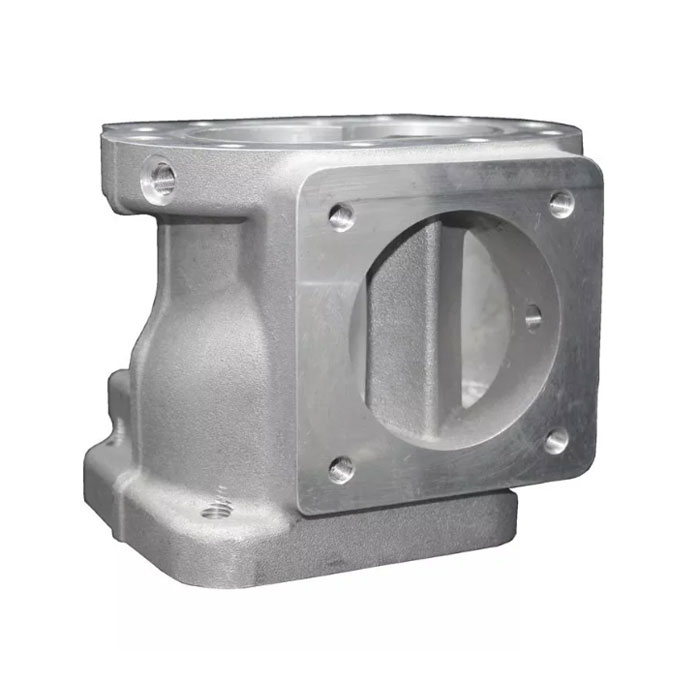
The Core Function: Particulate Filtration vs. Coalescing
To understand why one housing cannot replace the other, we must distinguish between two fundamentally different contamination challenges.
| Filter Type | Primary Target | Mechanism | Typical Efficiency |
|---|---|---|---|
| Particulate (Dry) | Solid dust, rust, pipe scale | Direct interception & impingement | 1–5 micron nominal |
| Coalescing (Oil/Water) | Submicron liquid aerosols (0.01–0.1 µm) | Brownian diffusion & coalescence | 99.99% at 0.01 µm |
A Stainless Steel Compressed Air Filter Housing is an excellent vessel for holding either filter element type. However, the housing itself does not filter air—the internal element does. If you install a particulate-grade element inside a Supreme Stainless Steel Compressed Air Filter Housing, it will remove solid particles but allow liquid oil and water to pass through as an aerosol. Conversely, a coalescing element inside the same housing will remove liquids but quickly clog if subjected to large solid loads.
Why a Single Housing Cannot Replace a Dedicated Coalescer
Three engineering realities prevent the elimination of a separate coalescing filter:
-
Different Filtration Media – Particulate elements use depth media (cellulose or synthetic fibers) with larger pores. Coalescing elements use multi-layer borosilicate microfiber that actively merges tiny droplets into larger ones that gravity drains.
-
Drainage Requirements – Coalescing elements require a dedicated condensate drain port at the bottom of the housing to remove accumulated liquid. Standard particulate housings often lack this feature.
-
Pressure Drop Trade-off – A coarse particulate filter has a low initial pressure drop (~0.2 bar), while a high-efficiency coalescer runs at ~0.5–0.7 bar. Combining both functions into one element would create an unacceptably high differential pressure or compromise on both tasks.
Supreme addresses this by offering modular Stainless Steel Compressed Air Filter Housing solutions with interchangeable element baskets, allowing you to stage a particulate pre-filter followed by a coalescing final filter in series—but never in a single vessel.
The Optimal System Configuration
For ISO 8573-1 Class 1.2.1 air quality (oil-free, dry, particle-free), the industry standard remains a multi-stage approach:
-
Stage 1 – General-purpose particulate filter (removes bulk solids)
-
Stage 2 – Coalescing filter (removes oil/water aerosols)
-
Stage 3 – Adsorption dryer (if dew point is required)
Using a Supreme Stainless Steel Compressed Air Filter Housing at each stage ensures corrosion resistance, high-temperature tolerance (up to 150°C), and compatibility with aggressive chemicals—making it ideal for food, pharmaceutical, and offshore applications. But the coalescing stage remains non-negotiable.
FAQ: Common Questions About Stainless Steel Compressed Air Filter Housing
Q1: Can I install a coalescing element inside any standard Stainless Steel Compressed Air Filter Housing?
A1: Not necessarily. A dedicated coalescing housing must include a proper condensate collection sump and an automatic or manual drain port at the lowest point. Standard particulate housings often have a side-entry/exit flow path that does not allow gravitational separation of coalesced liquids. Supreme designs their Stainless Steel Compressed Air Filter Housing with a clear distinction: models ending in "-C" are coalescing-ready, featuring a 20-mm drain opening and a baffle plate to prevent re-entrainment. Always verify the housing's internal geometry before installing a coalescing element—otherwise, the collected liquid will pool and be re-atomized downstream.
Q2: How does a Stainless Steel Compressed Air Filter Housing affect the service life of a downstream coalescing filter?
A2: Placing a high-quality particulate pre-filter (5-micron or better) inside a Stainless Steel Compressed Air Filter Housing upstream of the coalescer can extend the coalescing element's life by 300–400%. Solid particles act as nucleation sites that accelerate coalescer fouling. By removing 95% of particulates first, you allow the coalescing media to focus solely on aerosols. Supreme recommends replacing the pre-filter element every 6 months and the coalescing element every 12 months under normal operating conditions—but these intervals double when both are housed in corrosion-proof stainless steel housings that prevent internal rust from adding secondary contamination.
Q3: Is a Stainless Steel Compressed Air Filter Housing mandatory for high-temperature coalescing applications?
A3: While not mandatory, it is highly recommended. Standard aluminum housings lose structural integrity above 80°C and can suffer from galvanic corrosion when condensate is acidic. A Stainless Steel Compressed Air Filter Housing (grade 304 or 316L) maintains full pressure rating up to 200°C and withstands steam sterilization. For coalescing applications involving hot, wet compressed air (e.g., from an oil-flooded screw compressor after a heatless dryer), Supreme engineers consistently specify stainless steel to avoid catastrophic housing failure. Remember: the coalescing element itself may tolerate high temperatures, but the housing must match that tolerance—and stainless steel is the only cost-effective choice for long-term reliability above 100°C.
Cost-Benefit Analysis: One Housing vs. Two
Some suppliers market "multi-functional" housings, but these are essentially larger vessels with dual element stages inside. This design still uses two separate elements—they just share one shell. The true question is whether you can skip coalescing entirely. For applications like pneumatic tools or blow-off nozzles, a 5-micron particulate filter may suffice. But for instrumentation, painting, or medical air, coalescing is absolutely mandatory.
| Application | Particulate Only | Particulate + Coalescing |
|---|---|---|
| Tire inflation | Acceptable | Overkill |
| Spray painting | Risk of pinholes | Required |
| Food packaging | Microbial risk | Required |
| CNC machine spindles | Bearing wear | Required |
Final Verdict
A Stainless Steel Compressed Air Filter Housing is an essential investment in durability, hygiene, and long-term cost control—but it does not eliminate the need for a separate coalescing filter. The housing is the container; the coalescing element is the specialized tool. Together, they form a powerhouse pair. Supreme offers matched housing and element sets that guarantee optimal flow, drainage, and filtration efficiency, backed by full traceability and pressure-test certification.
Ready to spec the right configuration for your system? Contact our engineering team at Supreme today for a customized drawing, pressure-drop calculation, and element selection guide. We will help you design a multi-stage solution that meets your quality standard without overspending. Reach us through our website or call your local distributor—your clean air starts with the right housing, and we are here to make that choice simple.