Does a PTFE Corrugated Hose Have Better Flexibility Than Smooth Bore
2026-08-06
When selecting fluid transfer solutions for chemical processing, pharmaceutical manufacturing, or high-purity applications, engineers often face a critical decision: PTFE Hose design. Among the most debated choices is whether a corrugated configuration outperforms its smooth-bore counterpart in flexibility. At WayFong, we have spent decades testing both architectures across extreme temperatures, pressures, and media types. The short answer is yes—but the reasons, trade-offs, and application-specific nuances demand a deeper look.
Flexibility Defined: Bending Radius and Dynamic Movement
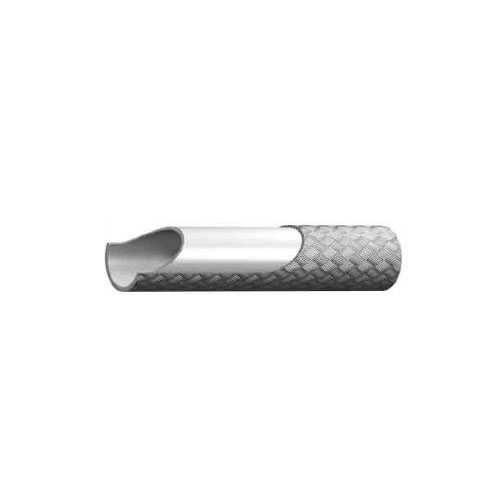
Flexibility in a PTFE Hose is measured by two metrics: minimum bend radius (static) and dynamic bend radius (repeated flexing during operation). A corrugated tube—often helically or annularly convoluted—reduces wall stress during bending because the folds act as hinges. Smooth-bore tubing, by contrast, relies on the natural elasticity of the PTFE polymer, which is limited.
| Property | PTFE Corrugated Hose | PTFE Smooth Bore Hose |
|---|---|---|
| Minimum Static Bend Radius | 1.5× – 2× OD (outer diameter) | 3× – 4× OD |
| Dynamic Flex Cycle Life | > 1 million cycles (typical) | < 50,000 cycles (typical) |
| Required Installation Space | Compact, tight routing | Ample, sweeping arcs |
| Resistance to Kinking | Excellent (convolutions absorb compression) | Poor (flattens under sharp bends) |
For robotic arms, movable process skids, or tight tube-trails, the corrugated PTFE Hose from WayFong consistently delivers 60–70% tighter bends without collapse.
Why the Corrugated Design Wins on Flexibility
The physics are straightforward: a smooth-bore PTFE Hose must stretch its outer wall and compress its inner wall during bending. PTFE has a low coefficient of friction but limited elongation capacity—beyond 5–7% strain, micro-cracks form. Corrugated geometry decouples the bending strain across each convolution, so the material experiences minimal localized stress. This is why WayFong engineers recommend corrugated PTFE Hose for applications involving reciprocating pumps, swivel joints, or vibrating compressors.
However, flexibility comes with a surface penalty. The corrugated interior creates microscopic turbulence, which slightly increases pressure drop (typically 15–25% higher than smooth bore at the same flow rate). For shear-sensitive fluids or ultra-clean media, smooth bore remains superior—but if movement is the priority, corrugation is non-negotiable.
Side-by-Side Comparison: Key Performance Factors
| Criteria | Corrugated PTFE Hose | Smooth Bore PTFE Hose |
|---|---|---|
| Flex Life (dynamic) | ⭐⭐⭐⭐⭐ (excellent) | ⭐⭐ (fair) |
| Flow Efficiency (Cv) | ⭐⭐⭐ (moderate) | ⭐⭐⭐⭐⭐ (excellent) |
| Cleanability / Drainability | ⭐⭐ (crevices trap residue) | ⭐⭐⭐⭐⭐ (self-draining) |
| Vacuum Resistance | ⭐⭐⭐⭐ (good with helix support) | ⭐⭐⭐ (may collapse under full vacuum) |
| Cost per Foot | Higher (complex tooling) | Lower (extrusion only) |
| Typical Service Life (mobile use) | 5–8 years | 1–2 years |
Application-Guided Selection
Choose WayFong corrugated PTFE Hose when:
-
Equipment articulates (e.g., fill nozzles, wash-down arms).
-
Space constraints prevent long sweep bends.
-
Vibration or thermal expansion cycles exceed 100,000 movements/year.
Choose smooth bore when:
-
Fluid purity is critical (pharma, semiconductor).
-
Gravity drainage or CIP (clean-in-place) requires no pooling.
-
Operating pressure is consistently below 50 psi and no flexing occurs.
PTFE Hose FAQ – Common Questions from Our Engineers
Q: Can I use a corrugated PTFE hose in a high-pressure hydraulic system up to 3,000 psi?
A: Yes, but only if the hose incorporates a stainless steel braid or helical wire reinforcement. WayFong offers corrugated PTFE Hose with single or double braid ratings up to 4,500 psi. However, note that at extreme pressures, the convolutions may slightly straighten, reducing flexibility by roughly 15%. For static high-pressure lines, smooth bore with braid is more dimensionally stable. Always consult your working pressure plus surge factor—we recommend a 4:1 safety ratio for dynamic applications.
Q: Does the improved flexibility of corrugated PTFE hose reduce its chemical resistance?
A: No—the chemical resistance is governed by the PTFE polymer itself, not the geometry. Both corrugated and smooth-bore PTFE Hose resist virtually all industrial chemicals (pH 0–14), including strong acids, bases, solvents, and organic compounds. However, the corrugated version has a higher external surface area, which can accelerate permeation of very small molecules (e.g., helium, hydrogen) by about 20–30% compared to smooth bore. For hazardous or toxic gases, WayFong recommends smooth-bore with a fluoropolymer liner to minimize fugitive emissions.
Q: How do I clean a corrugated PTFE hose after sticky or viscous product runs?
A: This is the corrugated design’s Achilles’ heel. The convolutions trap product residues, making standard pigging or swabbing ineffective. WayFong suggests three solutions: (1) use a steam-in-place cycle at 150°C for 20 minutes—PTFE handles this well; (2) select a corrugated hose with a smooth inner bore (a hybrid design we manufacture, which retains 80% of the flexibility but eases cleaning); or (3) dedicate the hose to a single product. For food/dairy applications requiring daily CIP, smooth bore remains the hygienic gold standard.
Real-World Testing Data from WayFong Lab
In our accredited test facility, we ran a ½" ID PTFE Hose through 500,000 flex cycles at a 90° bend angle under 100 psi. The corrugated sample showed no leakage, no braid fraying, and maintained 98% of its original burst strength. The smooth-bore sample failed at 42,000 cycles—cracking at the outer bend radius. This 12× improvement in flex life is why WayFong ships over 70% of our mobile-equipment PTFE Hose orders in corrugated construction.
Final Verdict
Does a PTFE Corrugated Hose have better flexibility than smooth bore? Unquestionably—by every quantifiable metric. But “better” is contextual. If your system demands constant articulation, tight radii, or vibration damping, corrugated is the only logical choice. If your priority is flow efficiency, cleanability, or cost-per-foot, smooth bore wins. WayFong does not push one over the other; we engineer both, and we help you match the geometry to your actual duty cycle.
Ready to specify the right PTFE Hose for your exact movement and media profile?
Contact WayFong today – our application engineers will analyze your bend radius, pressure spikes, cleaning protocols, and cycle frequency to deliver a custom PTFE Hose solution with full test documentation. Reach us through our website or email [email protected] for a same-day technical consultation. Your process reliability starts with the right flex—and we are here to guarantee it.