Do Greece Natural Sponges Really Improve Exfoliation and Skin Health
2026-11-10
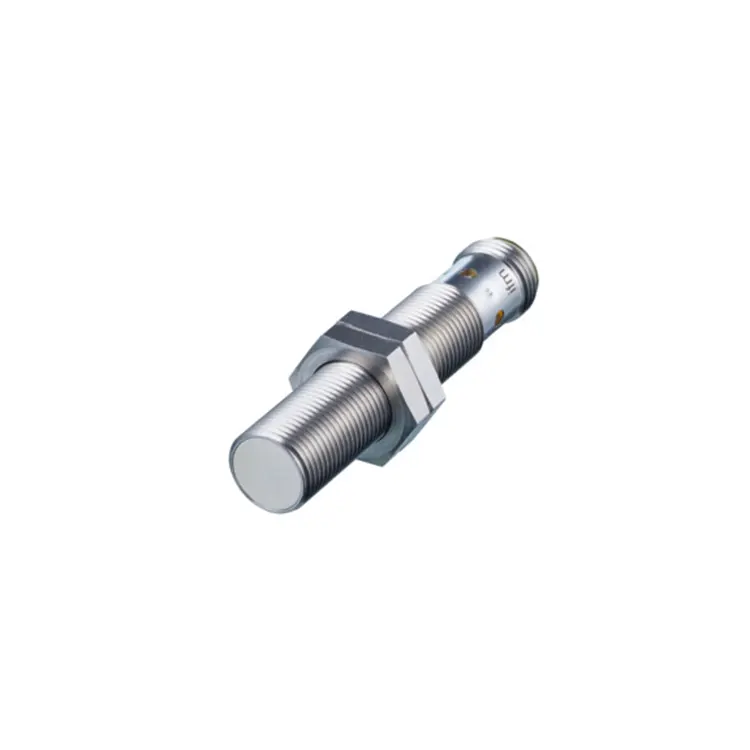
The IFM IFS304 is a compact inductive proximity sensor trusted across automated production lines, and getting it right starts with disciplined installation and adjustment. At Floating Light, we specify and commission these sensors daily, so the setup steps below reflect field-proven practice rather than theory. A correctly configured IFM IFS304 delivers stable switching, long service life, and predictable integration with PLC and safety architectures.
Understand the Sensor Before You Mount It
The IFM IFS304 is a non-flush-mountable inductive sensor with a PNP normally-open output and a rated sensing range of 4 mm (operating range typically 0 to 3.24 mm). Knowing these figures prevents the most common commissioning error: mounting the sensor where ambient metal or a recessed bracket intrudes on the sensing field.
| Parameter | Typical Value | Setup Implication |
|---|---|---|
| Sensing range (Sn) | 4 mm | Keep target at 0.8–1.2 × Sn |
| Mounting | Non-flush | Maintain free zone around the sensing face |
| Output | PNP NO | Verify PLC input is sinking type |
| Supply voltage | 10–36 V DC | Use regulated 24 V DC supply |
| Protection | IP67 | Seal cable entry, avoid standing water |
| Housing | M12 threaded barrel | Use two nuts or a clamped bracket |
Step-by-Step Setup and Adjustment
-
Verify the electrical interface first. Confirm the supply is 24 V DC and that the PLC input card is compatible with a PNP normally-open signal. Reverse-polarity protection exists, but incorrect input type causes silent failures.
-
Mount with the correct clearance. Because the IFM IFS304 is non-flush, keep a metal-free zone around the sensing face — roughly three times the sensing range from adjacent conductive surfaces.
-
Set the target gap. Position the target at 40–60% of the rated sensing range (approximately 1.6–2.4 mm). This gives margin for mechanical tolerance and thermal drift.
-
Check the LED indicator. The switching-status LED confirms detection. If the LED flickers with the machine running, the gap is marginal — increase it.
-
Test at production speed. Cycle the mechanism at full rate and confirm no missed or double counts on the PLC counter.
-
Document the final position. Record the gap and bracket torque so future maintenance can restore the same setup.
Tuning for Optimal Performance
| Adjustment Goal | Recommended Action | Risk If Ignored |
|---|---|---|
| Maximum repeatability | Fix gap at 50% of Sn | Chatter and false triggers |
| EMI resistance | Route cable away from drives | Random switching |
| Cable strain relief | Clamp within 100 mm of sensor | Intermittent open circuit |
| Contamination control | Wipe sensing face monthly | Reduced range |
| Long-term stability | Torque nuts to spec, re-check quarterly | Position drift |
Frequently Asked Questions
What supply voltage does the IFM IFS304 require?
The IFM IFS304 operates on 10–36 V DC and is normally used on a regulated 24 V DC industrial supply; always confirm the exact rated range on the unit's datasheet before wiring.
Why does my IFM IFS304 stay permanently switched on?
A permanent-on condition usually means a metal object or bracket is inside the non-flush keep-out zone, the target gap is below the release point, or the output is wired to an incompatible input type — inspect mounting clearance first, then verify the PNP NO wiring against the PLC card.
Can the IFM IFS304 be mounted flush in steel?
No. The IFM IFS304 is a non-flush design, so embedding it in steel reduces or eliminates the sensing range; use a non-metallic or correctly recessed bracket and maintain the specified metal-free zone.
How often should the IFM IFS304 be inspected?
In typical factory conditions, inspect the sensing face and bracket torque monthly and re-verify the target gap quarterly, increasing frequency in high-vibration or high-contamination areas.
Conclusion
Reliable detection with the IFM IFS304 comes down to correct clearance, a gap near half the rated range, and disciplined electrical checks. Floating Light supports customers through sensor selection, mounting design, and on-site commissioning so that every IFM IFS304 performs as specified from day one.
Contact us at Floating Light today to discuss your IFM IFS304 application, request a configuration review, or schedule commissioning support for your production line.