Can Zinc Die Casting Be Used for High-Volume Production
2026-10-21
When manufacturers evaluate processes for large-scale manufacturing, Zinc Die Casting consistently emerges as a proven, cost-effective solution — and Xuxing has built its reputation on delivering exactly that. High-volume production demands speed, repeatability, and tight quality control, and Zinc Die Casting meets all three. With multi-cavity tooling, automated casting cells, and robust process windows, Xuxing helps customers move from prototype to millions of parts without compromising dimensional accuracy or surface quality.
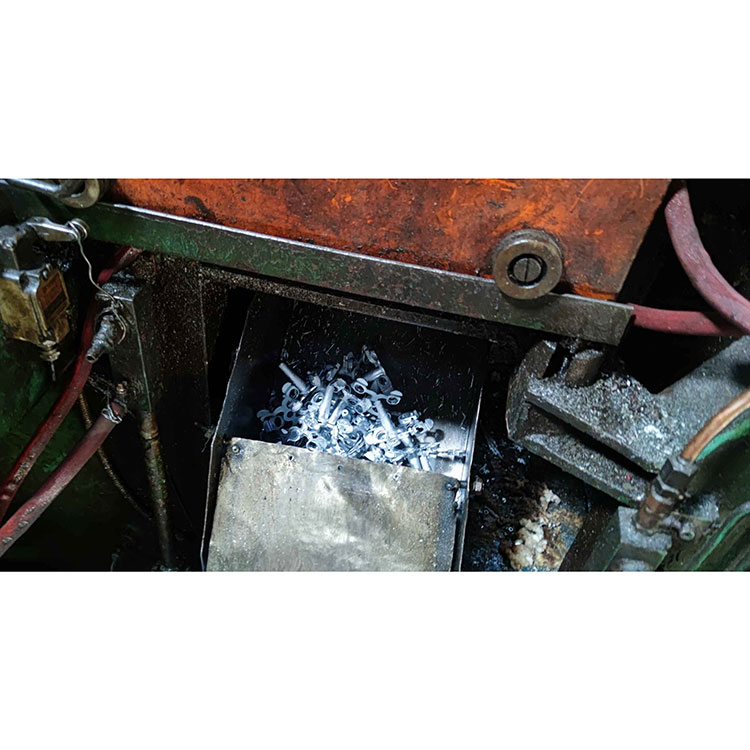
Why Zinc Die Casting Excels in High-Volume Production
Zinc Die Casting is inherently suited to high-volume runs because of its low melting temperature, excellent fluidity, and long tool life. These characteristics translate into faster cycle times, fewer defects, and lower per-part costs as volumes increase. Xuxing leverages these advantages with hot-chamber machines that operate continuously and reliably.
| Factor | Benefit for High-Volume Production |
|---|---|
| Low melting point (≈385–390°C) | Faster cycles, less thermal wear on tooling |
| Excellent castability | Thin walls, complex geometry, fewer rejects |
| Long mold life | 500,000–1,000,000+ shots with proper maintenance |
| Multi-cavity tooling | Higher output per cycle |
| Recyclable material | Stable material costs at scale |
Key Capabilities That Support Volume Manufacturing
Xuxing structures its production around the requirements of high-volume programs. The table below summarizes the core capabilities that make Zinc Die Casting viable at scale.
| Capability | Typical Specification |
|---|---|
| Cavitation | 2–8 cavities (up to 16 for small parts) |
| Cycle time | 15–60 seconds depending on part size |
| Tolerances | ±0.05 mm typical, tighter with secondary operations |
| Annual capacity | Millions of parts per year across automated cells |
| In-house tooling | Designed and maintained by Xuxing |
Critical Success Factors for High-Volume Runs
-
Tool design and maintenance — robust dies with proper cooling and ejection reduce downtime.
-
Process monitoring — real-time control of shot pressure, temperature, and cycle time ensures consistency.
-
Automation — robotic extraction and trimming improve throughput and repeatability.
-
Quality systems — SPC, dimensional inspection, and material traceability support long production runs.
Xuxing integrates all four factors into a single production workflow, which is why customers trust Zinc Die Casting for automotive, electronics, and hardware components produced in large quantities.
Frequently Asked Questions
Q: How many parts can a single Zinc Die Casting mold produce?
A: A well-maintained die typically lasts 500,000 to over 1,000,000 shots, and Xuxing provides in-house tool maintenance to maximize mold life throughout a high-volume program.
Q: Is Zinc Die Casting cost-effective for large production quantities?
A: Yes — tooling costs are amortized over large volumes, and fast cycle times plus low scrap rates make Zinc Die Casting one of the most economical choices for high-volume parts.
Q: What lead time should be expected for high-volume Zinc Die Casting orders?
A: Initial tooling usually takes 4–8 weeks, after which Xuxing supports recurring production with scheduled deliveries and capacity planning aligned to annual volumes.
Conclusion
Zinc Die Casting is not only suitable for high-volume production — it is one of the most efficient processes available for it. With the right tooling, automation, and quality systems, Xuxing delivers consistent, scalable results for customers worldwide. Contact us today to discuss your high-volume Zinc Die Casting project and receive a tailored production plan.