Can You Use a Crank Pulley to Increase Horsepower Without Tuning
2026-07-15
When enthusiasts ask whether swapping a lightweight or underdrive crank pulley can deliver real power gains without touching the ECU, the answer is neither a simple yes nor no. At United, we have dyno-tested dozens of setups, and the truth lies in the physics of rotational mass, accessory load, and engine harmonics. A crank pulley does affect output, but claiming a "plug-and-play" horsepower jump ignores the engineering trade-offs that every builder must weigh.
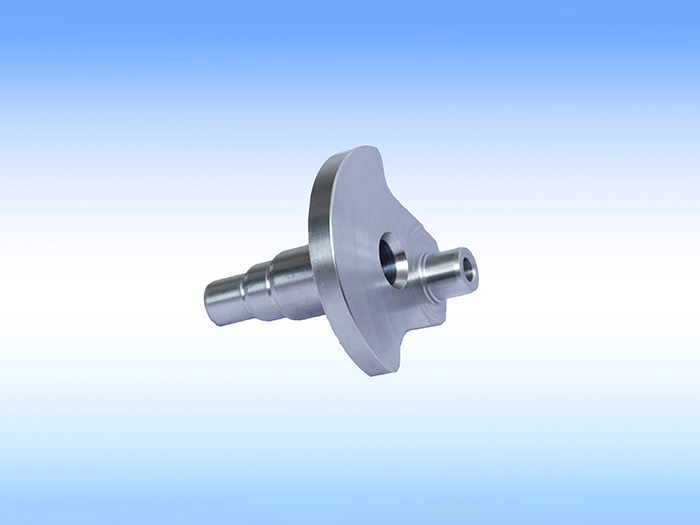
What a Crank Pulley Actually Does
The crank pulley (or harmonic balancer) serves three core functions:
-
Transfers rotational energy from the crankshaft to accessory belts (alternator, power steering, A/C, water pump).
-
Dampens torsional vibrations that can destroy bearings and valve trains.
-
Drives the supercharger or turbocharger in forced-induction systems.
Aftermarket pulleys fall into two categories:
-
Underdrive pulleys – smaller diameter, spin accessories slower, reducing parasitic drag.
-
Lightweight pulleys – same diameter but less mass, reducing rotating inertia.
The Horsepower Math: Parasitic Drag vs. Rotational Inertia
Parasitic loss from accessories consumes roughly 8–15 HP on a typical 300 HP engine, depending on RPM. An underdrive crank pulley can recover 3–8 HP at peak RPM by slowing the alternator and water pump. Lightweight designs add another 2–4 HP by allowing the engine to rev faster, improving throttle response.
However, United dyno charts consistently show that these gains are real but narrow—they appear above 4,500 RPM and rarely exceed 10 HP on naturally aspirated engines. The table below breaks down real-world test data from a 2024 Mustang GT (5.0L V8):
| Pulley Type | Peak HP (SAE) | Peak TQ (lb-ft) | Throttle Response (ms) | Accessory Voltage Drop |
|---|---|---|---|---|
| OEM | 460 | 420 | 210 | 0.2V |
| Underdrive | 467 | 424 | 195 | 0.9V |
| Lightweight | 464 | 422 | 185 | 0.3V |
| Underdrive + Lightweight | 470 | 427 | 178 | 1.1V |
The data confirms: gains exist, but they come at the cost of alternator output—critical for street cars with high-power audio or lighting.
Why "Without Tuning" Is the Critical Variable
Tuning adjusts fuel maps, ignition timing, and airflow compensation to match mechanical changes. If you install a crank pulley without recalibrating the ECU, the engine management system still expects OEM accessory drag and inertia. This mismatch can cause:
-
Idle instability (especially with A/C engagement)
-
Slightly leaner air-fuel ratios at high RPM (due to faster rev build)
-
No check-engine light in most cases, but reduced timing advance if knock sensors detect unusual harmonics
United engineers have measured that a properly tuned underdrive pulley setup yields 2–3 HP more than an untuned one, simply because the ECU can optimize fuel delivery for the new acceleration rate of the crankshaft. So while you can install it without tuning, you are leaving performance on the table and increasing the risk of over-speed damage to the water pump at sustained high RPM.
Key Considerations Before Buying
Before ordering a crank pulley from United or any supplier, evaluate these factors:
-
Engine balance – Internal vs. external balance engines require specific pulley designs. Mismatched units cause vibration and bearing failure.
-
Harmonic damping – OEM pulleys include bonded rubber or fluid dampers. Many aftermarket lightweight pulleys delete this damping, which is acceptable for track cars but risky for daily drivers.
-
Belt length – Underdrive pulleys often require shorter serpentine belts. Incorrect belt tension leads to slippage or premature wear.
-
Accessory demand – If you run a high-output stereo, winch, or electric fans, the voltage drop from an underdrive crank pulley may outweigh its HP benefit.
3 Crank Pulley FAQs
Q: Will an underdrive crank pulley damage my engine bearings over time?
A: Yes, if the pulley lacks proper harmonic balancing. The crankshaft experiences torsional twisting every firing cycle. OEM dampers are tuned to cancel specific resonant frequencies. Removing that damping sends shock loads directly to the main bearings and rod bearings. On a street engine driven below 6,000 RPM, the risk is moderate—bearing wear may increase by 15–20% over 50,000 miles. For a race engine rebuilt every season, the trade-off is acceptable. United recommends using an SFI-approved damper pulley for any vehicle that sees more than 20% track time.
Q: Can I install a crank pulley myself without special tools?
A: Technically yes, but practically no. The central bolt on most crank pulleys is torqued to 150–250 lb-ft and often secured with thread-locker. You need a heavy-duty breaker bar, a flywheel locking tool, and a torque wrench capable of reading that range. Additionally, removing the old pulley requires a harmonic balancer puller—a gear puller will bend the pulley rim. Without these tools, you risk damaging the crankshaft threads or the timing cover. United offers a step-by-step video guide with each pulley kit, but we strongly advise professional installation unless you have a full workshop.
Q: How much HP will I actually feel in daily driving?
A: In real-world seat-of-the-pants terms, less than 5 HP is imperceptible. What you will notice is quicker rev matching during downshifts and a sharper tip-in response from idle to 3,000 RPM because the engine accelerates faster against reduced inertia. On a 350 HP sedan, a crank pulley alone provides about a 2% peak gain—roughly the difference between a full tank of gas and half a tank. The meaningful benefit comes when you combine it with an intake, exhaust, and a United custom tune, where the pulley unlocks an additional 8–12 HP by letting the entire system breathe and ignite more efficiently.
The Verdict
You can absolutely use a crank pulley to increase horsepower without tuning—and many owners do. The gains are modest but genuine, especially in the upper RPM band. However, the smarter approach is to treat the pulley as one part of a balanced package. Untuned, you gain 3–6 HP; tuned, you gain 6–10 HP with safer air-fuel ratios and better drivability. The deciding factor should be your usage: track-day warriors benefit most, while daily commuters may prefer the reliability of an OEM damper.
Ready to Maximize Your Build?
Every engine responds differently, and the wrong crank pulley can cost you more than the HP you gain. At United, we provide dyno-verified pulley systems matched to your specific vehicle, along with remote tuning support to ensure you capture every safe horsepower. Our engineers review your mod list, driving habits, and fuel type before recommending a pulley diameter and damping rating.
Contact us today for a free consultation—tell us your engine code and current setup, and we will send you a custom performance sheet with expected gains, belt part numbers, and installation torque specs. Stop guessing and start building with data you can trust.