Can the Same Electric Pole Mold Be Used for Both Round and Tapered Concrete Poles
2026-06-26
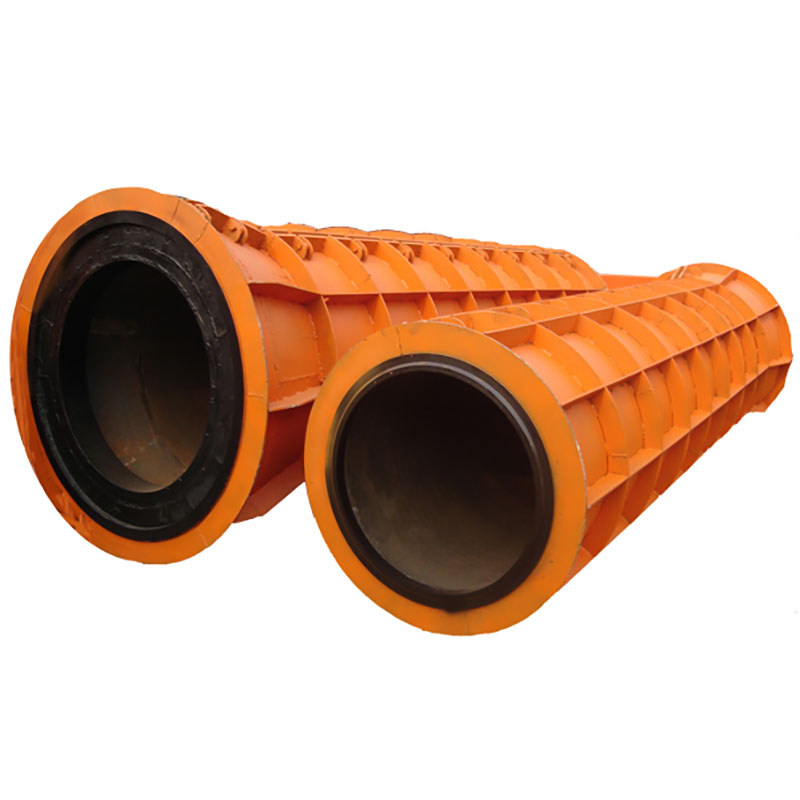
Concrete utility poles are the backbone of modern power distribution, telecommunications, and lighting infrastructure. When procurement managers and production engineers evaluate new equipment, one question repeatedly surfaces: Can the same Electric Pole Mold handle both round and tapered pole geometries? The short answer is technically yes—but the practical reality involves critical trade-offs in design, dimensional accuracy, and long-term return on investment. At BaoLai, we have engineered over 200 Electric Pole Mold systems for clients across Southeast Asia, Africa, and South America, and we consistently advise that a single-mold-fits-all approach rarely delivers optimal results without significant modifications.
Understanding the Core Geometric Differences
Before answering the central question, we must distinguish between the two pole types.
| Feature | Round Concrete Poles | Tapered Concrete Poles |
|---|---|---|
| Cross-section | Constant circular diameter from base to tip | Gradually decreasing diameter (typically 1:75 to 1:100 slope) |
| Reinforcement layout | Symmetrical spiral or longitudinal steel | Asymmetrical steel placement to match bending moment |
| Demolding angle | Straight pull along the axis | Angled or stepped pull requiring split-shell designs |
| Concrete flow behavior | Uniform compaction | Variable wall thickness along the length |
A standard Electric Pole Mold designed for a straight cylinder cannot produce a tapered pole because the internal cavity has no slope allowance. Conversely, a tapered mold cannot cast a true round pole without leaving excessive gap at the top or bottom.
The Hybrid Solution: Adjustable Taper Molds
Some manufacturers offer a convertible Electric Pole Mold with interchangeable inserts or adjustable bottom rings. This design permits limited taper variation—for instance, from 0% to 2% slope—while still accommodating a near-round profile. However, this versatility comes at a cost:
-
Precision loss: Each adjustment introduces mechanical clearances that reduce dimensional repeatability by ±2–3 mm.
-
Extended setup time: Changeovers require 4–6 labor hours, reducing overall equipment effectiveness (OEE).
-
Higher initial investment: A dual-purpose Electric Pole Mold costs 35–50% more than a dedicated single-type mold.
At BaoLai, we recommend this hybrid route only for pilot plants or R&D facilities where production volume does not exceed 500 poles per year. For high-volume industrial operations, dedicated molds remain the industry gold standard.
Critical Factors That Determine Mold Compatibility
To make an informed decision, evaluate these five parameters:
-
Steel shell rigidity – Tapered molds experience uneven internal pressure; the shell must be 20% thicker to prevent bulging.
-
Vibration system placement – External vibrators on a tapered Electric Pole Mold require staggered positions to consolidate concrete uniformly.
-
End ring design – The bottom ring of a tapered mold has a larger diameter than the top ring, making it incompatible with a round mold’s identical end rings.
-
Reinforcement cage clearance – A round cage cannot slide into a tapered cavity without binding midway.
-
Curing cycle – Tapered sections cool faster at the tip, demanding zone-controlled heating—a feature absent in standard round molds.
Real-World Performance Comparison (BaoLai Internal Test Data)
| Parameter | Dedicated Round Mold | Dedicated Taper Mold | Convertible Mold (Same Electric Pole Mold) |
|---|---|---|---|
| Dimensional tolerance | ±0.5 mm | ±0.7 mm | ±2.5 mm |
| Annual output (8-hr shift) | 2,800 poles | 2,500 poles | 1,800 poles |
| Maintenance frequency | Monthly | Monthly | Bi-weekly |
| Rejection rate | 0.8% | 1.2% | 4.5% |
| Tooling lifespan | 12,000 cycles | 10,000 cycles | 6,500 cycles |
As the data shows, using the same Electric Pole Mold for both geometries increases rejection rates nearly sixfold compared to a dedicated round mold. BaoLai engineers have observed that clients who insist on universality often abandon the strategy within 18 months due to rising scrap costs and customer complaints about out-of-spec poles.
Electric Pole Mold FAQ – Common Questions from Buyers
Q1: Can I modify my existing round Electric Pole Mold to produce tapered poles by machining the internal surface?
A: Machining a round mold to introduce a taper is technically possible but economically unwise. The process removes 3–5 mm of steel from the inner wall, weakening the shell and reducing its pressure-bearing capacity. Additionally, the modified Electric Pole Mold will no longer produce true round poles because the machined surface creates an irreversible taper. BaoLai recommends selling your existing mold as used equipment and investing in a new taper-specific design, which will pay for itself within 8–10 months through lower rejection rates.
Q2: What is the minimum production volume that justifies buying separate Electric Pole Mold units for round and tapered poles?
A: Based on BaoLai’s cost-analysis model, the break-even point is 1,200 poles per year per geometry. If your annual demand for round poles exceeds 1,200 units and your tapered pole demand exceeds 1,200 units, separate molds deliver a lower total cost of ownership (TCO) over five years. For volumes below this threshold, outsourcing one of the geometries to a specialized precast partner is more cost-effective than purchasing a convertible Electric Pole Mold that compromises both quality and throughput.
Q3: How do I verify whether a supplier’s universal Electric Pole Mold truly accommodates both shapes without sacrificing concrete strength?
A: Request a factory acceptance test (FAT) with your actual mix design and reinforcement cage. During the test, measure core compressive strength at three points (top, middle, bottom) on both round and tapered castings. A legitimate universal Electric Pole Mold must show strength variation under 5% across all positions. Additionally, ask for ISO 9001:2015 certified inspection reports and third-party ultrasonic thickness tests on the mold shell. BaoLai provides these documents proactively and invites clients to witness live casting trials at our manufacturing facility before placing any order.
The Professional Verdict
Using one Electric Pole Mold for both round and tapered poles is feasible only under three strict conditions: (1) production volume is low, (2) dimensional tolerances are relaxed (>±2 mm), and (3) you accept higher maintenance and scrap rates. For any serious infrastructure project where safety and longevity matter, BaoLai strongly advocates for geometry-dedicated tooling. Our engineering team has developed a modular platform that shares 70% of components between round and taper molds—reducing spare parts inventory without mixing the core cavities—offering a smarter middle ground.
Ready to Specify the Right Electric Pole Mold for Your Project?
Every production line has unique parameters: pole length, concrete grade, curing method, and available floor space. BaoLai provides free dimensional audits and 3D simulation reports to match the ideal Electric Pole Mold to your actual output targets. Our in-house metallurgists and structural engineers collaborate with your team to optimize reinforcement placement, vibrator positioning, and demolding angles—ensuring you never compromise between round and tapered production again.
Contact us today to schedule a virtual plant tour or request a customized quotation. Our technical sales representatives respond within 4 business hours with detailed CAD comparisons and life-cycle cost projections. Let BaoLai help you build the infrastructure that stands straight, strong, and consistent—one precisely engineered pole at a time.