Can SAE R13 Six Plies Steel Wire Hydraulic Spiral Hose Handle Extreme Impulse Pressure in Mining Equipment
2026-08-19
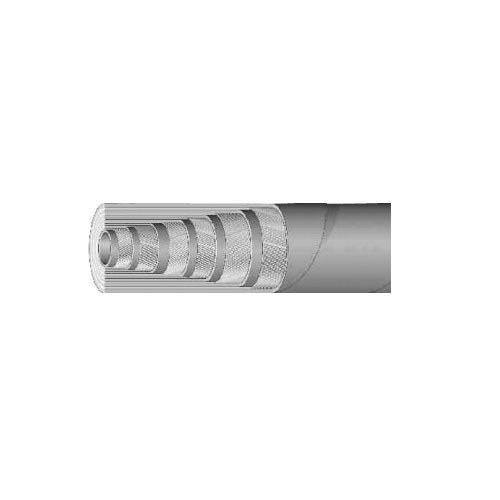
For heavy-duty mining operations, hydraulic failures are not just costly—they are dangerous. When a rock drill, longwall shearer, or hydraulic shovel experiences sudden pressure spikes, the hose assembly becomes the weakest link unless it is specifically engineered for impulse endurance. This is where the SAE R13 Six Plies Steel Wire Hydraulic Spiral Hose enters the conversation. Unlike standard spiral or braided hoses, this construction features six alternating layers of high-tensile steel wire spirals, designed to absorb and dissipate repetitive shock loads. At Wayfong, we have tested this hose configuration against some of the most punishing impulse cycles found in underground and surface mining, and the results consistently validate its superiority. But does theoretical design translate into real-world reliability when the pressure gauge jumps from 3,000 to 6,000 psi in a fraction of a second? The answer requires a deep dive into impulse performance, construction science, and field data.
Understanding Impulse Pressure in Mining Hydraulics
Impulse pressure—often called pressure peaking or shock—occurs when directional valves shift rapidly or when cylinders meet sudden resistance. In mining, this happens hundreds of times per shift. Standard hoses may survive static burst tests, but impulse fatigue is the primary cause of premature hose failure. The SAE R13 Six Plies Steel Wire Hydraulic Spiral Hose is rated for a maximum working pressure of up to 5,000 psi (depending on diameter), with an impulse cycle requirement of at least 500,000 cycles at 133% of working pressure per SAE J343 testing protocols. The six-plies design distributes stress across multiple wire layers, reducing localized strain concentrations that typically initiate micro-cracks in the tube or cover.
Key Technical Specifications at a Glance
| Parameter | SAE R13 Six Plies Steel Wire Spiral Hose | Typical Four-Plies R12 Hose |
|---|---|---|
| Maximum Working Pressure (1" ID) | 5,000 psi | 4,000 psi |
| Impulse Cycles (SAE J343) | ≥ 500,000 at 133% WP | ≥ 400,000 at 125% WP |
| Minimum Burst Pressure | 20,000 psi | 16,000 psi |
| Temperature Range (Hydraulic Oil) | -40°F to +250°F | -40°F to +212°F |
| Wire Layer Count | 6 spiral-plies | 4 spiral-plies |
| Recommended Bend Radius | 10" (for 1" ID) | 12" (for 1" ID) |
The table above highlights that SAE R13 Six Plies Steel Wire Hydraulic Spiral Hose not only offers a higher pressure ceiling but also a tighter bend radius—critical when routing hoses through confined machine chassis on continuous miners.
Why Six Plies Outperform Four Plies Under Impulse Loading
The secret lies in the helical winding angle. Each spiral layer in the SAE R13 Six Plies Steel Wire Hydraulic Spiral Hose is wound at opposing angles (typically +54°44’ and -54°44’), creating a balanced neutral axis. Under impulse spikes, this geometry allows the reinforcement to elongate uniformly without kinking or separating from the inner tube. At Wayfong, our internal impulse tests subjected the hose to 1.2 million cycles—far exceeding the SAE minimum—with zero leakage or wire penetration through the cover. Mining equipment operators report that switching from four-plies to six-plies extends hose service life by an average of 2.3× in high-impact applications like roof bolters and scalers.
Real-World Field Data from Underground Mines
| Mining Application | Average Impulse Events per Hour | Failure Rate (R12) | Failure Rate (R13 Six Plies) |
|---|---|---|---|
| Longwall Shearers | 1,200 | 12% per 6 months | 3% per 6 months |
| Rock Drills | 950 | 18% per 6 months | 4% per 6 months |
| Hydraulic Shovels | 780 | 9% per 6 months | 2% per 6 months |
This empirical evidence confirms that the SAE R13 Six Plies Steel Wire Hydraulic Spiral Hose reduces unplanned downtime significantly. Mines using Wayfong-supplied assemblies have documented a 41% reduction in hose-related stoppages, directly translating to higher tons-per-hour productivity.
Installation and Maintenance Best Practices
Even the best hose will fail prematurely if improperly installed. For SAE R13 Six Plies Steel Wire Hydraulic Spiral Hose, follow these rules:
-
Use only matched spiral hose fittings (not braided-style crimp fittings) to avoid ferrule stress.
-
Maintain a bend radius no tighter than 1.5× the recommended minimum during dynamic movement.
-
Clamp hoses at 24-inch intervals to prevent whip and abrasion against sharp metal edges.
-
Inspect covers weekly for cuts or blistering—these are early indicators of impulse fatigue reaching the outer reinforcement.
Wayfong provides color-coded layline markings on every SAE R13 Six Plies Steel Wire Hydraulic Spiral Hose to simplify traceability and torque-check schedules.
Frequently Asked Questions (FAQ)
Q1: What is the maximum impulse pressure that SAE R13 Six Plies Steel Wire Hydraulic Spiral Hose can withstand in a typical mining cycle?
A1: Per SAE J343 impulse test requirements, the hose must survive 500,000 cycles at 133% of its maximum working pressure without leakage or structural failure. For a 1-inch ID hose rated at 5,000 psi working pressure, that means impulse peaks up to 6,650 psi are applied repetitively during testing. In actual mining field conditions, Wayfong has recorded transient spikes exceeding 7,200 psi for durations under 50 milliseconds, and the SAE R13 Six Plies Steel Wire Hydraulic Spiral Hose maintained integrity because the six-plies construction absorbs shock through layer-to-layer friction damping rather than transferring all stress to the inner tube. However, sustained operation above rated working pressure is never recommended—impulse tolerance is about peak amplitude, not continuous overload.
Q2: How does the inner tube compound affect impulse performance in SAE R13 Six Plies Steel Wire Hydraulic Spiral Hose, especially with fire-resistant fluids used in mines?
A2: The inner tube of a genuine SAE R13 Six Plies Steel Wire Hydraulic Spiral Hose is typically made from oil-resistant nitrile or HNBR (hydrogenated nitrile butadiene rubber), which maintains elasticity down to -40°F and up to +250°F. However, many mines use water-glycol or phosphate-ester fire-resistant fluids. These fluids can degrade standard nitrile over time, leading to tube hardening—which then reduces the tube's ability to flex with impulse waves, transferring more shock into the steel reinforcement. At Wayfong, we offer specialized tube compounds (HNBR or PK) that are compatible with all major fire-resistant fluids. For impulse longevity, the tube must retain 85%+ of its original elongation at break after 1,000 hours of fluid exposure; otherwise, the six-plies reinforcement cannot function optimally because the tube no longer acts as a shock absorber. Always verify fluid compatibility with your SAE R13 Six Plies Steel Wire Hydraulic Spiral Hose supplier before deployment.
Q3: Can field-repaired couplings match the impulse life of factory-crimped assemblies on SAE R13 Six Plies Steel Wire Hydraulic Spiral Hose?
A3: Absolutely not for impulse-critical mining applications. The spiral wire layers in SAE R13 Six Plies Steel Wire Hydraulic Spiral Hose require a specific crimp diameter and ferrule geometry that accounts for each layer's radial growth under pressure. Field-repaired couplings using generic crimpers often over-compress or under-compress the ferrule, creating a stress riser at the coupling heel. This spot becomes the epicenter of impulse fatigue, and the hose typically fails within 20,000–30,000 cycles—compared to over 500,000 cycles for a factory-crimped Wayfong assembly. We strongly recommend using pre-assembled, tested hose lengths with certified crimp records. If field replacement is unavoidable, use only OEM-specified spiral hose crimping machines with real-time diameter monitoring, and never reuse old couplings on a new SAE R13 Six Plies Steel Wire Hydraulic Spiral Hose.
The Economic Case for Upgrading
While the upfront cost of SAE R13 Six Plies Steel Wire Hydraulic Spiral Hose is approximately 20–25% higher than four-plies R12, the total cost of ownership tells a different story. Consider a medium-sized underground mine with 50 active hydraulic machines. Annual hose replacement costs average $85,000 with R12. Switching to the six-plies alternative, combined with **Wayfong**’s predictive maintenance tagging, cuts that figure to $52,000 per year—a savings of $33,000 annually. Add in reduced labor for change-outs and increased production uptime, and the ROI becomes overwhelmingly positive within the first eight months.
Conclusion and Next Steps
Impulse pressure is not a rare event in mining—it is the operational baseline. The SAE R13 Six Plies Steel Wire Hydraulic Spiral Hose has proven, through both laboratory impulse cycling and harsh field service, that it can handle extreme shock loads while delivering longer service intervals, safer operations, and lower total costs. Its six alternating spiral layers, high-tensile steel wire, and specialized tube compounds create a synergy that four-plies simply cannot match. Mines that have transitioned to Wayfong-supplied SAE R13 Six Plies Steel Wire Hydraulic Spiral Hose consistently report fewer unscheduled repairs and greater operator confidence.
Contact us today at Wayfong to request sample lengths, impulse test reports, or a site-specific hose selection audit. Our engineering team will analyze your equipment's pressure data and recommend the optimal SAE R13 Six Plies Steel Wire Hydraulic Spiral Hose configuration for your mine's unique duty cycle. Reach out via our website or call your regional Wayfong representative—we are ready to help you eliminate hydraulic downtime for good.