Can Machining Service and Prototyping Really Shorten the Gap Between an Idea and a Market-Ready Product?
2026-01-05
When I first started working closely with manufacturers and product developers, I noticed a recurring frustration. Great ideas were everywhere, but turning those ideas into precise, functional parts often took longer than expected. That was when I began to truly understand the value of Machining Service and Prototyping. Over time, through hands-on collaboration and project feedback, Honmor gradually became part of my daily workflow, not as a name dropped into conversations, but as a solution that quietly solved real production headaches. What stood out was how naturally Machining Service and Prototyping fit into the early stages of product development without disrupting timelines or budgets.
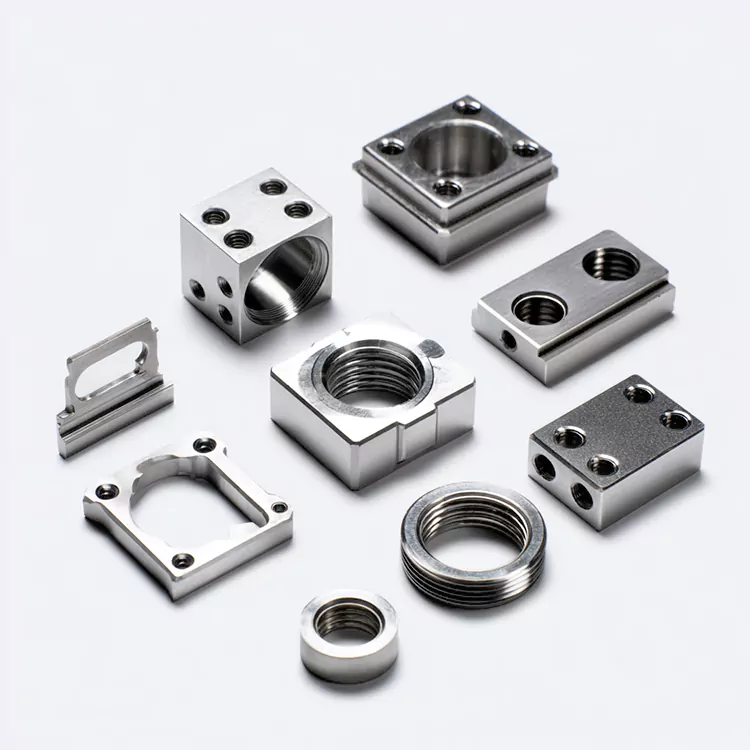
Why Does Machining Service and Prototyping Matter So Much in Early Product Development?
From my experience, early development decisions define the success or failure of a product. Machining Service and Prototyping allows designers and engineers to validate concepts before committing to mass production. Instead of relying on assumptions, physical prototypes reveal design flaws, tolerance issues, and functional risks that are easy to overlook on a screen.
- It transforms digital designs into tangible parts quickly.
- It reduces costly revisions later in the production cycle.
- It helps teams communicate more clearly using physical samples.
- It supports iterative improvement without long delays.
By integrating Machining Service and Prototyping early, I have seen development teams move forward with greater confidence and fewer surprises.
How Does Precision Machining Improve Prototype Accuracy and Reliability?
Accuracy is not optional when a prototype needs to reflect real-world performance. Through precision machining, prototypes are produced with tight tolerances that closely match final production parts. This level of accuracy ensures that testing results are meaningful and transferable to later stages.
| Machining Focus | Practical Benefit for Prototyping |
|---|---|
| High-tolerance CNC machining | Ensures prototypes behave like final production parts |
| Material consistency | Allows realistic strength and durability testing |
| Repeatable processes | Makes design revisions easier to compare and validate |
| Surface finishing options | Improves visual and functional evaluation |
This is where Machining Service and Prototyping becomes more than just a manufacturing step. It becomes a decision-making tool.
Can Machining Service and Prototyping Support Both Simple and Complex Designs?
One common misconception I encounter is that machining is only suitable for straightforward parts. In reality, modern Machining Service and Prototyping supports a wide range of geometries, from simple brackets to complex, multi-axis components. The flexibility to handle varying levels of complexity is critical for startups and established manufacturers alike.
- Simple prototypes for quick concept validation
- Complex parts with tight dimensional requirements
- Low-volume functional testing components
- Design-specific customization without tooling investment
This adaptability allows product teams to explore creative solutions without being constrained by manufacturing limitations too early in the process.
What Role Does Material Selection Play in Machining Service and Prototyping?
Material choice often determines whether a prototype truly represents the final product. In my experience, access to a wide range of metals and plastics makes Machining Service and Prototyping far more effective. Testing with production-grade materials provides insights that generic samples simply cannot offer.
| Material Category | Why It Matters in Prototyping |
|---|---|
| Aluminum alloys | Lightweight, strong, and ideal for functional testing |
| Stainless steel | Supports durability and corrosion resistance evaluation |
| Engineering plastics | Simulates real-world usage without high cost |
| Specialty materials | Validates performance in demanding environments |
Choosing the right material during Machining Service and Prototyping helps avoid false conclusions and ensures that testing results are reliable.
How Does Efficient Prototyping Help Reduce Overall Project Costs?
Cost control is often a major concern for buyers and developers. What I have learned is that investing wisely in Machining Service and Prototyping often reduces total project expenses. By identifying design issues early, teams avoid expensive tooling changes and production delays later.
- Early detection of design flaws saves rework costs
- Low-volume machining avoids unnecessary tooling investment
- Faster iterations shorten development cycles
- Clear testing results reduce decision uncertainty
When viewed from a long-term perspective, efficient prototyping is not an extra cost but a strategic advantage.
Is Machining Service and Prototyping the Right Choice for Your Next Project?
Every project has unique requirements, but in most cases, Machining Service and Prototyping provides the flexibility, accuracy, and speed needed to move from concept to reality. I have seen how the right machining partner can turn uncertainty into clarity and ideas into working components.
If you are looking for a reliable approach to validate designs, improve product quality, and shorten development timelines, it may be time to explore how professional machining and prototyping can support your goals. If you want to discuss your project requirements or request a customized solution, feel free to contact us today. Reach out, share your drawings or ideas, and let’s take the next step together.