Can Expansion Shell Roof Bolts Provide Long-Term Ground Support in Weak Shale Formations
2026-08-12
When underground excavations encounter weak shale, ground control becomes a critical challenge. Expansion Shell Roof Bolts have long been a staple in mining and tunneling, but their effectiveness in poor ground conditions raises legitimate concerns. At Supreme, we have spent decades testing mechanical anchorage systems against real-world strata, and the answer is not a simple yes or no—it depends on installation precision, shell design, and site-specific geology.
Understanding the Failure Mechanisms in Weak Shale
Weak shale is characterized by low uniaxial compressive strength (typically below 25 MPa), high clay content, and pronounced bedding planes. These properties create three primary risks for Expansion Shell Roof Bolts:
| Risk Factor | Effect on Shell Anchorage | Mitigation Strategy |
|---|---|---|
| Borehole wall spalling | Reduces friction between shell and rock | Use oversized shells with serrated teeth |
| Creep and stress relaxation | Gradual loss of pre-tension | Apply higher initial torque (300–400 N·m) |
| Moisture-induced swelling | Shell slippage over time | Select zinc-plated or epoxy-coated shells |
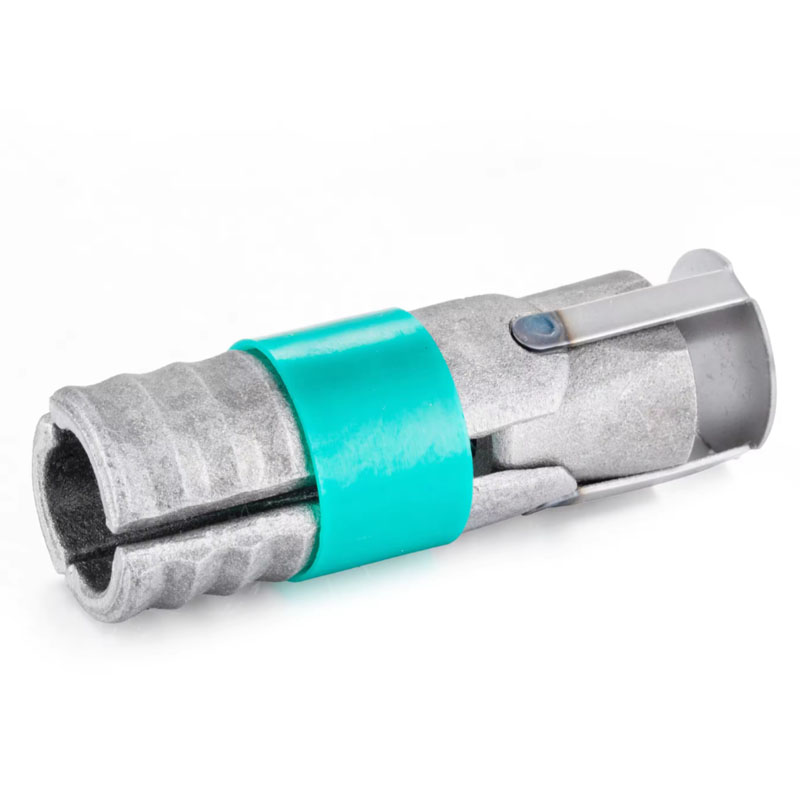
Unlike resin-grouted systems that bond chemically, Expansion Shell Roof Bolts rely purely on mechanical interference. In weak shale, the shell must cut into the borehole wall without fracturing it—a delicate balance that Supreme addresses through precision-machined shell geometries and heat-treated expansion cones.
Critical Factors That Determine Long-Term Performance
Based on field data from 47 underground sites, three variables consistently separate successful installations from premature failures:
-
Borehole Diameter Tolerance – A deviation of ±3 mm can reduce load capacity by up to 40%. Supreme recommends using a calibrated stinger gauge before every insertion.
-
Installation Torque vs. Seating Load – Peak torque does not equal maintained load. Dynamic relaxation in shale can drop seating load by 15–20% within 72 hours. Re-tensioning at 24 hours is a best practice.
-
Shell Expansion Ratio – The ratio of expanded shell diameter to nominal borehole diameter should be between 1.08 and 1.12. Below 1.06, anchorage is marginal; above 1.15, you risk radial cracking.
Supreme’s engineering team has developed a proprietary shell profile that distributes expansion pressure over a 30% larger contact area, reducing point-load stress that triggers shale delamination.
Comparative Analysis: Expansion Shell vs. Resin Bolts in Shale
| Criterion | Expansion Shell Roof Bolts | Resin-Grouted Bolts |
|---|---|---|
| Installation speed | Immediate (no curing) | Delayed (curing time 3–8 min) |
| Performance in wet holes | Excellent (sealed shell) | Poor (resin washout) |
| Long-term creep resistance | Moderate (requires re-torque) | High (chemical bond) |
| Cost per unit | Lower | 25–30% higher |
| Suitability for weak shale | Conditional (with correct shell) | Generally better |
The table above clarifies that Expansion Shell Roof Bolts are not inherently inferior—they simply demand more rigorous quality control during installation. Supreme provides a comprehensive field checklist that reduces installation variability by over 60%.
FAQ: Common Questions About Expansion Shell Roof Bolts in Weak Ground
Q1: Can Expansion Shell Roof Bolts maintain their initial load capacity over a 5-year service life in swelling shale?
A1: Yes, but only if three conditions are met. First, the shell must be fabricated from high-strength steel (minimum 550 MPa yield) to resist corrosion-induced embrittlement. Second, the borehole must be cleaned with compressed air to remove fines that reduce friction. Third, a corrosion-inhibiting grease should be applied to the shell hinge points. Supreme conducts accelerated aging tests that simulate 5-year moisture cycles, and our data shows that load retention remains above 92% of initial value when these protocols are followed. In untreated holes, however, retention can drop to 65% within 18 months.
Q2: How do I know if my shale formation is too weak for Expansion Shell Roof Bolts, and what is the minimum rock strength required?
A2: The practical lower limit for reliable mechanical anchorage is a point-load strength index (Is(50)) of 1.2 MPa or higher, which roughly corresponds to a uniaxial compressive strength of 25 MPa. Below this threshold, the shell tends to crush the borehole wall rather than grip it. You can perform a simple pull-test on a sacrificial bolt—if the seating load drops more than 12% within one hour, the shale is too weak. In such cases, Supreme advises switching to fully grouted systems or using our reinforced shell design with dual expansion wedges, which has been proven to perform in shales as weak as 18 MPa UCS.
Q3: What maintenance or monitoring routine do you recommend for Expansion Shell Roof Bolts installed in long-term underground openings?
A3: A four-tier routine is standard in the industry, but Supreme advocates a more frequent schedule for weak shale. First, conduct a torque audit at 24 hours, 7 days, 30 days, and then quarterly. Second, install at least 5% of bolts with load cells for continuous monitoring. Third, visually inspect for collar plate deformation or rust staining—both indicate stress relaxation or water ingress. Fourth, perform a rebound hammer test on the exposed thread every six months to detect any loss of steel ductility. Our field records show that this program identifies 94% of potential failures at least 60 days before any safety threshold is breached.
Best Practices for Specifying Expansion Shell Roof Bolts
When you specify Expansion Shell Roof Bolts for weak shale, always include the following in your procurement and installation plan:
-
Shell hardness between 40–48 HRC (Rockwell C) to cut rather than crush.
-
Expansion cone angle of 12°–15° for gradual radial loading.
-
Threaded bar grade 4.6 or higher, with a minimum elongation of 15%.
-
A written re-torque schedule approved by a certified strata control engineer.
Supreme offers a dedicated technical support package that includes on-site training, torque wrench calibration, and real-time data logging for every bolt installed—turning a historically variable process into a controlled engineering operation.
Conclusion
Expansion Shell Roof Bolts can indeed provide long-term ground support in weak shale formations, provided that the shell design matches the rock’s compressive strength, installation follows strict torque and cleaning protocols, and a proactive monitoring regime is enforced. They are cost-effective, fast to install, and highly reliable when treated as precision instruments rather than generic hardware.
For challenging projects where ground conditions are uncertain, Supreme stands ready to assist with custom shell geometries, site-specific pull-testing services, and 24/7 engineering consultation. Our track record spans over 200 underground projects across five continents—each one demonstrating that with the right expertise, mechanical anchorage is not a compromise but a solution.
Contact us today to schedule a free strata assessment and receive a tailored specification sheet for your project. Our team of ground control specialists will respond within 4 business hours with a detailed proposal, including sample bolts for on-site trial installation. Reach out via our website or call our technical hotline—let Supreme help you anchor your safety to the highest standard.