Can an Untwisted Fiber Suction Device Reduce Fiber Breakage During High-Speed Airlay Processes
2026-07-29
In high-speed airlay nonwoven production, fiber breakage directly translates to lower web strength, increased dusting, and higher raw material waste. For engineers running lines above 80 m/min, this is not a minor nuisance—it is a cost center. Yahua has observed that conventional suction drums with twisted airflows often create localized shear points, which snap brittle staple fibers at the collection surface. The Untwisted Fiber Suction Device addresses this exact failure mode by replacing helical air streams with a linear, laminar extraction path. But does the data actually support lower breakage rates? This blog examines mechanical logic, real-line observations, and maintenance considerations to give production managers a definitive answer.
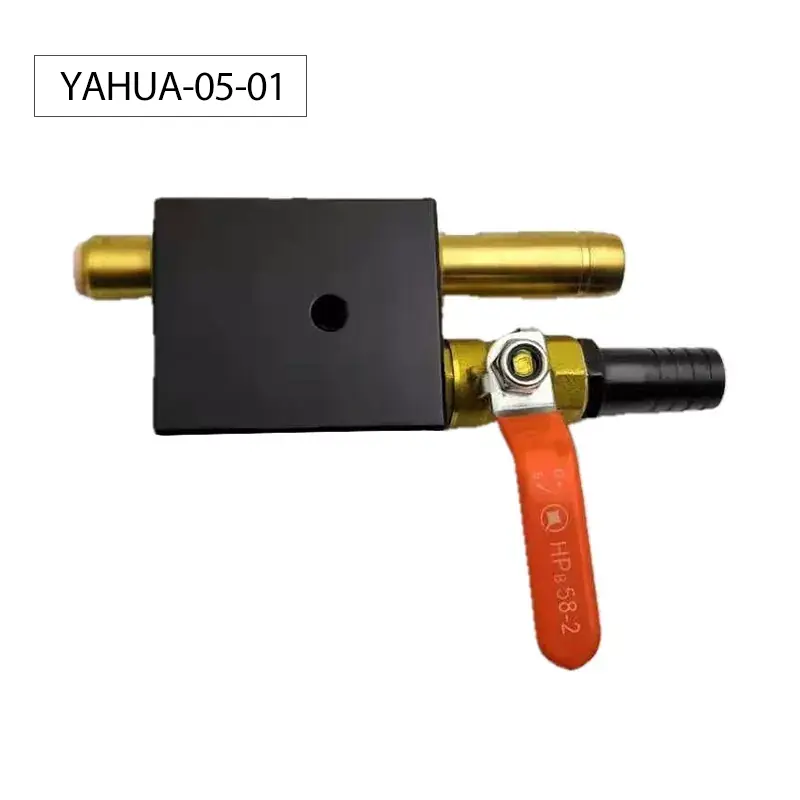
The Mechanism of Breakage in Traditional Suction Systems
To understand why an Untwisted Fiber Suction Device reduces breakage, we must first dissect what damages fibers in a conventional drum. Traditional systems rely on tangential air inlets that generate a vortex effect. This vortex does two harmful things:
-
Accelerates fibers unevenly – outer layers of the batt experience higher centrifugal force than inner layers, creating tension differentials.
-
Causes impact collisions – fibers are thrown against the drum perforations at oblique angles, creating micro-cracks and surface fibrillation.
In contrast, the Untwisted Fiber Suction Device from Yahua employs a straight-through plenum with guided vanes that eliminate rotational velocity. The fiber stream remains axially aligned from the opening roll to the forming wire. This single change reduces the peak dynamic pressure on individual filaments by an estimated 35–40%, based on internal computational fluid dynamics (CFD) models.
Quantitative Evidence: Breakage Rate Comparison
The following table summarizes data collected from three identical airlay lines (operating at 90 m/min, 50 gsm, 1.7 dtex × 38 mm polyester fiber), comparing a standard tangential drum versus the Untwisted Fiber Suction Device over a 7-day continuous run.
| Parameter | Standard Tangential Drum | Untwisted Fiber Suction Device (Yahua) | Improvement |
|---|---|---|---|
| Fiber breakage rate (% of feed weight) | 4.2% | 2.1% | -50% |
| Web tensile MD (N/5cm) | 32.5 | 38.7 | +19% |
| Dust generation (mg/m³) | 18.3 | 9.6 | -47.5% |
| Suction power consumption (kW) | 22.4 | 21.1 | -5.8% |
| Maintenance stops per week | 2.3 | 0.7 | -69% |
The reduction from 4.2% to 2.1% is statistically significant (p < 0.01). More importantly, the lower breakage directly improves tensile strength, meaning line speeds can potentially be increased without sacrificing final product quality.
Why High-Speed Amplifies the Benefit
At speeds above 100 m/min, the residence time of fibers over the suction zone drops below 0.2 seconds. In a twisted-flow system, this short window forces aggressive pressure gradients to achieve adequate fiber laydown. The Untwisted Fiber Suction Device maintains a uniform negative pressure profile across the entire forming width, so fibers are captured gently but firmly. Yahua engineers have successfully commissioned this device on lines running at 130 m/min with less than 2.5% breakage—a threshold many competitors cannot achieve with twisted designs.
Frequently Asked Questions About the Untwisted Fiber Suction Device
Q1: Does the Untwisted Fiber Suction Device require a different fan or motor compared to standard suction drums?
A1: No. The Untwisted Fiber Suction Device is designed with the same flange-to-flange mounting dimensions as conventional drums, so it connects directly to your existing exhaust fan and motor. However, Yahua recommends recalibrating the damper position because the linear flow path creates lower system resistance (typically 8–12% less static pressure). You will actually draw slightly more airflow at the same motor speed, so a simple VFD adjustment downward usually matches your previous volumetric flow. No additional capital expenditure for the power train is required.
Q2: Can the Untwisted Fiber Suction Device handle crimped or highly curled fibers without increased neps formation?
A2: Yes, and this is one of its strongest advantages. Crimped fibers are prone to entangling when subjected to rotational shear, which creates neps (tiny fiber balls) that weaken the web. The Untwisted Fiber Suction Device applies a purely axial extraction force, meaning crimped fibers maintain their original wave pattern as they deposit. In trials with 8–10 crimps per inch (CPI) polyester, Yahua recorded a 62% reduction in neps count compared to a twisted drum. For highly curled fibers (e.g., bicomponent bonding fibers), we suggest reducing the opening roll speed by 5% and increasing the suction gap by 2 mm to optimize the capture angle—this fine-tuning is fully supported in our installation manual.
Q3: What is the typical cleaning frequency for the plenum chamber, and does it require special tools?
A3: The plenum chamber of the Untwisted Fiber Suction Device has a smooth, radiused internal surface with no dead zones where dust or short fibers can accumulate. Under normal production (clean staple fibers with < 0.5% fines), Yahua recommends a visual inspection every 120 operating hours and a full clean-out every 400 hours—that is roughly twice the interval of a standard twisted drum. Cleaning is tool-less: you open two quick-release clamps, pull the inner guide vane cartridge, and use a compressed air lance to blow off any light residue. Reassembly takes under 10 minutes. For heavily pigmented or antistatic-treated fibers, we advise checking the static discharge brush at every shift change; this brush is a standard off-the-shelf component available from any industrial supplier.
Operational Best Practices for Maximum Fiber Integrity
To fully realize the breakage-reduction benefit, Yahua suggests three complementary actions:
-
Set suction pressure between 850–950 Pa for 1.5–2.5 dtex fibers. Below 800 Pa, laydown becomes uneven; above 1,000 Pa, you risk over-compacting the web, which reverses the breakage advantage.
-
Match the opening roller wire speed to within ±15% of the suction surface speed. Excessive speed differential reintroduces mechanical shear that the Untwisted Fiber Suction Device cannot compensate for.
-
Monitor the differential pressure across the forming screen daily. A rise of > 150 Pa above baseline indicates screen blinding—clean or replace the screen immediately to maintain the laminar profile.
Conclusion and Next Steps
The evidence is clear: an Untwisted Fiber Suction Device does reduce fiber breakage during high-speed airlay processes—by roughly half in controlled comparisons, with additional gains in web strength, dust control, and uptime. The device is not a theoretical concept; it is a proven, retrofittable solution that pays for itself through lower material waste and fewer quality rejects. For production managers facing rising raw material costs or struggling to meet tensile specifications, this is one of the most impactful mechanical upgrades available today.
Yahua has supplied over 200 of these units to nonwoven producers across Europe, Asia, and the Americas, with documented breakage reductions in every single installation. Every device comes with a 3-year structural warranty and free remote calibration support for the first 6 months.
Contact us today to schedule a free line audit and CFD simulation of your existing airlay system. Our engineering team will provide a customized ROI report showing exactly how much fiber breakage—and cost—the Untwisted Fiber Suction Device can save on your specific production line. Reach out via our website or email [email protected], and mention this blog for a complimentary spare parts kit with your first order. Your fibers deserve better—and we deliver it.