Can an Aluminum Foundry Produce Custom Parts with Tight Tolerances
2026-09-24
Achieving tight tolerances in custom aluminum components depends on the casting process, tooling quality, and the expertise of the Aluminum Foundry behind the project. At Xuxing, we routinely produce complex custom parts with dimensional accuracies that meet demanding industrial specifications. This article explains how tolerance capabilities vary by process, what factors influence precision, and how to evaluate whether a foundry can genuinely deliver the results your application requires.
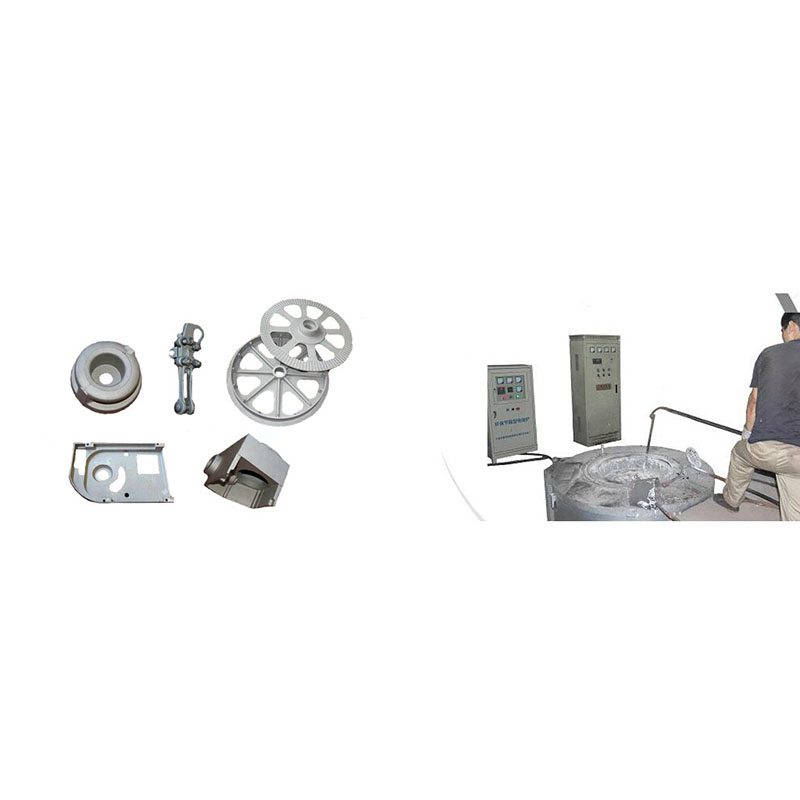
Understanding Tolerance Capabilities by Casting Process
Not all casting methods offer the same level of dimensional control. The table below summarizes typical tolerances achievable across common processes used by a professional Aluminum Foundry.
| Casting Process | Typical Tolerance Range | Best Suited For | Surface Finish |
|---|---|---|---|
| Sand Casting | ±0.8 mm to ±1.5 mm | Large, low-to-medium volume parts | Rougher, requires machining |
| Permanent Mold | ±0.25 mm to ±0.5 mm | Medium-to-high volume, repeatable parts | Smooth |
| Die Casting | ±0.05 mm to ±0.25 mm | High volume, small-to-medium parts | Very smooth |
| Investment Casting | ±0.1 mm to ±0.3 mm | Complex geometry, fine detail | Excellent |
As the data shows, tight tolerances are entirely achievable when the correct process is matched to the part design and production volume. Xuxing evaluates each project individually to recommend the most cost-effective route without compromising precision.
Key Factors That Determine Achievable Precision
Several variables directly affect whether an Aluminum Foundry can hold tight tolerances consistently:
-
Tooling quality and maintenance – Precision-machined molds reduce variation between shots.
-
Alloy selection – Different aluminum alloys exhibit distinct shrinkage rates, which must be compensated in the mold design.
-
Thermal management – Controlled cooling minimizes warping and dimensional drift.
-
Machining capability – Secondary CNC operations allow critical features to reach tolerances as fine as ±0.02 mm.
-
Inspection systems – CMM and optical scanning verify conformity across production lots.
Xuxing integrates in-house machining and metrology, ensuring that tolerance requirements are validated before shipment rather than assumed.
How Xuxing Delivers Tight-Tolerance Custom Parts
Our workflow is built around repeatability and documentation:
-
Design review (DFM) – We flag features that may be difficult to cast within tolerance and propose adjustments.
-
Prototype validation – First articles are measured and compared against the customer's drawing.
-
Production control – Statistical process control monitors critical dimensions throughout the run.
-
Final inspection reports – Full dimensional data accompanies each shipment.
This structured approach allows Xuxing to serve industries such as automotive, aerospace, medical equipment, and industrial automation, where precision is non-negotiable.
Aluminum Foundry FAQ
What tolerances can an Aluminum Foundry realistically hold for custom parts?
A capable Aluminum Foundry can typically hold ±0.05 mm to ±0.25 mm with die casting, ±0.1 mm to ±0.3 mm with investment casting, and ±0.25 mm to ±0.5 mm with permanent mold casting, while sand casting generally ranges from ±0.8 mm to ±1.5 mm. The final tolerance depends on part size, geometry, alloy, and whether secondary machining is applied, so tolerances should always be confirmed against a specific drawing rather than assumed as a fixed industry standard.
Does choosing a tighter tolerance increase the cost of custom aluminum castings?
Yes, tighter tolerances generally increase cost because they demand higher-precision tooling, more frequent mold maintenance, slower cycle times, additional machining operations, and more rigorous inspection procedures. An experienced Aluminum Foundry will help identify which dimensions truly require tight control and which can remain looser, preventing unnecessary cost from over-specification while still meeting functional requirements.
How can I verify that an Aluminum Foundry can meet my tolerance requirements?
Request first article inspection reports, review their measurement equipment and calibration records, ask about their process capability data, and start with a prototype or pilot run before committing to full production. A reliable Aluminum Foundry such as Xuxing will provide documented dimensional results, welcome customer audits, and offer transparent communication about what is achievable for your specific part design.
Conclusion
Tight tolerances and custom aluminum parts are not mutually exclusive. With the right process selection, disciplined tooling, and rigorous inspection, an Aluminum Foundry can deliver precision components that meet strict engineering drawings. Xuxing combines casting, machining, and quality verification under one roof, giving customers a single accountable partner for tolerance-critical projects.
Contact us today to discuss your custom aluminum part requirements, request a tolerance feasibility review, or receive a quotation tailored to your production volume and precision needs.