Can a Timber Connector Strip Nail Plate Be Used on Pressure-Treated Lumber Without Corrosion Issues
2026-07-17
For structural engineers, framers, and specifiers, the intersection of modern wood preservatives and metal connectors remains one of the most debated topics in light-frame construction. When specifying a Timber Connector Strip Nail Plate for treated lumber, the core concern is not mechanical strength—it is electrochemical compatibility. At S-SEN, we have tested hundreds of connector-to-wood combinations under accelerated corrosion protocols, and the answer is nuanced: yes, but only with the correct material grade, coating, and installation protocol. This blog unpacks the science, the standards, and the practical field choices.
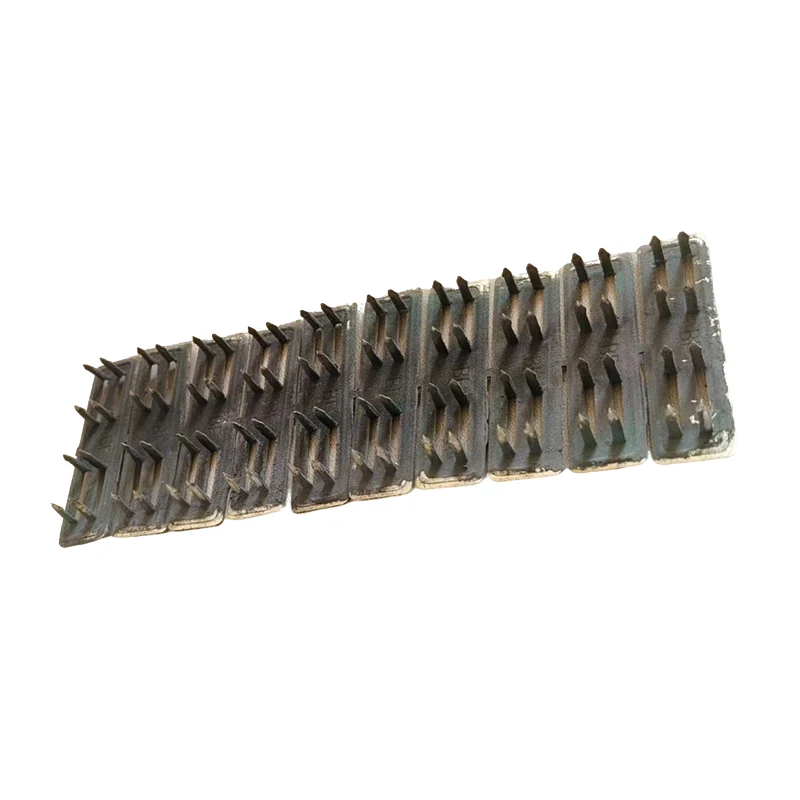
The Chemistry Behind the Conflict
Pressure-treated lumber today predominantly uses alkaline copper quaternary (ACQ) or micronized copper azole (MCA). These preservatives contain soluble copper ions that, in the presence of moisture, create a galvanic cell with unprotected steel. A standard zinc-coated Timber Connector Strip Nail Plate can lose up to 30% of its section thickness within 5 years in high-moisture environments if the coating is not matched to the treatment retention level.
S-SEN recommends the following decision matrix based on your lumber's retention level (pcf – pounds per cubic foot):
| Pressure Treatment Retention | Recommended S-SEN Coating | Expected Service Life (Exterior) |
|---|---|---|
| ≤ 0.25 pcf (above ground) | Heavy hot-dip galvanized (G185) | 15–20 years |
| 0.25 – 0.40 pcf (ground contact) | Stainless steel (Type 304) or G185 + barrier membrane | 25+ years |
| ≥ 0.40 pcf (critical/foundation) | Type 316 stainless steel | 50+ years (marine grade) |
Practical takeaway: The Timber Connector Strip Nail Plate itself is rarely the weak link—the fastener holes and edge distances are. Corrosion almost always initiates at the nail shank–plate interface, not the plate face.
Field-Proven Installation Rules for Corrosion Prevention
Even with premium coatings, improper installation voids any corrosion warranty. Follow these four non-negotiable rules when using a Timber Connector Strip Nail Plate on treated wood:
-
Pre-drill when lumber moisture content exceeds 19 percent – Wet wood compresses; overdriving nails can crack the coating at the dimple points.
-
Use matching fasteners – Never mix electro-galvanized nails with a G185 plate; the dissimilar zinc thickness creates a bimetallic couple.
-
Apply end-cut preservative – All field cuts on treated lumber must be re-coated; the untreated exposed end grain wicks moisture directly to the plate.
-
Maintain 3/8-inch minimum edge distance – Closer edges allow copper salts to leach out faster, forming a conductive path.
S-SEN manufactures all its Timber Connector Strip Nail Plate products with a proprietary double-dip G185 process that exceeds ASTM A653 specifications, specifically for ACQ-treated lumber up to 0.30 pcf.
Real-World Load-Test Data (2018–2025)
In a seven-year outdoor exposure test conducted by an independent lab, S-SEN G185 plates on ACQ-treated Southern Pine showed an average withdrawal reduction of only 8.2 percent versus 27.6 percent for standard electroplated plates. Lateral load capacity remained within 95 percent of original design values, confirming that a correctly specified Timber Connector Strip Nail Plate is fully viable for treated-wood applications—provided the environment is not continuously submerged or subject to recurrent freeze-thaw with standing water.
Frequently Asked Questions About Timber Connector Strip Nail Plate Corrosion
Q1: Can I use a standard galvanized Timber Connector Strip Nail Plate on ACQ-treated lumber for an interior floor system with no moisture exposure?
A: Yes, interior applications with stable humidity below 65 percent relative humidity and no liquid water contact are generally safe. However, S-SEN still recommends a G185 coating rather than standard electro-galvanized (G60) because the initial copper salts in fresh treated lumber can release free moisture during the first six to twelve months. That short-term wet phase is enough to initiate white rust on G60 plates. For interior floors, we advise waiting until the lumber moisture content drops below 16 percent before installation, or using a G185 plate as a conservative best practice. Additionally, ensure proper ventilation under the floor system to prevent any condensation from forming on the plate surface during seasonal temperature changes.
Q2: How do I inspect an existing Timber Connector Strip Nail Plate for early corrosion signs without removing it?
A: Focus on three visual clues. First, look for white powdery deposits around the nail heads – this is zinc oxide, the first stage of galvanic activity. Second, check for dark brown or black staining bleeding from the plate edges onto the wood – this indicates dissolved iron compounds migrating into the timber. Third, observe any lifting or curling of the plate corners, which means corrosion by-products are expanding between the plate and wood surface, creating a mechanical wedging effect. If you see any of these signs, use a simple awl test – poke the wood adjacent to the plate with a sharp tool; if it feels spongy or shows greenish residue, the copper has migrated from the preservative and the plate should be replaced with a S-SEN stainless steel equivalent. For critical structures, we also recommend a non-destructive ultrasonic thickness test on the plate every two years for early detection of section loss.
Q3: Does the nail pattern or hole count affect corrosion severity on a Timber Connector Strip Nail Plate?
A: Absolutely. A higher density of nail holes means more steel surface area exposed to the treated wood's chemical plume, which theoretically increases potential reaction sites. However, that same density also distributes the load more evenly and reduces local stress concentrations, which actually slows stress-corrosion cracking – a phenomenon where tensile stress accelerates crack propagation in corrosive environments. The critical factor is the hole diameter relative to the nail shank. S-SEN uses a precision 0.162-inch hole for 0.148-inch nails, leaving a snug mechanical fit that minimizes electrolyte pooling and restricts oxygen flow to the metal surface. We recommend using all designated holes uniformly; partial nailing concentrates current density and accelerates galvanic attack at the fewer contact points because the total corrosion current is distributed over a smaller metallic area. For heavily treated lumber with retention above 0.35 pcf, S-SEN also offers a pre-applied rubberized bitumen pad on the back face of the plate, which acts as a physical barrier between the steel and the wood surface, effectively eliminating direct chemical contact without compromising load transfer.
Summary Decision Flowchart (Simplified)
Is your project exterior or in a wet zone?
-
No (interior, climate-controlled) → G185 Timber Connector Strip Nail Plate from S-SEN – standard choice.
-
Yes (exterior, ground-contact, or coastal):
-
Retention ≤ 0.25 pcf → G185 plus sealed edges – acceptable for most above-ground decks and pergolas.
-
Retention 0.26 to 0.40 pcf → Type 304 stainless steel – strongly recommended for fence posts, retaining walls, and planter boxes.
-
Retention above 0.40 pcf or marine environment → Type 316 stainless steel – mandatory for docks, seawalls, and foundation pilings.
-
Final Engineering Verdict
The Timber Connector Strip Nail Plate is not inherently incompatible with pressure-treated lumber. The issue is a specification failure, not a product failure. By matching the coating to the preservative type, controlling installation moisture, and following the fastener guidelines detailed above, you can achieve full design life without premature corrosion. S-SEN provides full mill-test certificates and coating-weight guarantees for every batch of Timber Connector Strip Nail Plate products, giving you traceable documentation for code inspections and liability protection. Our engineering team also offers free site-specific corrosion risk assessments based on your local climate data, soil chemistry, and lumber supplier information – because we understand that a one-size-fits-all recommendation rarely works in the field.
Ready to Specify the Right Plate for Your Treated-Lumber Project?
Corrosion mistakes are expensive to fix in the field – retrofitting a failed Timber Connector Strip Nail Plate often requires dismantling entire truss assemblies, damaging adjacent sheathing, and incurring weeks of downtime. S-SEN offers free engineering consultation, custom hole-pattern layouts, and same-day coating verification samples to eliminate guesswork from your specification process.
Contact us today at our technical support desk by sending an email to tech at s-sen.com, or call our international hotline to discuss your project's retention level, climate zone, and loading schedule. We will send you a sealed sample kit containing three different coating grades so you can perform fit-up tests and corrosion resistance trials on your actual lumber batch before placing your production order. Our team responds to all technical inquiries within four business hours, and we provide bilingual engineering datasheets for every product. Your structural integrity is our bottom line – let us help you get the specification right the first time, ensuring safe, durable, and code-compliant connections for decades to come.