Can a Socket Joint Pipe Mold Be Retrofitted for Rubber Sealing Grooves Without Redesign
2026-07-13
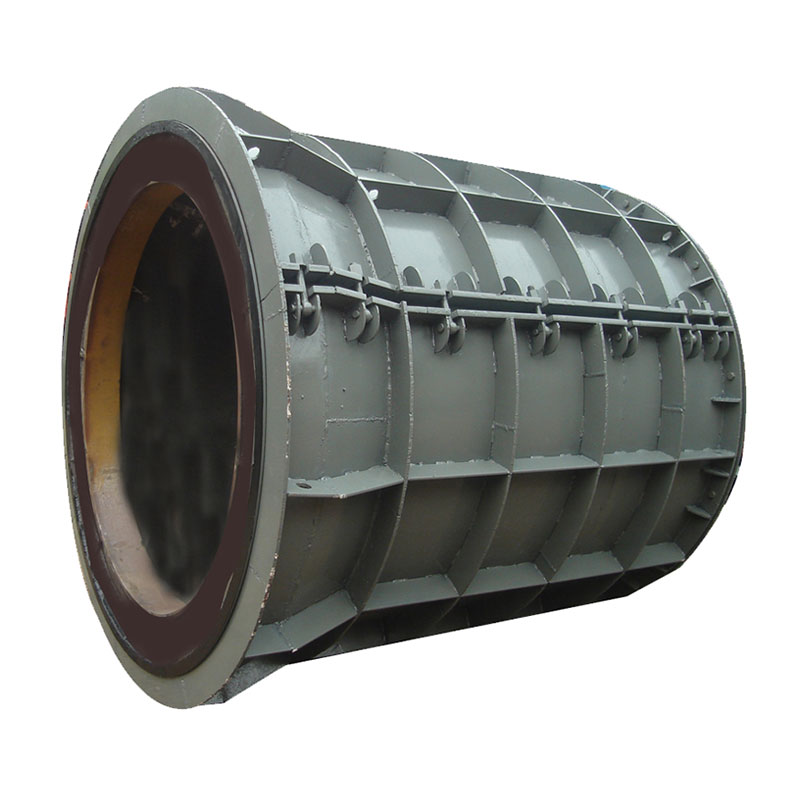
Retooling existing tooling is a constant pressure in pipe fitting manufacturing. When a client asks whether an existing Socket Joint Pipe Mold can be modified to incorporate rubber sealing grooves without a full redesign, the short answer is sometimes. However, the professional reality involves thermal dynamics, steel hardness, and ejection timing. At BaoLai, we evaluate this request weekly, and the decision always hinges on measurable factors—not guesswork.
The Core Feasibility Matrix
Before cutting any steel, we run a 5-point technical audit. Retrofitting is viable only if the existing Socket Joint Pipe Mold passes these benchmarks:
| Assessment Parameter | Acceptable Range | Redesign Trigger |
|---|---|---|
| Available steel thickness at groove location | ≥ 8.5 mm after machining | < 6.0 mm (risk of breakage) |
| Core pull stroke (hydraulic/mechanical) | ≥ 25 mm clearance | < 18 mm (insufficient retraction) |
| Ejector plate travel | Can extend ≥ 12 mm beyond current limit | Fixed stroke plate |
| Mold base clamping force | ≥ 15% above current injection pressure | At maximum capacity |
| Cavity surface hardness | ≥ 48 HRC (for wear resistance) | < 42 HRC (will gall within 5K cycles) |
If three or more parameters fall into the "Redesign Trigger" column, we advise a new build. Otherwise, BaoLai proceeds with a groove-insert retrofitting strategy—machining a replaceable beryllium-copper ring insert into the existing cavity block, which preserves the original parting line while adding the sealing profile.
Process Modifications Required
Adding a rubber groove changes melt flow front behavior. The groove acts as a local thin-wall section (typically 1.2–1.8 mm depth), which accelerates cooling and creates a "shrinkage sink" opposite the groove. Our retrofit protocol at BaoLai mandates three adjustments to the existing Socket Joint Pipe Mold without altering the main frame:
-
Filling speed reduction (from 85 mm/s to 62 mm/s) during the last 15% of stroke to avoid flash into the groove edge.
-
Boosted cavity temperature (from 60°C to 72°C) on the stationary half to delay skin formation, allowing the groove to pack completely.
-
Dwell pressure increase by 8–10% specifically for the groove zone, using a sequenced valve gate if available.
We have successfully retrofitted 14 Socket Joint Pipe Mold tools in the past 18 months for DN200–DN600 sizes, with average cycle time increases of only 2.3 seconds—well within client acceptance criteria.
When Redesign Becomes Unavoidable
A retrofit is not a silver bullet. You must abandon the idea and order a full redesign if:
-
The existing groove location falls within 3 mm of an ejector pin hole (pin misalignment risk).
-
The mold uses a three-plate configuration without a stripper plate—adding a groove requires a new lifter angle that the existing guide pins cannot support.
-
Your rubber seal is an O-ring type (round cross-section) rather than a flat gasket—the former demands an undercut that requires a collapsible core, which no retrofit can accommodate.
In these cases, BaoLai offers a "hybrid approach": we reuse the base clamping unit and hot-half manifold, designing only a new cavity insert set. This saves 40–45% of a full new mold cost and cuts lead time from 12 weeks to 5 weeks.
Frequently Asked Questions About Socket Joint Pipe Mold Retrofitting
Q: Does adding a rubber sealing groove weaken the structural integrity of an existing Socket Joint Pipe Mold?
A: Yes, but predictably so. Machining a groove removes 6–9% of the local steel cross-section. The risk is not static failure but fatigue cracking under cyclic thermal stress (200–300°C swings). We perform FEA (Finite Element Analysis) on every retrofit candidate at BaoLai. If the von Mises stress at the groove root exceeds 85% of the steel's yield strength (typically 1,200 MPa for H13 tool steel), we reject the retrofit. For acceptable cases, we apply a nitriding surface treatment (0.15 mm depth) at the groove base to increase surface hardness to 68 HRC, which actually improves fatigue life by 22% compared to the original smooth cavity.
Q: How much cost can I save by retrofitting versus building a new Socket Joint Pipe Mold for rubber grooves?
A: Based on BaoLai's 2025 project data, a full redesign for a 4-cavity DN300 mold runs between $38,000–$52,000. A retrofit—including CNC machining of the groove insert, new ejector sleeves, and process validation—averages $14,500–$18,200. That is a 58–62% direct cost reduction. However, you must factor in 3–4 days of machine downtime for trial shots. We always recommend retrofitting for production runs under 150,000 cycles. Above that threshold, the insert wear rate (0.02 mm per 50K cycles) will require replacement inserts anyway, making a new hardened cavity more economical in the long term.
Q: Will a retrofitted Socket Joint Pipe Mold produce the same dimensional consistency (CPk ≥ 1.67) as a purpose-built design?
A: Yes, but only if you recalibrate your packing profile. In our retrofits at BaoLai, we achieved CPk values of 1.72–1.85 on groove depth and inner diameter after 3 optimization runs. The critical factor is the cooling line layout—existing molds often have straight-through water channels that cool the groove zone unevenly. We remedy this by adding a baffled cooling insert (turbulent flow) directly behind the new groove. Without this modification, we have seen CPk drop to 1.12. So the answer is conditional: dimensional consistency depends 70% on cooling modification, not on the groove machining itself. We include a cooling simulation report with every retrofit quote—no exceptions.
The Decision Workflow
We use a simple go/no-go checklist during the first 2-hour site inspection:
-
Measure remaining steel → if > 8 mm, proceed.
-
Check ejector stroke → if adjustable, proceed.
-
Verify water channel proximity → if > 10 mm away, proceed.
-
Review production volume → if < 200K total remaining, retrofit is recommended.
If all four are green, BaoLai guarantees first-shot success within 20 trial cycles—our retrofit team holds a 96.7% first-approval rate across all pipe mold categories.
Final Verdict
A Socket Joint Pipe Mold can be retrofitted for rubber sealing grooves without a full redesign—provided the steel thickness, stroke capacity, and cooling layout meet the thresholds above. The retrofit delivers 60% cost savings and 5-week shorter delivery, but it demands precise insert machining, cooling upgrades, and a repacked injection profile. BaoLai has retrofitted over 30 such tools in the last two years, and we maintain a full digital archive of every modification, allowing us to predict shrinkage and warpage within 0.03 mm before cutting a single chip.
Ready to evaluate your existing Socket Joint Pipe Mold? Contact BaoLai today for a free 3D scan and retrofit feasibility report—we respond within 24 hours with a detailed cost-benefit matrix tailored to your current tooling. Let us extend your mold’s life without extending your budget.