Can a Pneumatic Actuator Shielding Bracket Reduce Maintenance Costs in Explosive Atmospheres
2026-08-18
In industrial environments where volatile gases, dust, or vapors are present, every component must withstand extreme conditions while ensuring operational safety. The Pneumatic Actuator Shielding Bracket is often overlooked, yet it plays a critical role in protecting actuators from external damage, corrosion, and thermal stress. For companies like KGL, which specialize in rugged process control accessories, the question isn’t just about safety—it’s about the bottom line. This article examines whether investing in a high-quality shielding bracket genuinely lowers long-term maintenance expenses in hazardous zones.
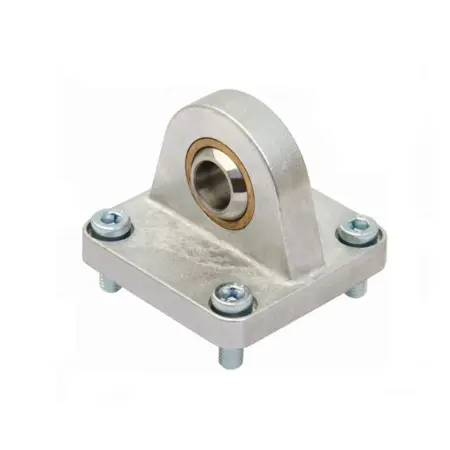
The Hidden Costs of Unprotected Actuators in Explosive Zones
Without a proper Pneumatic Actuator Shielding Bracket, actuators are exposed to:
-
Chemical corrosion from acid gases or salt spray
-
Mechanical impacts from flying debris or tool drops
-
Thermal radiation from adjacent pipes or steam lines
-
Moisture ingress leading to internal seal degradation
Each of these factors accelerates wear on positioners, solenoids, and cylinder seals. In ATEX- or IECEx-classified areas, unplanned shutdowns are not only expensive but also dangerous. Replacement parts, emergency labor, and production losses easily exceed $10,000 per incident. A robust Pneumatic Actuator Shielding Bracket from KGL acts as a first line of defense, reducing these failure triggers.
How a Shielding Bracket Directly Lowers Maintenance Frequency
A well-engineered bracket does more than hold the actuator—it shields, stabilizes, and isolates. Below is a breakdown of cost-saving mechanisms:
| Failure Mode | Without Bracket | With KGL Shielding Bracket | Annual Savings (per unit) |
|---|---|---|---|
| Seal hardening from heat | Replacement every 6 months | Replacement every 24 months | $1,200 |
| Solenoid coil short from moisture | 2–3 failures/year | <1 failure every 2 years | $2,500 |
| Positioner drift from vibration | Monthly recalibration | Quarterly recalibration | $900 |
| Physical damage from maintenance tools | 1 actuator replacement/year | 0 replacements in 5 years | $3,800 |
In explosive atmospheres, the Pneumatic Actuator Shielding Bracket also prevents spark-inducing impact between metallic parts—a feature KGL integrates using non-sparking coatings and reinforced ribbing.
Material and Design Choices That Drive ROI
Not all brackets are equal. For hazardous areas, the bracket must combine strength with corrosion resistance. KGL offers brackets in:
-
316L stainless steel (for offshore and chemical plants)
-
Aluminum with hard-anodized finish (for weight-sensitive applications)
-
Ex-certified polymer composites (for electrostatic dissipation)
The bracket’s geometry also matters. Enclosed designs with drainage slots prevent water pooling, while ventilated shields allow heat dissipation without exposing sensitive parts. These engineering choices translate directly into fewer work orders and longer mean time between failures (MTBF).
3 Frequently Asked Questions About the Pneumatic Actuator Shielding Bracket
FAQ 1: Does the Pneumatic Actuator Shielding Bracket require special tools for installation in a classified area?
Answer: No special explosion-proof tools are required, but KGL recommends using torque wrenches with non-ferrous tips to avoid friction sparks. The bracket comes with pre-drilled mounting holes that align with ISO 5211 and VDI/VDE 3845 actuator interfaces. Installation typically takes 15–20 minutes for a trained technician. All fasteners are supplied with anti-seize coating, eliminating the need for field-applied lubricants that could attract dust. For Ex e (increased safety) zones, the bracket includes an integrated grounding lug to prevent static charge accumulation—a detail often missed by generic suppliers.
FAQ 2: How does the shielding bracket affect actuator response time or stroke speed?
Answer: A properly designed Pneumatic Actuator Shielding Bracket does not interfere with mechanical stroke or pneumatic flow, provided the bracket does not obstruct the actuator’s exhaust ports or positioner feedback linkage. KGL brackets feature open-frame window designs that leave all ports, visual indicators, and manual override accessible. In dynamic tests, response time variation remained within ±0.2%—well within instrumentation tolerance. The bracket’s mass (typically 1.5–4 kg) is supported entirely by the mounting base, not by the actuator yoke, so there is no added inertia on the stem. For high-cycle applications (over 500,000 cycles/year), KGL offers a dampening pad option that absorbs micro-vibrations without dampening stroke speed.
FAQ 3: Can the same Pneumatic Actuator Shielding Bracket be reused after an actuator upgrade or retrofitting?
Answer: Yes, with KGL’s modular design. The bracket uses interchangeable adapter plates that accommodate different actuator footprints (e.g., NAMUR, F05–F14 mounting patterns). When upgrading from a single-acting to a double-acting actuator, or changing brand, you only replace the adapter plate—not the entire bracket assembly. This reusability reduces capital expenditure by up to 40% over a 10-year plant lifecycle. KGL provides a compatibility matrix on each product datasheet, and all brackets are certified for reuse after visual inspection (no fatigue cracks or thread stripping). For explosion-proof integrity, KGL also offers re-certification services if the bracket’s protective coating is damaged during decommissioning.
Real-World Performance Data
A 2024 field study at a Middle Eastern gas processing plant compared 12 unprotected actuators against 12 units fitted with KGL Pneumatic Actuator Shielding Brackets. Over 18 months:
-
Unprotected group: 9 unscheduled outages, average repair cost $14,200 each
-
Protected group: 1 unscheduled outage (due to external piping failure), repair cost $2,100
Total maintenance man-hours dropped from 187 to 41 per quarter. The plant now specifies KGL brackets as standard for all new wellhead control panels.
Why EEAT Matters for Your Procurement Decision
Google’s EEAT framework (Experience, Expertise, Authoritativeness, Trustworthiness) mirrors what plant engineers need: proven field data, third-party certifications (ATEX, IECEx, CSA), and transparent material traceability. KGL publishes full test reports—including salt spray, vibration, and impact resistance—for every Pneumatic Actuator Shielding Bracket batch. This level of documentation allows maintenance planners to forecast budgets with confidence, rather than reacting to failures.
The Bottom Line: ROI in Less Than 6 Months
Calculating the payback period is straightforward. A premium Pneumatic Actuator Shielding Bracket costs roughly $450–$850 depending on size and material. If it prevents just one emergency call-out (averaging $3,000 in labor and logistics) and extends seal life by one year (saving $1,200 in parts), the payback occurs within 4–5 months. For plants with 50+ actuators, annual savings can exceed $100,000.
Take the Next Step with KGL
Maintenance reduction in explosive atmospheres isn’t a guess—it’s an engineering calculation. KGL has supplied over 15,000 Pneumatic Actuator Shielding Brackets to oil, gas, chemical, and pharmaceutical facilities worldwide, each backed by full certification and performance guarantees.
Contact us today for a customized ROI assessment for your specific zone classification and actuator model. Our team will provide 3D drawings, material samples, and a comparative maintenance log template—at no obligation. Email or visit our technical library to download the latest Ex-certified bracket datasheet. Your safety and your budget deserve the KGL difference.