Can a custom-stamped Mobile Phone Mainboard EMI Shielding Cover support SMT automated assembly
2026-11-26
Mobile Phone Mainboard EMI Shielding Cover produced by Qiyiguo is widely adopted in smartphone mainboard designs to isolate RF chips, power management modules and reduce electromagnetic interference. Many hardware engineers worry that custom stamped shielding parts may fail to match high-speed SMT lines, which rely on stable pick-and-place, consistent coplanarity and standard tape-and-reel packaging. With proper DFM adjustment during stamping tooling development, custom shielding covers can fully integrate into standard surface mount workflows for mass mobile phone production.
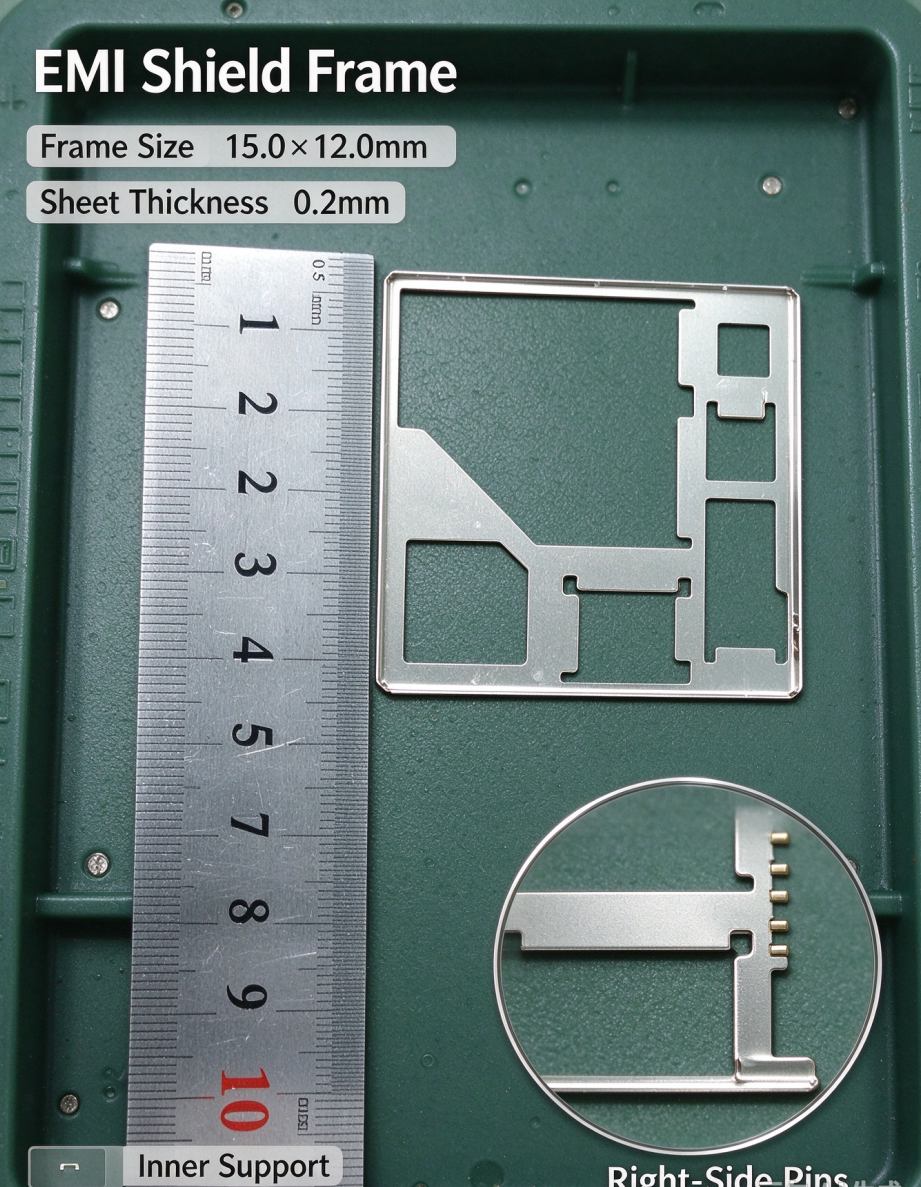
SMT Compatibility Specifications Table
| Parameter | SMT Requirement | Qiyiguo Custom Stamped Shield Standard |
|---|---|---|
| Coplanarity | ≤0.10 mm | 0.06–0.08 mm |
| Packaging | EIA-481 tape & reel | Anti-static tape and reel or tray packaging |
| Surface Finish | Solderable plating | Tin-plated copper nickel silver / SPCC |
| Pick Feature | Flat top pick area or vacuum pad zone | Reserved vacuum pick zone on cover surface |
Core Design Checklist for Automated SMT
- Reserve a flat vacuum pick area on the top surface for pick-and-place nozzles
- Control flange flatness to avoid tombstoning or cold solder joints during reflow
- Use tin plating to guarantee solder wettability on grounding pads
- Follow anti-static packaging rules to prevent electrostatic damage to phone mainboards
- Keep shield outline compatible with your SMT feeder and vision recognition system
FAQ for Mobile Phone Mainboard EMI Shielding Cover
Q1: What surface treatment is required for a custom-stamped Mobile Phone Mainboard EMI Shielding Cover to pass SMT reflow? A1: Nickel silver base with tin plating is the most reliable option. Bare metal or passivated surfaces cannot form stable solder joints. Qiyiguo applies uniform tin plating on all SMT shielding covers, which can withstand standard lead-free reflow temperature profiles without peeling or discoloration.
Q2: Can two-piece frame-and-lid Mobile Phone Mainboard EMI Shielding Cover be processed on one SMT line? A2: Yes. The frame is soldered onto the mainboard during SMT reflow, while the lid can be attached later manually or by secondary automated assembly. Qiyiguo can stamp frames and lids separately with matching positioning features, which helps repair teams access underlying components without removing the soldered frame.
Q3: Will inconsistent flatness of a stamped Mobile Phone Mainboard EMI Shielding Cover cause SMT defects? A3: Poor coplanarity is the top cause of open grounding solder joints. Progressive stamping with flattening stations helps control flatness. Qiyiguo performs 100% flatness sampling inspection before packaging, and adjusts stamping dies if warpage occurs to maintain stable SMT yields.
Additional Practical Notes
Not all custom stamped shielding designs are SMT-ready. Complex deep-drawn shapes, uneven top surfaces or unplated edges will break automation. Qiyiguo’s engineering team reviews PCB footprint and SMT process parameters before cutting stamping tools, reducing trial run risks for mobile OEM and ODM customers.
If you need custom DFM support, sample testing or tape-and-reel packaging for your Mobile Phone Mainboard EMI Shielding Cover, share your mainboard layout and SMT line requirements with our engineering team. Qiyiguo delivers precision stamped EMI shielding parts optimized for high-volume smartphone assembly. Contact us today to get reliable shielding solutions matched to your automated production line.