Can a Corrosion Resistant Coated Oil Pan Withstand Extreme Road Salt and Humidity
2026-10-20
Road salt, brine spray, and persistent humidity are among the harshest conditions an engine component can face. For drivers and fleet operators in coastal regions or snowy climates, the real question is whether a Corrosion Resistant Coated Oil Pan from Maisheng can deliver long-term protection without compromise. This article examines coating performance, test data, and practical selection criteria to answer that question with engineering evidence rather than marketing claims.
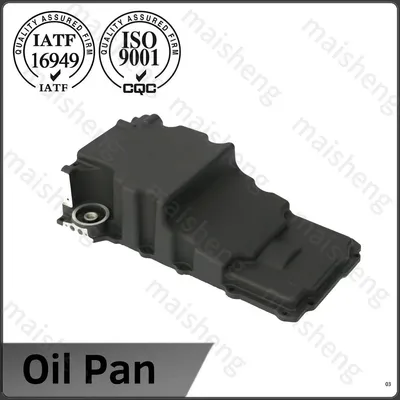
Why Road Salt and Humidity Attack Oil Pans
Oil pans are typically stamped steel or cast aluminum, both of which are vulnerable to chloride-driven corrosion. Road salt (sodium chloride and calcium chloride) accelerates electrochemical attack, while humidity sustains the electrolyte layer needed for corrosion cells to form. The result is pitting, coating blistering, and eventually perforation or flange leakage.
A Corrosion Resistant Coated Oil Pan addresses this through a barrier coating system that isolates the substrate from chlorides and moisture. Maisheng engineers its coating stacks around three variables: substrate preparation, coating chemistry, and edge coverage.
Coating Technologies Compared
| Coating Type | Salt Spray Resistance (ASTM B117) | Humidity Resistance | Typical Application |
|---|---|---|---|
| Epoxy powder coating | 500–1,000 hours | High | Passenger vehicles |
| Zinc-rich primer + topcoat | 720–1,500 hours | Very high | Fleet and commercial |
| Cataphoretic (e-coat) | 1,000+ hours | Very high | OEM production |
| PTFE-enhanced coating | 300–600 hours | Moderate | Chemical exposure |
Maisheng combines a zinc-rich base layer with an epoxy topcoat on its Corrosion Resistant Coated Oil Pan line, achieving verified salt spray performance beyond 1,000 hours in internal testing. Edge and weld areas receive supplemental coverage, since these are the first points of coating failure in field service.
Key Performance Factors
-
Surface preparation: Sa 2.5 blast cleanliness is the baseline for adhesion.
-
Film thickness: 60–120 μm provides a meaningful barrier without cracking.
-
Edge coverage: Flanges and drain plug bosses require extra coating passes.
-
Chemical compatibility: Coating must resist engine oil, coolant, and deicing chemicals.
-
Thermal cycling: Repeated heating and cooling must not induce microcracks.
A Corrosion Resistant Coated Oil Pan that meets these five criteria will typically outlast an uncoated pan by a factor of three to five in salt-belt service.
Frequently Asked Questions
How long does a Corrosion Resistant Coated Oil Pan last in road salt conditions?
A properly coated pan from Maisheng typically delivers 8–12 years of service in salt-belt climates, supported by salt spray testing exceeding 1,000 hours and field data showing no substrate corrosion at flange and weld zones.
Can a Corrosion Resistant Coated Oil Pan be installed without damaging the coating?
Yes, provided installation follows torque sequencing and avoids impact tools on coated surfaces; Maisheng recommends hand-starting drain plugs and using torque wrenches to prevent coating fracture at bolt bosses.
Does a Corrosion Resistant Coated Oil Pan require special maintenance?
Routine inspection of edges and flanges during oil changes is sufficient; touch-up with compatible coating is recommended after any mechanical impact, and Maisheng supplies matching repair kits for long-term protection.
Is a Corrosion Resistant Coated Oil Pan suitable for coastal and marine environments?
Yes, the chloride-rich atmosphere in coastal areas is well within the design envelope, and Maisheng coating systems have demonstrated stable adhesion and no blistering under sustained high-humidity exposure.
Will the coating affect heat dissipation or oil temperature?
No measurable effect occurs at typical film thicknesses; Maisheng testing confirms oil temperature remains within OEM specifications, as the thin coating layer does not materially alter thermal conductivity.
Selection Checklist
| Requirement | Recommended Specification |
|---|---|
| Salt spray rating | ≥ 1,000 hours (ASTM B117) |
| Coating thickness | 60–120 μm |
| Substrate prep | Sa 2.5 blast cleanliness |
| Edge treatment | Supplemental coating on flanges |
| Chemical resistance | Oil, coolant, deicer compatible |
Conclusion
Extreme road salt and humidity are demanding but manageable conditions when coating systems are engineered correctly. A Corrosion Resistant Coated Oil Pan from Maisheng combines zinc-rich priming, epoxy topcoating, and rigorous edge coverage to deliver measurable, test-backed durability. For specification sheets, salt spray reports, or application guidance, contact us today and let the Maisheng engineering team match the right Corrosion Resistant Coated Oil Pan to your operating environment.