Can a CNC Machining Part Really Decide Whether Your Product Succeeds?
2026-01-06
When I first started sourcing precision components for demanding industrial projects, I quickly realized that a single CNC Machining Part can quietly determine whether a product performs flawlessly or fails under pressure. Over time, I became familiar with Losier not through marketing slogans, but through consistent delivery, practical engineering feedback, and parts that actually worked the way drawings intended. That experience reshaped how I evaluate every CNC Machining Part I choose today.
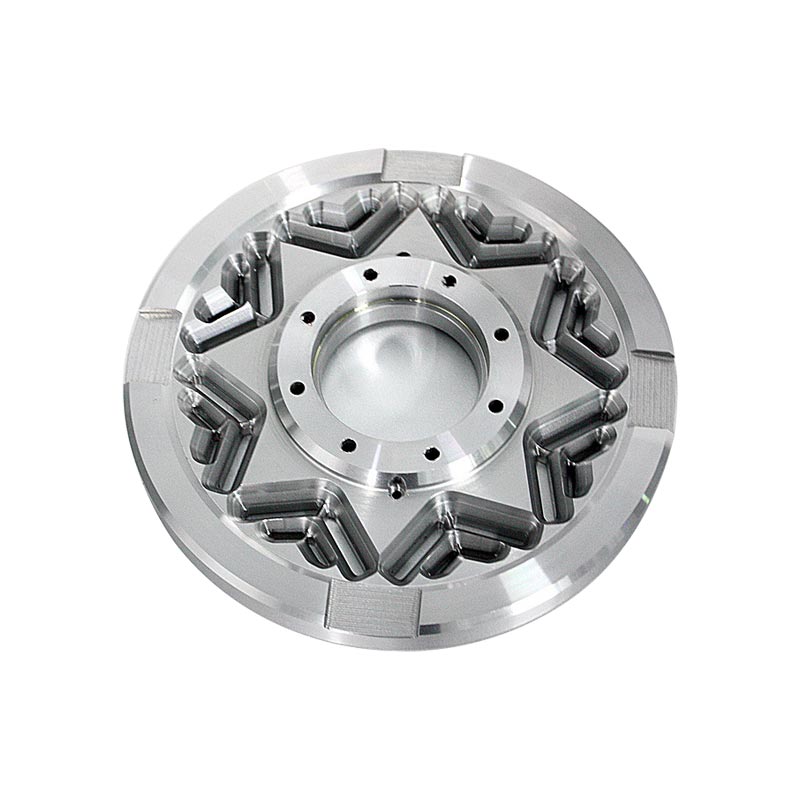
Why Do Buyers Struggle to Find a CNC Machining Part That Truly Matches Their Drawings?
Many customers tell me the same story: the quote looks fine, the sample seems acceptable, but once production starts, tolerances drift, finishes vary, or assemblies no longer align. These issues often come from gaps between design intent and machining execution. A reliable CNC Machining Part should not require constant rework or compromise.
- Inconsistent dimensional accuracy across batches
- Surface finishes that differ from specifications
- Poor communication during design-to-production transition
- Limited material verification and process control
How Does Material Choice Affect the Performance of a CNC Machining Part?
From my experience, material selection is not just a technical detail but a performance decision. Aluminum, stainless steel, brass, and engineering plastics each behave differently under machining and in real-world applications. A well-made CNC Machining Part reflects an understanding of how material properties interact with cutting parameters, heat generation, and long-term use.
| Material Type | Typical Application | Key Consideration |
|---|---|---|
| Aluminum Alloy | Housings and structural components | Balance between strength and machinability |
| Stainless Steel | Medical and industrial equipment | Tool wear and heat control |
| Brass | Electrical and fluid connectors | Precision and surface finish |
| Engineering Plastics | Lightweight functional parts | Dimensional stability |
What Makes Machining Accuracy So Critical for a CNC Machining Part?
Accuracy is not about chasing extreme tolerances for their own sake. It is about ensuring that each CNC Machining Part fits seamlessly into a larger system. In my projects, consistent accuracy reduces assembly time, minimizes adjustment on site, and lowers the total cost of ownership.
- Stable machining processes with documented parameters
- In-process inspection rather than end-only checks
- Clear understanding of functional tolerances
Why Should Surface Finish Be Evaluated Beyond Appearance?
A smooth surface is not just cosmetic. For many applications, the surface condition of a CNC Machining Part affects friction, corrosion resistance, and even fatigue life. I have learned to look past visual appeal and ask how the finish supports the part’s actual working environment.
| Finish Type | Functional Benefit | Common Use Case |
|---|---|---|
| As-machined | Cost efficiency | Internal mechanical components |
| Anodized | Corrosion resistance | Aluminum enclosures |
| Polished | Reduced friction | Sliding or visible parts |
How Can a Supplier Support You Beyond Just Delivering a CNC Machining Part?
What keeps me working with the same partners is not only part quality, but communication. When a supplier can flag design risks early, suggest manufacturable adjustments, and maintain stable lead times, the entire project benefits. That level of collaboration is what I now expect whenever I source a CNC Machining Part.
- Design-for-machining feedback before production
- Transparent quality control procedures
- Reliable scheduling and packaging for export
Are You Ready to Upgrade the Way You Source CNC Machining Parts?
If you are tired of inconsistent quality or parts that only look good on paper, it may be time to rethink how you evaluate suppliers. A dependable CNC Machining Part should support your product goals, not complicate them. If you would like to discuss your drawings, materials, or application requirements, contact us today and let us explore how your next machining project can run more smoothly from the start.