Can a 24kW Condensing Heat Exchanger Run Both Radiators and Underfloor Heating
2026-08-21
When upgrading or designing a home heating system, one of the most frequent technical questions asked by installers and homeowners alike is whether a single compact unit can effectively serve two entirely different emission systems. The short answer is yes—but the real question lies in how to make it work efficiently. A 24kW Condensing Heat Exchanger from HEC Machinery is engineered with sufficient thermal capacity and modulation range to handle both radiators and underfloor heating (UFH) simultaneously, provided the system is properly configured with hydraulic separation and temperature control strategies.
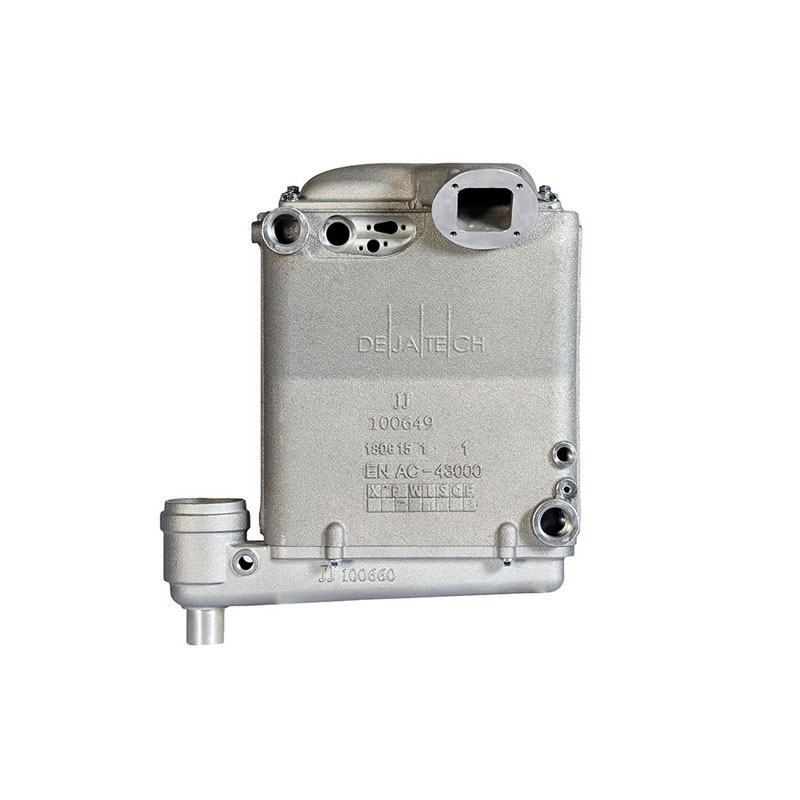
The Core Technical Challenge
Radiators typically require a flow temperature of 65–75°C to deliver their rated output, while underfloor heating operates optimally at 35–45°C to avoid floor surface overheating and ensure comfort. A 24kW Condensing Heat Exchanger produces high-temperature water by default, but its true efficiency gains come from operating at lower return temperatures (below 55°C), where flue gas condensation occurs. This creates a paradox: how can one heat source satisfy both high-temperature and low-temperature demands without sacrificing efficiency?
The solution lies in low-temperature radiator design (oversized radiators) paired with a mixing manifold or low-loss header for the UFH circuit. HEC Machinery recommends a system design where the 24kW Condensing Heat Exchanger runs at a flow temperature of 50–55°C, which is still high enough for correctly sized radiators and already ideal for UFH after mixing down to 40°C.
System Configuration Options
| Configuration Method | Components Required | Efficiency Impact | Best Suited For |
|---|---|---|---|
| Direct Supply with Mixing Valve | Thermostatic mixing valve, bypass pipe | Moderate (some bypass loss) | Retrofits with existing radiators |
| Low-Loss Header (Hydraulic Separator) | Primary/secondary pumps, buffer tank | High (decouples flow rates) | New builds with multiple zones |
| Weather-Compensated Controller | Outdoor sensor, modulating pump | Very High (optimal condensing) | Smart home / high-end installations |
HEC Machinery strongly advocates for the low-loss header approach when using a 24kW Condensing Heat Exchanger for dual systems. This separates the primary circuit (boiler side) from the secondary circuits (radiator and UFH loops), allowing each to operate at its own flow rate and temperature without interfering with the other.
Sizing Verification
A 24kW Condensing Heat Exchanger delivers approximately 82,000 BTU/h. For a typical well-insulated 150–200 m² home, this is sufficient for both systems combined, provided the total heat loss does not exceed 20–22kW at design outdoor temperature. The remaining 2–4kW margin accommodates domestic hot water priority if required.
HEC Machinery provides a free sizing spreadsheet for installers to verify that their specific radiator selection and UFH pipe spacing (typically 150–200mm) align with the 24kW Condensing Heat Exchanger output curve.
24kW Condensing Heat Exchanger FAQ
Q: Can I connect the underfloor heating directly to the 24kW Condensing Heat Exchanger without a mixing valve?
A: No. Direct connection is strongly discouraged. Underfloor circuits are highly sensitive to temperature; exceeding 45°C can damage screed, warp wooden floors, and cause discomfort. A 24kW Condensing Heat Exchanger typically supplies water at 60–70°C during initial warm-up phases. Without a mixing valve or thermostatic blending device, the UFH loop would receive water that is too hot. HEC Machinery recommends a 3-way motorized mixing valve with a remote sensor for precise control, ensuring the UFH inlet never exceeds 42°C even if the primary flow spikes.
Q: Will running both radiators and UFH from one 24kW Condensing Heat Exchanger reduce its condensing efficiency?
A: It depends entirely on the return water temperature. The 24kW Condensing Heat Exchanger achieves its highest efficiency (typically 98–104% HHV) when the return temperature is at or below 55°C. Radiators with a 65°C flow and 45°C return actually help achieve this. The UFH loop, operating at 40°C flow and 35°C return, also contributes to a cool overall return when blended correctly. The risk occurs if you run radiators at 75°C flow with a 65°C return—that pushes the blended return above 55°C and kills condensation. HEC Machinery advises designing radiators for 50°C flow (oversized by 30–40%) to keep the entire system in condensing mode year-round.
Q: What happens if the 24kW Condensing Heat Exchanger is undersized for the combined load of radiators and UFH?
A: An undersized 24kW Condensing Heat Exchanger will struggle to reach setpoint during extreme cold days, leading to continuous high-fire operation, reduced lifespan, and increased fuel consumption. However, 24kW is a common sweet spot for most European and North American detached homes up to 200m² with moderate insulation. To verify, perform a room-by-room heat loss calculation (using ISO 13790 or equivalent). If the total loss at -10°C outdoor exceeds 22kW, you need a larger unit or supplementary heat source. HEC Machinery offers a 30kW model as an upgrade path, but we always recommend starting with a precise load calculation rather than guessing. Our technical team provides free pre-sales verification for any project.
Operational Sequence & Control Logic
For optimal performance, HEC Machinery programs the 24kW Condensing Heat Exchanger with a weather-compensated curve. The outdoor sensor adjusts the setpoint dynamically:
-
At 0°C outside → 55°C flow (radiators + UFH mixing)
-
At -10°C outside → 62°C flow (higher output, UFH mixing still protects floor)
-
At +10°C outside → 42°C flow (UFH direct, radiators barely active)
This modulation strategy ensures the 24kW Condensing Heat Exchanger runs at part-load (60–80% of capacity) for most of the heating season, which is where condensing efficiency peaks. The built-in pump from HEC Machinery features variable speed control to match the pressure requirements of both circuits.
Practical Installation Checklist
-
Install a low-loss header with dedicated pumps for each zone.
-
Fit a thermostatic mixing valve on the UFH supply line (set to 40°C).
-
Use oversized radiators (calculated for ΔT30 instead of ΔT50).
-
Set the 24kW Condensing Heat Exchanger maximum flow temperature to 60°C via the control panel.
-
Include a bypass valve to maintain minimum flow rate during UFH zone valve closures.
Final Recommendation
A 24kW Condensing Heat Exchanger is not only capable of running both radiators and underfloor heating—it is one of the most intelligent choices for modern hybrid systems, provided you follow hydraulic separation and low-temperature design principles. HEC Machinery has supplied over 5,000 units for dual-system installations across 30 countries, with field data showing seasonal efficiencies above 96% when properly commissioned.
The key is not the heat exchanger itself, but the system architecture around it. With correct pipe sizing, pump selection, and control logic, your 24kW Condensing Heat Exchanger will deliver comfort and savings simultaneously.
Ready to size your dual-system project? Contact HEC Machinery today for a free system layout review and product quotation. Our engineering team responds within 24 hours with detailed schematics and pump head calculations tailored to your floor plan. Visit our website or email us directly—we are here to help you build a smarter, greener heating system.