Are Your Casting Parts Holding Back the Performance of Your Trailers?
2026-02-27
When I first started sourcing Casting Parts for heavy-duty trailer systems, I realized how often small structural components determined the lifespan of the entire vehicle. Over time, I saw how Shandong Liangshan Fumin Trailer Parts Manufacturing Co. LTD gradually strengthened its production capabilities and refined its process control, focusing on delivering more consistent and reliable Casting Parts to global trailer manufacturers. That shift in precision and quality control made a measurable difference in real-world performance.
If you have ever dealt with cracked brackets, premature wear, or inconsistent dimensional tolerances, you already know that not all Casting Parts are created equal. The challenge is not just finding a supplier. It is finding a manufacturing partner who understands load distribution, dynamic stress, and the practical conditions your trailers face every day.
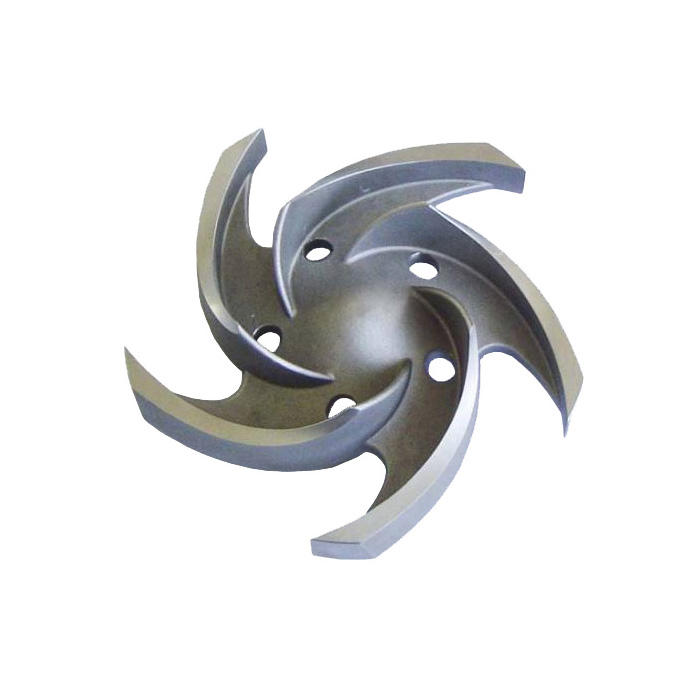
Why Do Casting Parts Fail in Heavy-Duty Applications?
In my experience working with OEM buyers and aftermarket distributors, failures usually trace back to three root causes:
- Inconsistent raw material composition
- Poor mold precision and unstable casting temperature control
- Insufficient post-casting machining and surface treatment
Heavy-duty trailers operate under constant vibration, impact loads, and long-distance transport stress. If Casting Parts such as suspension brackets, axle components, or coupling elements are not engineered with accurate metallurgical control, micro-cracks form early and grow quickly.
That is why I always look beyond price. I evaluate process transparency, inspection standards, and machining capabilities before committing to any supplier.
How Can Precision Casting Improve Structural Reliability?
Precision begins with material selection. High-quality ductile iron or alloy steel provides better tensile strength and fatigue resistance. However, raw material alone does not guarantee performance. What matters is the complete production workflow.
Here is how optimized Casting Parts manufacturing typically improves durability:
- Stable melting temperature control ensures uniform internal structure
- Advanced molding reduces porosity and shrinkage defects
- CNC machining guarantees dimensional accuracy
- Surface treatment enhances corrosion resistance
- Load testing verifies real-world strength performance
When these elements work together, the final Casting Parts perform consistently across different road conditions and climate environments.
What Should You Compare When Selecting a Casting Parts Supplier?
I usually compare suppliers across technical and operational dimensions. Price matters, but long-term reliability matters more. Below is a simplified comparison framework I use when evaluating Casting Parts partners.
| Evaluation Factor | Basic Supplier | Advanced Manufacturer |
|---|---|---|
| Material Traceability | Limited documentation | Full batch tracking and chemical reports |
| Mold Precision | Manual tolerance control | Precision mold design with strict dimensional verification |
| Machining Capability | Outsourced machining | Integrated CNC machining center |
| Quality Inspection | Visual inspection only | Mechanical testing and dimensional inspection |
| Customization Support | Standard parts only | OEM and drawing-based customization |
This level of evaluation helps reduce supply chain risk and ensures that the Casting Parts you receive match your engineering specifications.
Can Customized Casting Parts Reduce Your Overall Cost?
At first glance, customized production might seem more expensive. However, I have found that well-designed custom Casting Parts often reduce long-term operational cost by:
- Minimizing premature replacement
- Reducing assembly misalignment
- Lowering maintenance downtime
- Improving overall vehicle stability
Instead of adapting your design to available parts, you align the components precisely with your structural requirements. That approach leads to fewer warranty claims and stronger brand reputation in your local market.
How Do Casting Parts Influence Trailer Safety and Compliance?
Safety regulations in many regions require structural components to withstand specific load thresholds. Poor-quality Casting Parts can compromise suspension systems and load-bearing joints, creating serious safety risks.
When manufacturers maintain strict internal testing and quality documentation, it becomes easier for buyers to meet compliance standards. That transparency supports smoother customs clearance and builds trust with distributors.
Are You Ready to Upgrade Your Casting Parts Strategy?
If you are currently reviewing your trailer component sourcing strategy, this might be the right time to reassess the reliability of your Casting Parts. A dependable manufacturing partner should provide:
- Stable production capacity
- Clear communication during customization
- Consistent quality inspection reports
- Long-term cooperation mindset
I believe sourcing decisions should be based on durability, transparency, and technical capability rather than short-term pricing advantages.
If you would like to explore high-quality Casting Parts designed for heavy-duty trailer applications, I encourage you to contact us today. Share your drawings, technical requirements, or performance concerns, and let us work together to build components that strengthen your trailers from the inside out.