

Are Special Screws the Missing Link in Your High-Performance Assembly?
2026-03-02
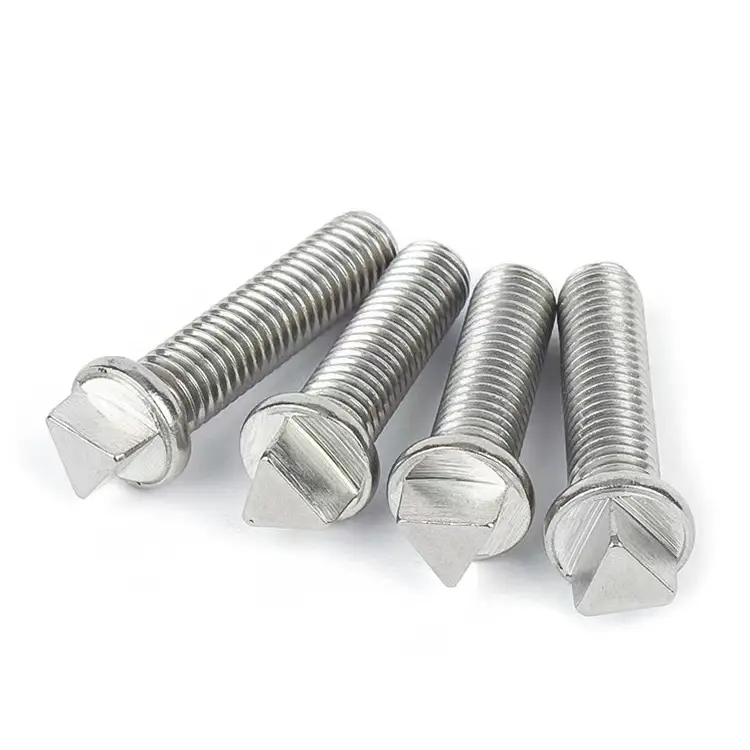
Over the past few years, I have seen more manufacturers move away from standard fasteners as their projects become increasingly specialized. As production demands grow more complex, Nuote Metals Technology Co.,Ltd. has gradually expanded its engineered fastening portfolio, especially in the field of Special Screws, to address challenges that conventional screws simply cannot solve. When tolerances are tight, materials are unconventional, or load conditions are extreme, relying on off-the-shelf fasteners often leads to avoidable risks.
Why Do Standard Screws Often Fail in Demanding Applications?
I frequently speak with engineers who initially attempt to adapt standard screws to specialized equipment. While this may reduce upfront costs, the long-term consequences can be significant:
- Thread stripping in soft or composite materials
- Premature corrosion in harsh outdoor or marine environments
- Vibration loosening in automotive or heavy machinery assemblies
- Head deformation during high-torque installation
- Incompatibility with automated assembly systems
In these cases, I usually recommend considering Special Screws designed specifically for the material, load, and environmental conditions involved. Customization at the fastening level often improves the entire product lifecycle.
How Do Special Screws Improve Structural Reliability?
When I evaluate fastening performance, I focus on three core aspects: mechanical strength, material compatibility, and surface protection. Well-designed Special Screws are engineered around these criteria rather than adapted as an afterthought.
| Performance Factor | Standard Screw Limitation | Special Screw Advantage |
| Thread Design | Generic pitch and profile | Optimized threads for wood, plastic, metal, or composite materials |
| Head Structure | Limited drive types | Custom drive systems for torque control and anti-slip performance |
| Material Strength | Fixed carbon steel grades | Alloy steel, stainless steel, or tailored metallurgy |
| Surface Treatment | Basic plating | Advanced coatings for corrosion, heat, or chemical resistance |
| Dimensional Accuracy | Standard tolerance range | Precision machining for critical assemblies |
By integrating design, material selection, and surface engineering, Special Screws enhance both load-bearing capacity and long-term durability.
What Customization Options Should Engineers Look For?
In my experience, the value of Special Screws lies in flexibility. A reliable manufacturer should offer more than minor dimensional adjustments. The following customization capabilities are often critical:
- Non-standard diameters and lengths tailored to specific equipment
- Custom head shapes for restricted installation spaces
- Security drive systems for anti-tampering applications
- High-temperature or chemical-resistant coatings
- Hybrid thread patterns for multi-material fastening
These design elements directly impact assembly efficiency, maintenance cycles, and product safety. Rather than adapting machinery to fit available fasteners, I believe fasteners should adapt to the machinery.
Can Special Screws Reduce Overall Manufacturing Costs?
Some buyers initially assume that Special Screws increase procurement costs. However, when I analyze full lifecycle expenses, the opposite is often true. Custom fasteners can:
- Reduce rework caused by installation failure
- Minimize downtime due to loosening or corrosion
- Lower warranty claims from structural instability
- Improve automation compatibility, reducing labor costs
In industries such as automotive, electronics, renewable energy, and heavy equipment, even a minor fastening issue can halt production lines. Investing in the right Special Screws often delivers measurable long-term savings.
How Do Special Screws Support Modern Industry Standards?
Today’s manufacturing environment demands compliance with international standards, traceability requirements, and sustainable production practices. I always encourage clients to choose suppliers that provide:
- Material certification and mechanical testing reports
- Strict quality control at each production stage
- Precision inspection equipment for dimensional consistency
- Surface treatment processes aligned with environmental regulations
High-quality Special Screws are not simply customized parts; they are engineered components backed by technical data and consistent production control.
Are You Choosing the Right Partner for Special Screws?
Selecting the correct fastening solution requires collaboration between engineering, procurement, and production teams. I recommend working with manufacturers who understand application-specific demands and can provide technical input during the design phase.
If your current fastening system limits product performance or assembly efficiency, it may be time to reconsider your approach. Special Screws can redefine reliability, safety, and cost efficiency across your projects.
If you would like tailored recommendations or technical guidance, we encourage you to contact us directly. Leave your inquiry today, share your drawings or specifications, and let us help you develop high-performance Special Screws that match your exact requirements.
