Are Bonded Neodymium Magnet Solutions the Missing Link in High-Precision Motor Design?
2026-02-27
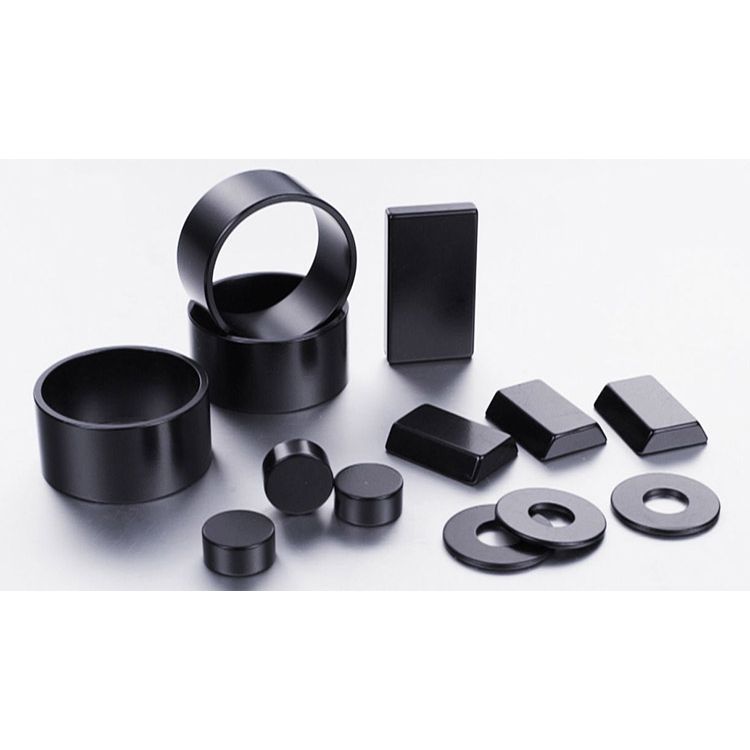
When I first started sourcing high-performance magnetic components for compact motors and sensor assemblies, I kept running into the same engineering bottleneck—limited shape flexibility and unstable dimensional tolerances. Over time, I noticed how Ningbo New-Mag magnetics Co.,Ltd gradually expanded its material portfolio to address these exact challenges, especially with its advanced Bonded Neodymium Magnet solutions. Instead of relying solely on traditional sintered magnets, I began to explore how a well-designed Bonded Neodymium Magnet could solve structural and manufacturing pain points without sacrificing magnetic strength.
Why Do Traditional Magnets Create Design Constraints in Modern Applications?
In many motor, automotive, and electronic assemblies, I have seen engineers struggle with:
- Complex geometries that are difficult to achieve with sintered magnets
- High post-processing costs due to grinding and machining
- Chipping and brittleness during assembly
- Inconsistent magnetization patterns for precision control systems
When working on compact BLDC motors or micro gear motors, I found that structural efficiency matters just as much as magnetic performance. This is where a Bonded Neodymium Magnet becomes particularly valuable. Because it is produced by mixing NdFeB magnetic powder with a polymer binder and then compression or injection molding the material, it allows for near-net-shape manufacturing and tighter dimensional control.
How Does a Bonded Neodymium Magnet Improve Manufacturing Efficiency?
From a production standpoint, I pay close attention to yield rate and assembly compatibility. A Bonded Neodymium Magnet offers several measurable advantages:
| Feature | Bonded Neodymium Magnet | Sintered NdFeB Magnet |
| Shape Flexibility | High, suitable for complex and thin-wall structures | Limited, requires secondary machining |
| Dimensional Tolerance | Excellent consistency from molding process | Dependent on grinding accuracy |
| Mechanical Strength | Better resistance to chipping and cracking | More brittle |
| Magnetization Options | Multipole magnetization achievable | More restricted patterns |
| Production Efficiency | Near-net shape reduces waste | Higher material loss during machining |
When I compared lifecycle costs instead of only focusing on peak magnetic energy product, the value proposition became clearer. For applications that prioritize structural integration and precision over maximum flux density, a Bonded Neodymium Magnet often delivers a more balanced performance-to-cost ratio.
Where Can Bonded Neodymium Magnet Technology Deliver the Most Impact?
In my experience, this type of magnet performs exceptionally well in:
- Automotive sensors and actuator systems
- Stepper motors and brushless DC motors
- Office automation equipment
- Smart home devices and compact electronic tools
- Medical devices requiring consistent torque control
For example, in automotive throttle control modules, dimensional precision and vibration resistance are critical. A molded Bonded Neodymium Magnet can integrate directly into rotor assemblies without excessive finishing work, which simplifies both assembly and quality control.
Can Magnetic Performance Meet Modern Efficiency Standards?
Many engineers initially worry that bonded magnets may not match the strength of sintered NdFeB. While it is true that the maximum energy product is generally lower, performance must be evaluated in context. In applications where the magnetic circuit is optimized and air gaps are minimized, a Bonded Neodymium Magnet can provide stable flux output and reliable multipole magnetization.
I also appreciate the corrosion resistance advantages that come from the polymer matrix. Unlike bare sintered magnets that often require heavy coating layers, bonded variants demonstrate inherent environmental stability, which reduces additional surface treatment requirements in many indoor or controlled-environment applications.
What Should Buyers Evaluate Before Selecting a Supplier?
When sourcing a Bonded Neodymium Magnet, I focus on several practical evaluation criteria:
- Material grade stability and magnetic consistency
- Molding precision and tooling capability
- Multipole magnetization expertise
- Quality inspection standards and traceability
- Long-term production capacity for large-volume projects
Working with an experienced manufacturer such as Ningbo New-Mag magnetics Co.,Ltd gives me confidence that both engineering consultation and production scaling can move forward smoothly. Rather than offering a one-size-fits-all product, the ability to customize geometry and magnetization pattern plays a decisive role in project success.
Is a Bonded Neodymium Magnet the Strategic Choice for Your Next Project?
If you are designing compact motors, high-precision sensors, or space-constrained electronic assemblies, I encourage you to evaluate how a Bonded Neodymium Magnet can streamline your mechanical design while maintaining stable magnetic performance. By considering total system efficiency instead of isolated magnetic strength, you may discover measurable gains in both reliability and manufacturing cost.
If you would like tailored technical recommendations or detailed specifications for your application, I invite you to contact us directly. Share your design drawings, performance targets, or production volume expectations, and our engineering team will provide practical guidance and customized solutions. Let us help you determine whether a Bonded Neodymium Magnet is the right fit for your next innovation.