

Top 10 Serrated Gasket Factories in China for Reliable Industrial Sealing
2026-09-22
Finding a serrated gasket that won’t let you down under pressure isn’t just about price—it’s about knowing which Chinese factories actually deliver on reliability. While dozens claim industrial-grade sealing, only a select few prove it daily in refineries, chemical plants, and power stations. Our roundup of the top 10 manufacturers cuts through the noise, spotlighting proven performers like Kaxite, whose gaskets hold tight where others fail. Curious who else made the list? Let’s dig in.
What Sets Serrated Gaskets Apart in Demanding Flange Joints
Serrated gaskets earn their keep in flange joints that punish conventional materials. The machined concentric grooves bite into the flange faces under load, creating a labyrinth of localized high-pressure zones. This isn't just sealing by compression; it's a mechanical interlock that resists blowout even when thermal cycling or vibration tries to unseat the gasket.
What really separates them is how they handle imperfect surfaces. A standard flat gasket relies on uniform contact, which rarely exists after years of service or on rough cast flanges. The serrations compensate by deforming into the peaks and valleys, so minor pitting or waviness doesn't become a leak path. In aggressive media or extreme temperatures, that resilience translates directly to fewer unplanned shutdowns.
The Role of Controlled Serration Depth in Leak Prevention
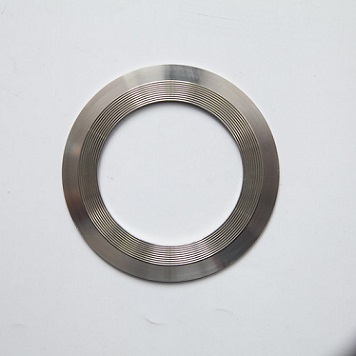
Controlled serration depth on a flange face is not simply a surface finish detail; it dictates how the gasket material flows and locks into the metal profile under bolt load. When depths are kept within a narrow band, the peaks and valleys create a network of miniature compression zones that evenly distribute sealing stress across the entire contact area. This prevents the formation of continuous leak paths that often develop when the serrations are either too shallow to bite into the gasket or too deep to allow proper material conformance.
A serration depth that runs too shallow may leave the gasket with insufficient mechanical keying, allowing it to shift or extrude under thermal cycling or pressure fluctuations. On the other hand, excessive depth can concentrate stress at the valley bottoms, leading to localized gasket tearing or metal-to-metal contact that bypasses the seal. The controlled range therefore acts as a balancing mechanism, ensuring the gasket remains compressed but not crushed, and the flange surface retains enough roughness to hold the seal without becoming a cutting edge.
In practice, achieving this control requires consistent machining processes and periodic verification with profile measurement tools. Rather than relying on visual inspection alone, many maintenance teams use comparative gauges or digital profilometers to confirm that serration depth remains within the specified tolerance before assembly. This kind of disciplined approach reduces the likelihood of premature seal failure and avoids the costly downtime associated with fugitive emissions or process fluid leaks.
Why Material Traceability Matters More Than Marketing Claims
A tag that says “responsibly sourced” can sit on a shelf for years without telling you a single thing about where the cotton grew, who spun the yarn, or how the dye water was handled. Most brands stop at a logo and a carefully worded promise, because going deeper is expensive and messy. Traceability, by contrast, asks uncomfortable questions at every handoff: which farm, which mill, which shipment, which batch. Without that chain of custody, the label is just a mood.
When a supplier changes halfway through a production run, a real traceability system flags the switch before the goods ship. A marketing claim can't do that. It simply keeps saying “ethically made” while the fabric origins blur. That difference becomes painfully clear when a dyehouse dumps untreated water or a sub-supplier uses forced labor: a brand with traceability can pull the specific lot. A brand with only a slogan has to call a press conference.
Consumers have learned to read the fine print, and they increasingly know that “conscious collection” doesn't mean the buttons were tracked from a specific factory. Traceability is boring infrastructure—barcode scans, batch records, supplier audits—but it's the only thing that turns a value statement into something you can verify. If a company won't show you the chain, assume the marketing is doing all the work.
Inside the Testing Rig Where Reliable Factories Prove Seal Integrity
The first thing you notice inside the rig is the silence before the hiss. A bank of stainless steel chambers sits bolted to a vibration table, each one holding a test article with its O-rings and gaskets fully compressed. Technicians don't just watch gauges; they log micron-level distortions in the housing whenever pressure spikes from 0 to 35 bar in under two seconds. That abrupt surge mimics a real-world water hammer, the kind that kills seals in the field long before their rated life.
Most of the cycle runs unattended through the night, but the data tells a sharper story by morning. Helium mass spectrometers sniff for leaks down to 10^-9 mbar·L/s while thermal cameras map cold spots where an elastomer might be losing its grip. A failed seal rarely announces itself with a gush—it shows up as a faint drift on a graph, a 0.2% pressure decay over eight hours. Factories that invest in this level of scrutiny aren't just testing parts; they're building a record of every seal's resistance to fatigue before it ever ships.
The Real Cost of Cutting Corners on Gasket Thickness
Spec sheets often treat gasket thickness as a minor variable, easily swapped out when a thinner sheet saves a few cents per unit. That logic collapses the moment a flange pair heats up unevenly or sees a sudden pressure spike. A thinner gasket can feel like a quick win on the purchasing spreadsheet, but it shifts the entire load profile of the joint, concentrating stress along the bolt circle instead of letting the sealing face breathe. The result is rarely a dramatic, immediate blowout. Instead, you get micro-leaks that erode flange faces, creep relaxation that demands retorquing every few weeks, and a slow degradation in sealing performance that nobody traces back to the missing half-millimeter until a shutdown audit reveals pitting and fretting on surfaces that were supposed to last a decade.
Maintenance teams learn to read the signs: bolts that keep loosening even after proper torqueing, damp patches around the gasket OD that reappear days after a wipe-down, and a faint hiss that vanishes under thermal load. Each symptom points to the same root cause—insufficient compressed material to accommodate flange rotation, surface waviness, or thermal expansion. Cutting thickness from 3 mm to 1.5 mm might save enough money to buy a few extra spare gaskets, but it also reduces the gasket's ability to fill irregularities. On a flat, machined flange in a clean room, that might not matter. On a cast-iron pump housing with decades of corrosion and a slight warp, it guarantees a weeping joint that operators just learn to tolerate.
The hidden invoice arrives later, usually in the form of unplanned downtime, more frequent gasket replacement cycles, or worse—a compliance citation after a fugitive emission test fails. Retrofitting a thicker gasket after the fact isn't always a simple swap either, because the bolt length, flange standoff, and even the piping alignment were all designed around the original compressed thickness. When you start cutting corners on gasket thickness, you're not just buying a thinner piece of material; you're silently redesigning the joint's entire mechanical behavior and betting that your operating conditions will never drift from the ideal. Most process environments drift daily, and the gasket is the only component asked to forgive every excursion without complaint.
Long-Term Supply Partners Versus One-Off Low-Bid Sellers
A low bid can look like a win on paper, but the math often flips once the invoice is paid. Long-term supply partners tend to understand your production rhythms, tolerance limits, and the unspoken rules of how your team likes to communicate. That familiarity shows up as fewer rejected batches, quicker adjustments when specs shift, and a genuine willingness to fix problems before they reach your dock. One-off low-bid sellers, by contrast, are usually optimizing for a single transaction. They may hit the target price, but they rarely carry the context needed to prevent small issues from becoming expensive delays.
Operationally, the difference compounds. A partner who has supplied you for three years knows that your Q3 ramp starts earlier than the calendar suggests, and they have already reserved capacity or raw material. A low-bid vendor who submitted the cheapest quote yesterday has no such foresight; they are juggling multiple unrelated jobs and will likely quote a longer lead time or substitute materials when their own margin gets squeezed. Over time, the cost of re-qualifying new sellers, inspecting inconsistent shipments, and absorbing line stoppages eats away whatever upfront savings the low bid promised.
That does not mean every purchase deserves a partnership. For commodity items with clear specs and abundant alternatives, a one-off low bid can work fine. But for anything that touches your core product, your delivery promise, or your regulatory exposure, stable supply partners lower your total cost of ownership even when their unit price is a few points higher. The real question is not “who is cheaper today,” but “who is still standing next to you when the schedule breaks.”
FAQ
The machined serrations create a spring-like compression zone that conforms to minor surface defects, while the facing material fills grooves without being squeezed out under high bolt load.
Check if they have in-house CNC serration cutting, a documented material traceability system, and burst or compression testing rigs—not just a polished sales brochure.
Most top Chinese manufacturers can turn around non-standard diameters and special facings in 2–4 weeks, mainly because they keep common metal coil stocks and run flexible batch production rather than only making catalog sizes.
Yes, if the metal core is 316L or 321 stainless and the facing is exfoliated graphite or mica, they routinely hold up from 450°C to 600°C, but you need to verify the exact grade and facing binder.
Serrated gaskets have a solid metal core with concentric grooves machined on both faces, while kammprofile has a serrated metal core with a soft facing layer on top; the former relies on mechanical bite, the latter on both bite and soft conformability.
Ask for recent video of the CNC lathe cutting serrations, request a batch of raw material certificates tied to the specific heat numbers, and check if they allow third-party inspection before shipment.
For standard ASME B16.20 sizes, many accept mixed orders of 50–100 pieces, but custom large-diameter gaskets may have a minimum of 10–20 pieces depending on the metal thickness and facing.
Yes, PTFE, ceramic-filled, and mica facings are available for corrosive or high-temperature applications, though you may need to specify the adhesive system to avoid outgassing in vacuum service.
Conclusion
When you're dealing with flange joints that face pressure swings, thermal cycling, or aggressive media, serrated gaskets earn their keep in ways smooth gaskets simply cannot match over time. The best Chinese factories understand that a controlled serration depth is not a cosmetic detail; it concentrates clamping force into narrow ridges that bite into the flange face, creating multiple leak-blocking barriers without crushing the gasket core. Equally important is material traceability. I've seen too many purchasing decisions driven by glossy datasheets rather than actual mill certificates, and that's where reliable suppliers separate themselves. They keep full records from raw coil to finished product, so you know the 316L or duplex you specified is exactly what arrived.
Beyond paperwork, top factories run every batch through a dedicated testing rig that cycles pressure and temperature, simulates flange misalignment, and measures leakage rates under conditions closer to field reality than standard lab checks. Cutting corners on gasket thickness is a false economy: a slightly thinner core may save a few cents per unit but leaves no margin for flange rotation or surface irregularities, leading to premature blowouts. In the long run, partnering with a factory that reorders consistently, keeps dimensional records, and responds to site feedback beats chasing one-off low-bid sellers who disappear when a seal fails. The top ten on this list have proven over repeated projects that they can supply not just gaskets, but dependable sealing outcomes under real operating loads.
Contact Us
Contact Person: Kaxite
Email: [email protected]
Tel/WhatsApp: 0086-574-87527771
Website: https://www.seal-china.com
