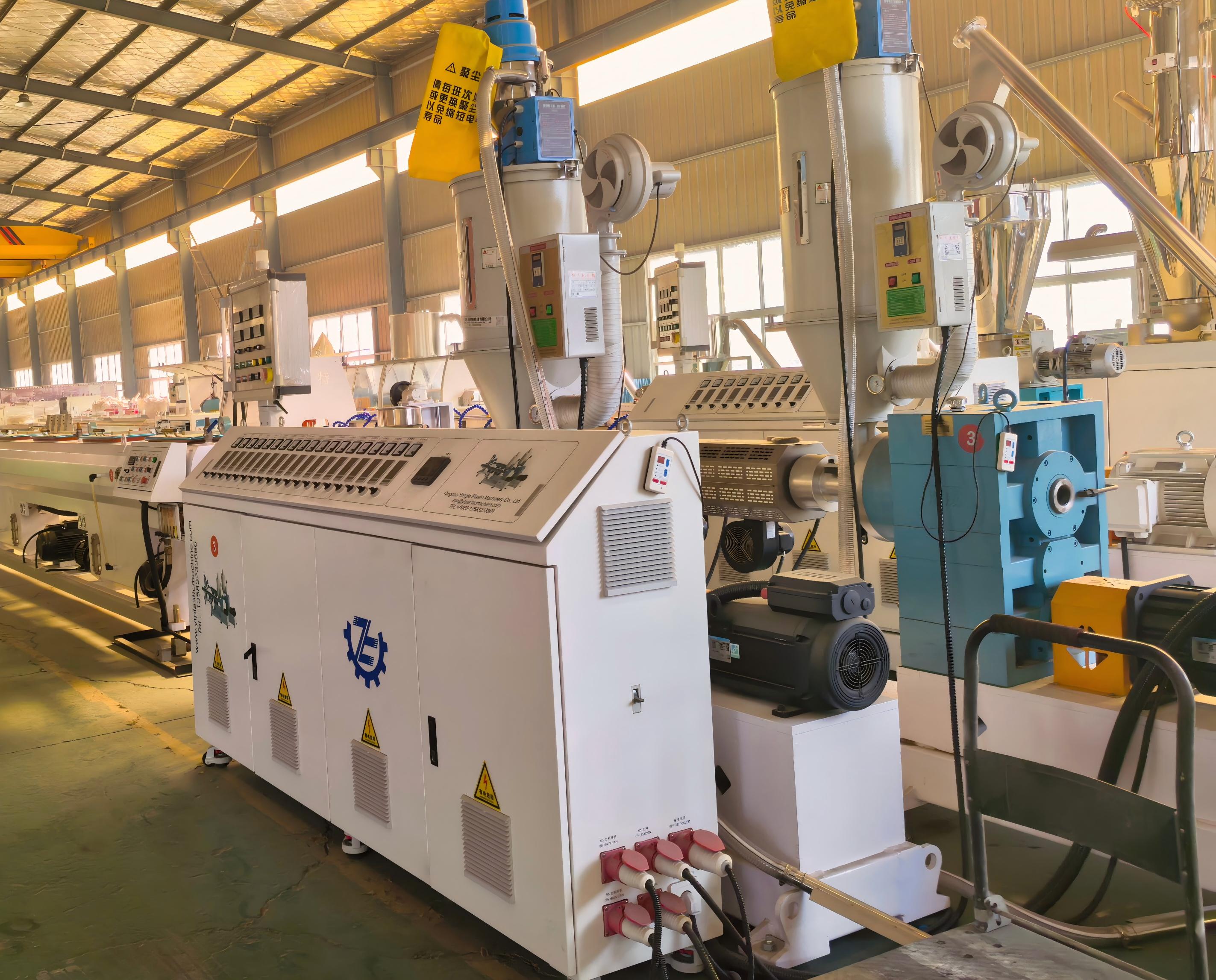
Plastic Pipe Machine Solutions: Streamlining Production with Advanced Technology
2026-06-18
In the fast-evolving world of plastic pipe manufacturing, staying competitive means embracing solutions that do more than just keep the line moving. Enter advanced plastic pipe machine solutions—designed to streamline every stage of production with precision, speed, and intelligence. But what truly sets apart a smart investment from a short-term fix? As industry demands shift toward higher output, tighter tolerances, and energy efficiency, the technology behind the machines becomes the heartbeat of your operation. At the forefront of this transformation is Yongte, a name synonymous with innovation that doesn't just promise performance—it embeds it into every extrusion line. In this post, we’ll explore how next-generation machinery is redefining efficiency and why the right partner can turn production challenges into a seamless, scalable success story.
Redefining Speed: Smarter Extrusion Lines for Modern Demands
Speed in extrusion has always been about throughput, but the conversation has shifted. It’s no longer just a numbers game of meters per minute. Modern demands call for a kind of velocity that doesn’t sacrifice its own stability—lines that adapt mid-run, recalibrating on the fly as material viscosity fluctuates or ambient conditions shift. We’re seeing smarter systems that embed real-time monitoring directly into the die and barrel, logging micro-adjustments that prevent a minor drift from becoming a full stop. The result is less about raw acceleration and more about sustained, predictable pace that lets operators plan with confidence instead of reacting to alarms.
What really redefines speed is how these lines handle transitions. In the past, changing over from one profile to another meant a deliberate slowdown, manual tweaks, and a pile of edge trim in the bin. Intelligent extrusion setups now treat speed as a variable symphony rather than a single note. Servo-driven pullers, synchronized cooling calibrators, and melt pumps that communicate rather than compete mean a line can gracefully ramp up or down without that awkward scramble. It’s the difference between a rigid tempo and a flexible rhythm—hitting high throughput when the order demands it, then easing into a gentle pace for delicate geometries without ever breaking stride. The scrap rate drops not because someone is watching closer, but because the line already knows what’s coming.
Beyond the machinery itself, this smarter approach to speed connects directly to what customers actually need now: shorter lead times and smaller batches that still pencil out. A line that can self-diagnose a developing wear pattern on a screw, or suggest an optimal barrel temperature profile based on the specific regrind ratio in use, isn’t just fast—it’s autonomously productive. It turns what used to be an operator’s gut instinct into a data-backed action. That’s the hidden acceleration—reducing the invisible pauses between good decisions. Ultimately, the fastest line isn’t the one with the highest top speed; it’s the one that spends the least time recovering from its own limits.
Intelligent Automation: Reducing Hands-On Time Without Sacrificing Quality
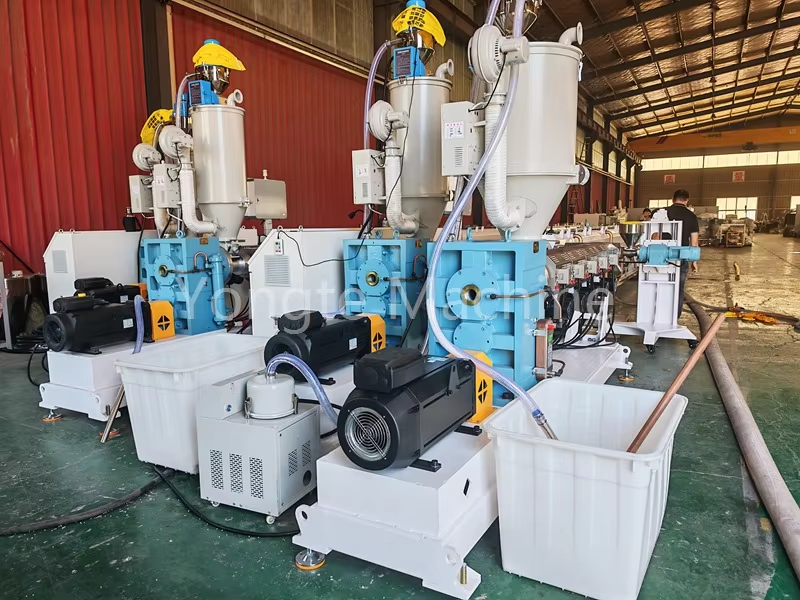
Automation often conjures images of rigid, preprogrammed scripts that break the moment something unexpected happens. That’s no longer the case. Today’s intelligent systems don’t just follow steps—they interpret patterns, adapt to outliers, and know when to flag a human for input. By handling the predictable bulk of work, these tools free up specialists to focus on decisions that genuinely require a human mind, all while maintaining the consistency that manual processes struggle to match.
One overlooked advantage is how automation reshapes quality control itself. Instead of periodic spot checks, intelligent agents continuously monitor outputs against dynamic benchmarks, catching drift before it becomes a defect. This real-time oversight means fewer escalations and rework cycles, effectively reducing hands-on time in areas that used to demand constant vigilance. The quality bar doesn’t just stay level—it tends to rise because the system learns from every correction, baking improvements into the next run without anyone having to write new rules.
The real test comes when human judgment is still essential. Intelligent automation shines here by routing complex edge cases to the right person, complete with context and suggested paths forward. That selective handoff eliminates the noise of routine queries, so experts spend their time where it counts. The result is a workflow that feels less like babysitting machines and more like a collaboration, where mundane effort shrinks and the definition of quality expands.
Material Mastery: Minimizing Waste Through Precision Control
Achieving true material mastery starts with a deep understanding of how raw inputs behave under different conditions. By closely monitoring variables like temperature, pressure, and feed rates, operators can dial in processes to use exactly what’s needed—nothing more. This kind of precision control turns material from a cost center into a strategic advantage, slashing offcuts and rejects before they ever happen.
Advanced sensor arrays and real-time analytics now give teams the ability to spot subtle shifts in material flow long before they become scrap. Instead of relying on scheduled adjustments or gut feel, machines self-correct within microns, ensuring every ounce of resin, metal, or fiber lands exactly where it should. The result is a production line that runs leaner, cleaner, and with far fewer surprises.
Waste reduction of this caliber doesn’t just boost the bottom line—it reshapes a facility’s entire relationship with its supply chain. When you can repeatedly hit target specs with minimal buffer, you order less, store less, and throw away less. That’s the quiet power of precision: it turns conservation into a seamless, everyday outcome rather than a special initiative.
Tailored Configurations: Machines That Adapt to Your Pipe Specs
Not every production line handles a single pipe diameter or wall thickness. That’s why it pays to look beyond rigid designs and focus on equipment that flexes with your specs. Tailored configurations mean the machine molds itself around the job—not the other way around. Whether you’re switching between thin-walled tubing and heavy-gauge conduits, the right setup adjusts with minimal fuss.
Modern adaptable machines offer modular tooling, quick-change clamps, and programmable logic that remembers your most-used profiles. A bent pipe former might swap out die sets in under a minute, while a cutting station automatically shifts blade speed and feed rate based on material density. The idea is to keep the line moving without breaking stride every time the order changes.
This kind of built-in flexibility doesn’t just save time—it protects your margins. Fewer dedicated machines on the floor, less downtime during switchovers, and the ability to take on custom small-batch work give you an edge without overengineering the solution. The best machine isn’t the one with the most features; it’s the one that slips right into your workflow and handles whatever you throw at it.
Energy-Smart Operations: Lower Costs, Lighter Footprint
Slashing energy waste doesn't require a PhD — it starts with tuning up what you already have. Simple steps like recalibrating HVAC schedules to match actual occupancy, insulating exposed piping, and swapping out aging pumps for variable-speed models can cut consumption by double digits without major capital outlays. These measures often pay for themselves in months, not years, freeing up cash for other priorities while immediately shrinking your carbon footprint.
Bringing real-time monitoring into the mix changes the game entirely. When facilities teams can see which circuits are drawing power at 3 a.m. or spot a compressed air leak the moment it starts wasting energy, fixes become proactive instead of reactive. Pairing submetering with a dashboard that flags anomalies helps plant managers dial in on the 20% of equipment responsible for 80% of the waste — and hold departments accountable for their actual usage instead of splitting utility bills by square footage.
There's also a quiet cultural shift when energy becomes part of the daily conversation. Posting monthly usage in break rooms, celebrating teams that hit reduction targets, and rewarding ideas from operators on the floor turn savings into a shared mission. Over time, that mindset leads to smarter procurement — like opting for high-efficiency motors during routine replacements or timing production runs to align with off-peak rates — embedding long-term resilience into the operation without anyone feeling like they're sacrificing productivity.
Built for Uptime: Reliability That Keeps Production Flowing
When every second of downtime translates into lost revenue, equipment reliability isn't just a nice-to-have—it's the backbone of your operation. Our systems are engineered from the ground up to minimize interruptions, with redundant components and proactive monitoring that catch issues before they cascade.
Real-world manufacturing rarely follows a perfect script. That's why we've built in self-diagnostic routines and quick-swap modules that let your team address anomalies on the fly, without calling in specialists or waiting for parts. The result: lines that keep moving, shifts that finish on schedule, and maintenance that happens on your terms.
What sets this apart isn't a single breakthrough feature, but a design philosophy that treats uptime as a continuous discipline. From thermal management that prevents overheating in high-cycle applications to firmware updates that roll out without halting operations, every detail pushes towards one goal: keeping your production flowing, no matter what.
FAQ
They integrate automation and real-time monitoring to reduce downtime and material waste, allowing for faster cycle times and consistent output without manual intervention.
They can manufacture a wide range, including PVC, PE, and PP pipes for applications like plumbing, drainage, gas distribution, and cable protection, with diameters from a few millimeters to large industrial sizes.
Advanced extrusion systems ensure precise temperature control and uniform melt flow, resulting in pipes with excellent dimensional accuracy and surface finish, minimizing post-production corrections.
Yes, many solutions are designed to process recycled plastics efficiently without compromising pipe quality, supporting sustainability goals while keeping material costs low.
Features like servo-driven motors, optimized heating/cooling zones, and energy recovery systems significantly decrease power usage, making operations more eco-friendly and cost-effective.
With modular die heads and quick-change systems, changeovers can be completed in minutes, boosting flexibility and minimizing production interruptions for varying orders.
Regular inspection of screws, barrels, and calibration units, along with predictive maintenance using IIoT sensors, helps prevent unexpected failures and extends equipment lifespan.
Conclusion
The landscape of plastic pipe manufacturing is shifting rapidly, demanding not just faster output but a complete rethinking of how extrusion lines operate. At the core of modern solutions is a drive to merge blistering production speeds with intelligent automation—where self-optimizing controls reduce reliance on constant manual oversight while maintaining, or even elevating, product quality. This means integrating real-time feedback loops that adjust parameters mid-run, ensuring every meter of pipe adheres to strict specs without operator micro-management. The result is a line that feels less like a machine and more like a seamless extension of the production team, handling the heavy lifting of consistency so skilled workers can focus on process refinement.
Beyond speed and automation, the real competitive edge comes from tackling waste and energy consumption at a material level. Precision extrusion control—down to the gram of polymer flow and the millimeter of wall thickness—dramatically slashes scrap rates while adapting on the fly to different resin grades or recycled content. Pair that with energy-smart heating and drive systems, and the operational costs drop as significantly as the environmental footprint shrinks. Crucially, this technology isn’t locked into a one-size-fits-all mold; tailored configurations mean the same core platform can switch between producing corrugated drainage pipe and pressure-grade water mains with minimal downtime, preserving the uptime that keeps supply chains intact. It’s a holistic approach where reliability isn’t an afterthought but a design principle—keeping production flowing with fewer surprises and far less waste, shift after shift.
Contact Us
Contact Person: Ms Qin
Email: [email protected]
Tel/WhatsApp: 8613583233866
Website: https://www.yongteplast.com