Concrete Reclaimer Company Innovations Driving Sustainable Construction Practices
2026-10-07
The construction industry is finally waking up to the waste problem hidden in every concrete pour. While most conversations focus on carbon-heavy cement production, few address the mountains of slurry, leftover mix, and washout water that quietly end up in landfills or down drains. That's where concrete reclaimer companies are changing the game. Among them, Sinou stands out—not just for recovering aggregate and water, but for rethinking how job sites can run cleaner, leaner, and with far less environmental guilt. In this post, we'll dig into the innovations driving sustainable construction forward, and why reclaiming concrete might be the most underrated green practice on site today.
Returned Concrete as a Feedstock, Not a Waste Stream
Returned concrete often ends up in landfills because it is viewed as a byproduct with no further use. This mindset ignores the material's remaining value. Fresh concrete that comes back from a job site still contains cement, aggregates, and water in proportions that can be reactivated or repurposed. Treating it as a feedstock means shifting the focus from disposal to recovery. Instead of paying to haul it away, producers can reclaim the sand and gravel, reuse the water, and capture the cementitious fines for future batches. The key is to separate the components before they harden into a solid block of waste.
The practical steps are not complicated. A truck returning with excess concrete can discharge into a reclaimer that washes the aggregates and separates the slurry. The coarse material goes back into storage for new mixes, while the fines settle out for controlled reintroduction. Some plants also use the returned concrete to make precast blocks or road base, giving the material a second life without complex processing. This approach reduces raw material purchases and lowers the volume sent to landfills, which directly cuts operating costs. It also helps meet sustainability targets without requiring a complete overhaul of existing batching operations.
Seeing returned concrete as a feedstock changes how a plant handles daily logistics. Drivers no longer need to find a dumping spot, and yard space stays cleaner. The savings from avoided disposal fees and recovered materials add up quickly, especially for high-volume producers. More importantly, it creates a closed loop where the same tonnage of cement and aggregate can serve multiple cycles before eventually degrading. That is a practical shift in thinking, not just a slogan, and it turns a nagging operational headache into a steady source of usable inputs.
Closed-Loop Wash Water That Never Leaves the Site
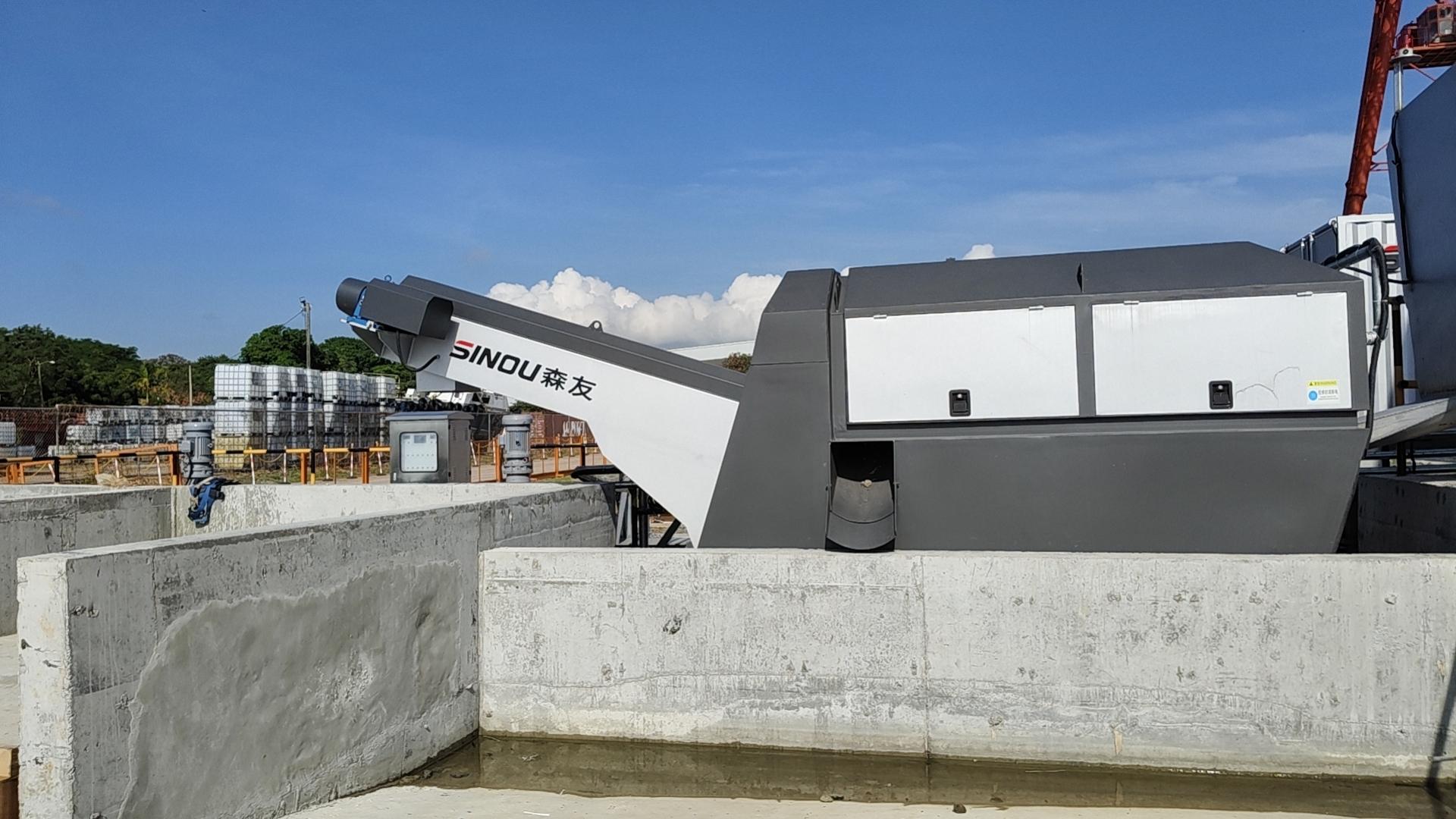
Most wash systems send contaminated water down the drain or into a holding tank that eventually needs hauling away. That approach not only wastes a valuable resource, but also opens the door to spills, permit headaches, and ever-rising disposal fees. The closed-loop design here flips that model entirely. Every drop of water used during washing is captured, filtered, and recirculated back into the next cycle. Nothing gets discharged into the ground, storm drains, or municipal sewer lines. Instead, the water lives entirely within the system, scrubbed clean again and again.
Achieving that kind of containment takes more than just plugging a drain. The loop relies on a staged filtration train that pulls out heavy solids, oils, and fine particulates before the water returns to the wash manifold. Sensors monitor clarity and pressure in real time, automatically triggering backwash cycles or filter swaps before clogging ever becomes an issue. Because the water stays on site, there is no need for wastewater permits tied to discharge limits, no transport manifests, and no third-party treatment bills. The only water added is what evaporates or gets carried out on cleaned surfaces—a fraction of what a conventional wash would use.
Operators quickly notice the difference beyond compliance checkboxes. Without the constant drain of fresh water and disposal fees, the cost per wash drops sharply. The system's footprint stays small since there are no large settling ponds or external storage tanks. And in regions with strict water conservation rules, the closed loop becomes a genuine advantage: it lets a site run full-scale washing operations even during drought restrictions. The water never leaves, so the business never stops.
Real-Time Slurry Density Tuning for Predictable Mixes
Adjusting slurry density on the fly changes how every downstream step behaves. A mix that drifts even two or three percent from target can throw off viscosity, coat weight, or final mechanical properties. Rather than waiting for a post-batch lab result, operators now watch a live density signal and make small corrections before the variation gets baked into the product. This turns a reactive quality check into a continuous, almost invisible adjustment loop.
The hardware behind this is often simpler than people expect: a Coriolis meter or nuclear densitometer placed directly in the recirculation line, feeding a controller that trims either the liquid addition valve or the dry powder feeder. What matters is not the sensor brand but the control logic. A slow proportional-only loop will hunt around the setpoint and waste material. A properly tuned cascade, where density feeds an inner flow loop, holds the line tight even when raw material moisture or ambient temperature shifts mid-shift.
Operators who adopt this approach stop chasing viscosity spikes or settling problems that actually start with density drift. Batch records become less noisy, and the next unit operation—coating, casting, extrusion—sees a more consistent feed. The result is fewer rejected lots, shorter startups after a recipe change, and a mixing process that finally behaves like the predictable step it was always supposed to be.
Compact Reclaimers That Fit Where Trucks Barely Turn
Tight job sites punish equipment that can't squeeze into place. When a standard reclaimer forces you to stage material in an open lot two blocks away, the whole schedule starts to slip. Compact models flip that script, slipping through narrow access points and pivoting inside footprints that would leave larger machines stuck waiting for a spotter. Operators find they can keep the cold planing work moving without turning every pass into a three-point maneuver.
The real advantage shows up on residential streets, parking garages, and trail sections where a full-size unit simply has no business being. A shorter wheelbase and reduced tail swing let these reclaimers work parallel to curbs, hug building lines, and carve out patches around manholes without constant repositioning. That translates into less hand trimming, fewer edge passes with a skid steer, and a finished surface that doesn't look like it was chewed out by a machine fighting for space.
It's not just about fitting through a gate; it's about actually working once you're inside. Well-designed compact reclaimers keep the rotor, conveyor, and depth controls responsive enough to match larger machines on small-scale repairs. You give up some raw horsepower, but you gain the ability to run a full milling operation in places where the alternative used to be a jackhammer and a prayer.
Cutting Carbon by Extending Aggregate Life Cycles
Quarrying, crushing, and trucking fresh aggregate burns fuel and disrupts land. But gravel, crushed stone, and sand do not wear out chemically—they can be cleaned, graded, and returned to service. Extending the life of these materials keeps their embodied carbon in place and avoids starting the extraction cycle again.
A common path is to process concrete and asphalt rubble on site with mobile crushers, then reuse the output as base course, backfill, or new concrete aggregate. Selective demolition and design for disassembly make it easier to recover clean, uncontaminated material. Every ton of recycled aggregate used in place of virgin rock avoids the emissions from blasting, hauling, and processing new stone.
The carbon math is straightforward: longer material life means fewer quarry trips and less diesel burned per cubic meter of built work. Projects that set a minimum recycled aggregate fraction often see embodied carbon drop by 15-30 percent compared to business-as-usual supply chains. This is not a distant technology—it is a shift in procurement and demolition practice that pays back immediately.
Recovered Fines That Strengthen the Next Generation of Mixes
Fines recovered from crushed recycled asphalt or concrete aren't just filler—when screened and blended correctly, they bring a surprisingly balanced gradation to fresh mix designs. Instead of dumping these ultra-fine particles as waste, engineers can use them to fill the gaps between coarser aggregate, reducing void space and cutting the amount of virgin binder needed for a stable matrix.
The real advantage shows up in compacted density and early strength. Because the recovered fines have already been through a previous life cycle, their surface texture and angularity often promote better interlock than rounded natural fines. Add them at a controlled proportion, and the next generation of mixes gains stiffness without sacrificing workability at the paver.
Moisture sensitivity and binder aging are the usual concerns with recycled fines, but testing at the mix design stage can turn these into manageable variables. A well-designed blend treats recovered fines as a performance ingredient rather than a cheap substitute, giving lab and field crews a mix that holds up under traffic and weather while keeping material costs in check.
FAQ
They're deploying closed-loop slurry separation units that capture leftover concrete from truck washout, split it into reusable aggregate, sand, and water, and feed all three streams back into batching operations instead of sending them to landfill.
The truck discharges its residual mix into a hopper, where high-pressure sprayers and a rotating drum separate cement paste from stone and sand. The heavy material is screened and stockpiled for reuse, while the water carrying fine cement particles is held in settling tanks and later reused for mixing or washing.
Rising disposal fees, limited landfill space, and the cost of virgin aggregates have made reclaimers a practical investment. A single site can recover several tons of material per day, which directly lowers project overhead and keeps schedules moving when quarries are constrained.
Sensors track slurry density, water clarity, and throughput in real time, letting operators adjust wash cycles automatically. Some systems link to batch plant software so the reclaimed aggregate and water are proportioned into new mixes without manual handling.
With proper washing and gradation control, reclaimed stone and sand perform comparably in non-structural and even structural applications. Many producers blend reclaimed fines with fresh aggregate to hit target gradation curves, and lab tests often show equal or better compressive strength when mix designs account for the reclaimed material.
Instead of drawing thousands of gallons of fresh water for washout and dust control, plants recycle the same process water repeatedly. The closed loop can cut water demand by up to 90% on a busy site, which is a major advantage in drought-prone regions.
Look for low-maintenance drum designs, durable wear plates, and a control panel that logs material recovery rates. Also check how the system handles varying slump and aggregate sizes, since a flexible reclaimer prevents downtime when different mix designs arrive throughout the day.
Conclusion
Across a growing number of ready-mix plants, returned concrete is no longer parked in a corner and hauled away. Modern reclaimer systems treat that material as a feedstock: aggregates are scrubbed and separated, sand is recovered for reuse, and the cementitious slurry is routed back into the production loop. Wash water from truck drums and chutes stays on-site, passing through settling and clarifying stages before it rejoins the batching water supply. Operators no longer have to guess how much recycled slurry to add; real-time density meters let them tune the blend so every load meets the same slump and strength expectations as a virgin mix. This shift changes the math on both water and disposal costs.
Tight sites benefit too. Compact reclaimers with a small footprint can be installed where a concrete truck can barely turn around, so even urban batch plants can process returns without trucking material across town. Cleaned aggregate goes back into the stockpile, stretching the life of quarried rock and cutting the emissions tied to mining and hauling. The fine particles recovered from the slurry are metered into fresh mixes, where they fill voids and improve workability, often reducing the cement needed to hit a given strength. Over time, that adds up to a quieter, lower-carbon operation that still holds tolerances on every yard of concrete delivered.
Contact Us
Contact Person: HaiYan
Email: [email protected]
Tel/WhatsApp: +86 18957325588
Website: https://www.senyoubeton.com/