China Tissue Folding Machine Solutions for High Efficiency Production
2026-09-29
In the competitive tissue manufacturing landscape, achieving high efficiency without compromising quality is a constant challenge. At the heart of this challenge lies the folding machine—a critical yet often overlooked link between raw tissue rolls and the neatly packaged products consumers reach for every day. China has emerged as a global hub for advanced tissue folding technology, and among the leaders, DAXIN stands out with solutions engineered to streamline production, reduce downtime, and boost output. Whether you're upgrading an existing line or building a new facility, the right folding machine can transform your operational efficiency. Here's what to look for—and why DAXIN's approach is worth a closer look.
Servo-Driven Folding Arms That Match High-Speed Converting Lines
On modern converting lines, cycle rates keep climbing, yet folding stations often become the bottleneck. The latest servo-driven folding arms are designed to keep pace—not by simply moving faster, but by synchronizing every fold with the precise position of the web and the product. Instead of relying on fixed cams or mechanical linkages that drift over time, these systems use closed-loop feedback to adjust fold angles, dwell times, and acceleration profiles on the fly. The result is a fold that stays crisp at 200 meters per minute or more, without the constant tweaking that older setups demand.
What sets these arms apart is their ability to handle format changes without a tool crib. A servo-driven design stores fold recipes digitally, so switching from a narrow carton blank to a wide liner takes seconds, not a shift. Operators can fine-tune the folding action from the HMI—softening the touch for delicate substrates or adding force for heavier board—without touching a wrench. That flexibility matters when a converting line runs multiple SKUs in a single day, and downtime for mechanical adjustment eats directly into throughput.
Durability also plays a quiet but critical role. High-speed lines vibrate, and folding arms that rely on lightweight steppers or undersized gearboxes tend to lose accuracy within months. Servo-driven units are built around direct-drive or low-backlash planetary gearing, paired with motors sized for continuous duty rather than peak bursts. That means the fold quality you dial in during commissioning stays stable through millions of cycles, which is exactly what high-volume converters need when every mis-fold ends up as waste.
Why More Tissue Mills Are Choosing Beltless Vacuum Folders
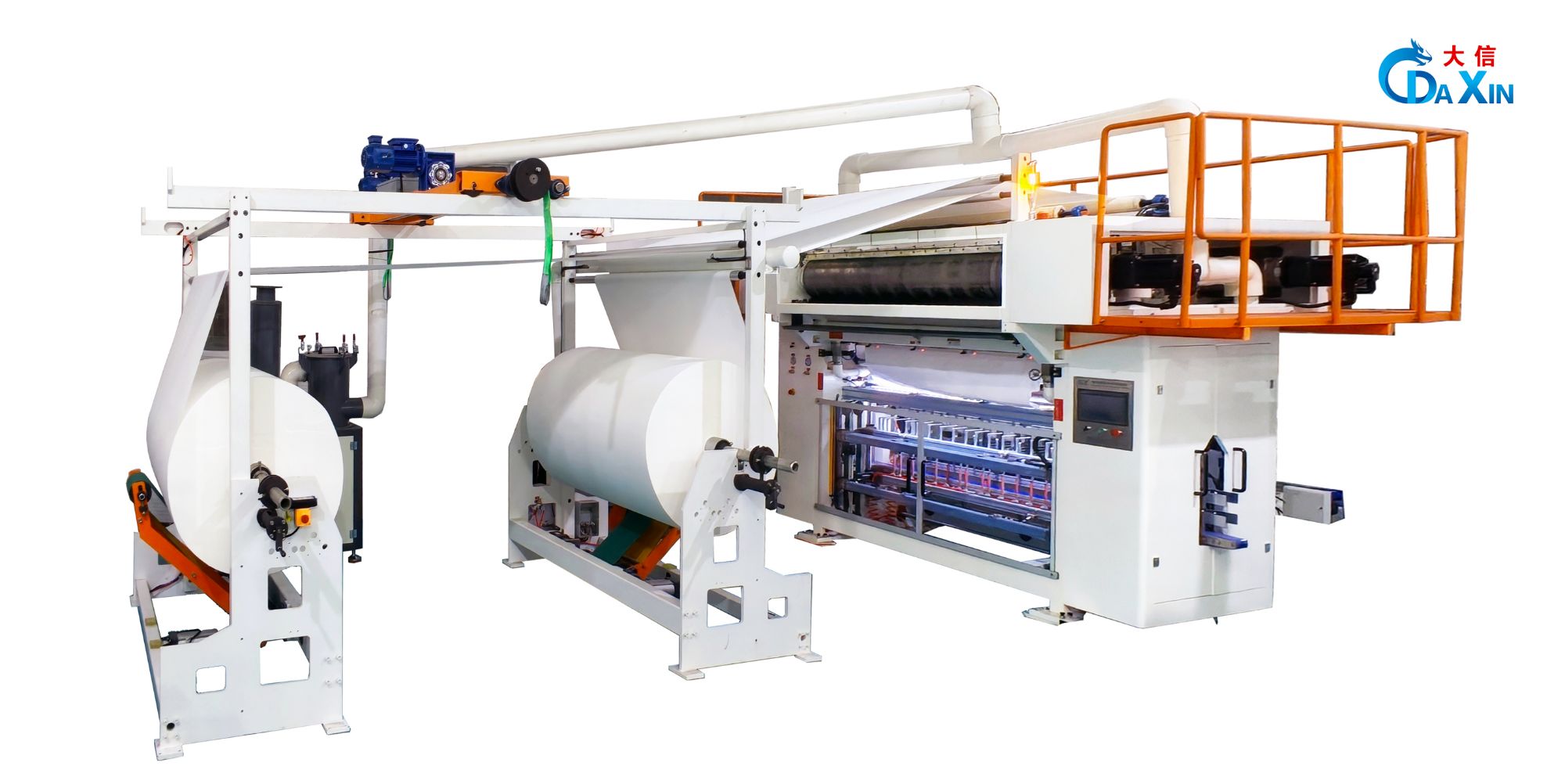
Maintenance crews used to keep a stockpile of spare folding belts and schedule regular changeouts that stopped production for hours. Beltless vacuum folders eliminate that entire task. Without belts to stretch, crack, or slip, mills are seeing fewer unplanned stops and a more predictable production calendar.
Folding accuracy is another reason for the shift. Belts can lose tension over time, causing folds to drift off-center as the line runs faster. Vacuum folders hold each sheet in place with consistent negative pressure, so fold placement stays tight even at higher speeds. That means fewer rejects and less rewinding.
Hygiene also matters in tissue converting. Belt surfaces pick up fiber dust and can transfer it to finished products. A beltless design removes those contact surfaces from the folding area, which simplifies cleaning and reduces the chance of contamination complaints from customers.
Self-Diagnosing Folding Units That Reduce Unplanned Stops
The folding unit tracks its own wear points, pressure curves, and timing drift on every cycle. When a bearing starts running hot or a cam trace falls outside the expected window, the unit flags the issue before it turns into a jam. Maintenance receives a specific notice instead of a generic alarm, so the line keeps moving until a planned service window opens.
Rather than waiting for a tear or misfeed to force a shutdown, the self-diagnostic layer maps each fault to a probable root cause. Operators can clear a sensor offset, adjust belt tension, or swap a worn roll during a scheduled pause. The result is fewer early-morning breakdowns and less time spent chasing intermittent stops.
Over time, the unit builds a local history of drift patterns and uses those baselines to separate real problems from harmless variation. That means the folding operation only interrupts production when there is something worth fixing, keeping overall equipment effectiveness higher without constant manual oversight.
Maintaining Fold Registration on Low-Grammage Stock Without Jams
Lightweight stocks tend to flutter and drift as they move through folding units, so the first thing to check is sheet control before the fold plates. Reduce air blast settings on the feeder and use only enough vacuum to separate sheets cleanly; too much air lifts the tail edge and skews the sheet. Keeping side guides set to a minimum clearance—about 0.5 mm per side—prevents lateral wander without pinching, and a slight forward lean on the feed table helps the sheet enter the fold rollers squarely.
Fold roller pressure and speed matching matter more on thin stock than on heavier boards. Run the fold rollers with the lightest pressure that still gives a crisp fold; excessive nip pressure stretches the sheet and throws off registration. If your folder allows individual roller speed trim, set the first fold section slightly slower than the infeed so the sheet doesn’t buckle too early. Also check that all rollers are clean and free of glaze—glazed rollers lose grip and let thin sheets slip.
Static and moisture are common hidden causes of jams with low-grammage stock. A static eliminator placed just before the fold section reduces sheets sticking together or clinging to guides, while keeping the pressroom humidity around 50–55% prevents the paper from becoming brittle or overly limp. For very light sheets, a thin film of silicone on fold plates or using Teflon-coated plates lowers friction enough to maintain fold registration without the extra drag that leads to jams.
Recovering Heat From Folding Drives to Lower Plant Energy Use
Folding machines in industrial laundries and packaging plants run hot for a reason. Their drives—whether electric motors, hydraulic pumps, or gearboxes—convert a noticeable share of input energy into waste heat. Historically, that heat just dissipated into the shop floor, forcing HVAC systems to work harder and pushing up overall energy bills. But a shift in thinking is turning this thermal byproduct into a usable resource, especially in facilities where folding lines operate continuously.
The approach centers on capturing heat directly at the drive unit. For electric drives, this often means fitting liquid-cooled jackets around motor housings or routing exhaust air from VFD cabinets through a heat exchanger. Hydraulic folding drives run even hotter; their oil reservoirs can be tapped with plate-and-frame exchangers that transfer heat to a building's hot water loop. Some plants go further, using the recovered warmth to preheat boiler feedwater or to supplement space heating in adjacent zones. The key is matching the temperature grade to the end use—drive waste heat typically lands between 40°C and 80°C, which suits low-temperature applications perfectly.
Results from early adopters are tangible. One mid-sized laundry processing 18 tonnes of linen per day cut its natural gas demand by roughly 12% after retrofitting heat recovery on six folding lines, with a payback under two years. The added benefit shows up in the summer months: less heat dumped into the production hall means fewer chiller run-hours. As folding drives become more efficient themselves, the remaining waste heat is lower grade but still valuable—capturing it closes a loop that used to be wide open.
Short-Run Fold Patterns for Private Label and E-Commerce Brands
Short-run fold patterns give private label and e-commerce brands a way to test packaging concepts without locking into massive print volumes. Instead of committing to a single die line for tens of thousands of units, a brand can run a few hundred pieces with a modified fold sequence—say, a reverse tuck instead of a straight tuck, or an extra panel that changes how the product sits on a shelf. The focus stays on physical interaction: how the box opens, how the flap tension feels, and whether the interior layout makes sense for the actual item being shipped.
For online-only sellers, the fold pattern also has to survive a different journey. A box that looks elegant on a studio table might arrive crushed because the fold orientation left a weak corner exposed to courier handling. Short runs let you iterate on structural details—adding a locking tab, shifting the glue flap, or adjusting the crease depth—without paying for a full production batch each time. This kind of rapid testing is especially useful when launching a limited edition or a seasonal variant where the packaging needs to feel special but the quantity is modest.
One underused approach is to treat the fold pattern as a branding element itself. A slightly unusual closure, like a diagonal tuck or a friction-fit panel, creates a tactile signature that customers remember. Since short runs keep the cost per unit manageable, you can afford to run two or three different fold styles for a split test, then scale up the winner. It’s a low-risk way to make the unboxing moment feel deliberate rather than generic.
FAQ
Most suppliers offer rotary and reciprocating models for interfolded, multifolded, and quarter-folded tissue. You'll find machines handling sheet widths from 300 mm to over 1500 mm, with production speeds from 100 to 800 sheets per minute depending on the fold type and paper grade. Some factories also build combined units with embossing or lotion application for premium products.
They use servo-driven folding rollers and automatic web tension control to keep fold accuracy within tight tolerances. Auto splicing on unwind stands lets you change parent rolls without stopping, while missing-sheet detection and reject gates remove bad stacks before they reach packaging. That reduces both material waste and manual sorting.
Match the machine to your fold pattern first—interfold, multifold, or custom folds need different plate and roller setups. Then check the maximum parent roll diameter, paper basis weight range, and whether the delivery system piles stacks neatly. Ask about changeover time between formats, especially if you run short runs. After-sales support, including remote diagnostics and local spare part depots, matters more than a low upfront price.
Yes, many suppliers have in-house engineering teams that can adjust fold sizes, add perforation units, or integrate custom embossing patterns. For niche products like car tissues or medical wipes, they can build machines with special folding plates and packing attachments. Usually, you provide a sample or drawing, and they'll run a trial before shipment to prove the format works.
Plan daily cleaning of folding plates and rollers to remove paper dust, weekly lubrication of cam and gear systems, and monthly inspection of blades and belts. Many newer machines have automatic lubrication points and self-diagnostic alarms that show which part needs attention. Keeping a small stock of wear parts like folding rollers, suction cups, and timing belts reduces unexpected stoppages.
Automatic sheet feeding, stack counting, and robotic or pneumatic discharge mean one operator can oversee several lines instead of one per machine. Touchscreen controls let you switch between saved recipes in minutes, so no mechanical adjustments are needed by skilled technicians. Some advanced lines also include vision systems that automatically discard defective stacks, cutting the need for manual inspection.
They run the machine for 24 to 48 hours with your actual paper grade and fold pattern, then verify stack count, fold alignment, and discharge speed against a checklist. Many factories have ISO 9001 certification and test every machine's electrical safety and pneumatic circuits. You can ask for a Factory Acceptance Test video or visit the workshop to see the machine under load before payment.
Conclusion
Chinese tissue converting lines are pushing past the output limits of older mechanical folders by pairing servo-driven folding arms directly with high-speed log saws and wrappers. The arms adjust stroke length and timing on the fly, so a single machine can hold fold accuracy without slowing the line when grammage or sheet count changes. Beltless vacuum folders are gaining ground for the same reason: eliminating transfer belts removes a common source of drift and lint buildup, and the vacuum cylinders grip lightweight sheets more repeatably. Maintenance teams are also seeing fewer surprise stops because newer folding units run continuous self-diagnostics. Sensors monitor bearing temperature, vacuum pressure, and arm synchronization, flagging wear patterns before they trip a line fault. The result is a folding section that no longer dictates the pace of the entire converting operation.
Low-grammage tissue remains a challenge, but improved air-assisted nose bars and vacuum timing keep fold registration stable without jams even on 13 to 15 gsm stock. Rather than forcing operators to slow the line, the controls adjust vacuum dwell and folder finger entry speed for each new parent roll. Waste heat from the high-torque folding drives is now being recovered through liquid cooling loops and redirected to pre-heat combustion air or facility water, trimming overall plant energy use by several percentage points. This matters most to private label and e-commerce brands, whose orders often involve short runs and frequent pattern changes. Servo-controlled fold plates and quick-change former sets allow converters to switch from interfolded kitchen towels to flat-pack bath tissue in minutes, keeping small-batch production profitable while still running at high efficiency.
Contact Us
Contact Person: Sam Xie
Email: [email protected]
Tel/WhatsApp: 86-18938538530
Website: https://www.daxin321.com/