China Hot-Dip Galvanized Angle Steel Company: Your Trusted Partner for Corrosion-Resistant Structures
2026-10-07
Steel corrodes. It’s a fact of engineering life—but it doesn’t have to be yours. When structural integrity hinges on every angle, hot-dip galvanized angle steel from China has become the quiet workhorse behind bridges, towers, and frames that refuse to quit. Yet not all suppliers deliver the same bite. That’s where Shunchen steel changes the conversation: a partner that treats corrosion resistance as a design parameter, not an afterthought. In this post, we’ll walk through what separates true long-term protection from a surface-level promise—and why your next project may already be leaning in this direction.
Why Hot-Dip Galvanizing Keeps Angle Steel Rust-Free for Decades
Hot-dip galvanizing works by fully immersing angle steel in molten zinc, creating a metallurgical bond that goes far beyond a simple surface coating. The zinc reacts with the steel to form a series of zinc-iron alloy layers, each harder than the base metal itself. These layers are then covered by a top coat of pure zinc. Unlike paint or powder coating, this bond becomes part of the steel, so it won't crack, peel, or flake off under impact or bending stress. That structural integrity is why galvanized angle steel keeps its protection even after decades of rough handling and environmental exposure.
The real long-term shield comes from zinc's sacrificial behavior. When the galvanized coating is scratched or cut, the surrounding zinc corrodes first, protecting the exposed steel underneath. This electrochemical protection, known as cathodic action, means small nicks and edges don't become starting points for rust. In harsh environments—like coastal salt spray, industrial pollution, or constant moisture—the zinc continues to sacrifice itself slowly, buying decades of rust-free service. The rate of zinc consumption is predictable and gradual, often lasting 50 years or more in moderate climates without any maintenance.
Another overlooked advantage is that hot-dip galvanizing covers every surface, inside and out. Angle steel has complex geometry with holes, corners, and cut ends that are difficult to coat evenly with sprays or brushes. Full immersion ensures these vulnerable areas get the same thick zinc layer as the flat faces. Combined with the bond strength and sacrificial protection, this complete coverage eliminates the weak points where rust usually starts. For angle steel used in transmission towers, guardrails, or support frames, that means decades of dependable performance with zero repainting, zero patching, and zero hidden corrosion.
How Our Galvanizing Kettle Delivers Uniform Zinc Coverage Every Time
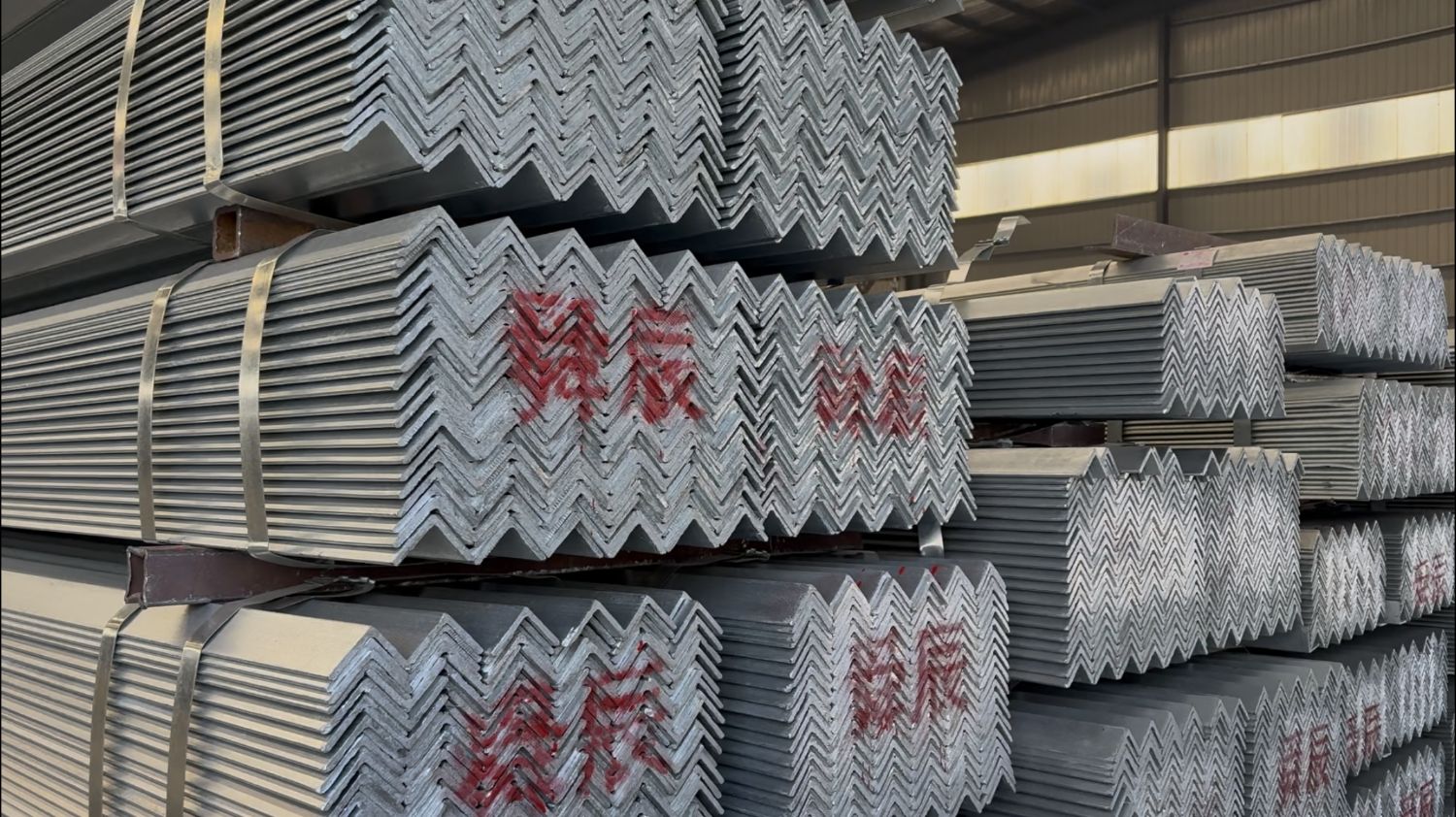
Achieving a perfectly even zinc layer on every part begins long before the steel enters the bath. Our kettle is engineered with a carefully controlled heating system that maintains temperature stability across the entire surface, eliminating the hot and cold spots that typically cause uneven coating thickness. The result is a smooth, predictable metallurgical reaction between the iron and molten zinc, regardless of where the workpiece sits in the kettle.
We further refine coverage by managing immersion angle and withdrawal speed with precision tooling. Rather than relying on a single generic dip, each load is positioned to allow zinc to flow evenly into recesses and over edges, while excess metal drains cleanly as the part exits. This attention to withdrawal dynamics prevents the heavy drips and thin patches that plague lesser galvanizing operations, giving every piece a consistent, durable shell from first inch to last.
Finally, our zinc bath chemistry is continuously monitored and adjusted to promote uniform wetting. By keeping alloy layers within a narrow window, we avoid the brittle, uneven buildup that can occur when reactive steel meets uncontrolled zinc. The payoff is a finish that not only looks uniform but also performs uniformly in the field, with corrosion protection that holds up across the entire surface year after year.
Angle Steel That Thrives in Coastal, Industrial, and Underground Settings
Where salt-laden winds, chemical fumes, and constant dampness would quickly eat through ordinary steel, the right angle steel doesn't just survive—it holds its shape and strength. Coastal environments demand exceptional resistance to chloride corrosion, which is why alloys with higher chromium and molybdenum content are favored. These grades form a stable passive layer that keeps pitting and crevice corrosion at bay, even when exposed to sea spray and tidal splash zones. In industrial plants, angle steel must contend with acidic vapors, alkaline solutions, and abrasive dust, so selecting a grade with proven resistance to both uniform and localized attack becomes a practical necessity, not a luxury.
Underground settings introduce a different set of challenges: microbiologically influenced corrosion, fluctuating groundwater chemistry, and high mechanical stress from soil movement. Angle steel used in tunnels, foundations, or buried infrastructure often relies on a combination of metallurgical purity and specialized coatings. Some projects opt for hot-dip galvanizing over a corrosion-resistant base metal, while others use epoxy or polyurethane linings. The key is designing for the specific soil resistivity and moisture levels—a one-size-fits-all approach tends to shorten service life dramatically. Contractors who track actual corrosion rates on test coupons find that a carefully matched angle steel can outlast conventional carbon steel by decades, even in aggressive clay or peat soils.
Beyond material selection, geometry and fabrication details play a quiet but decisive role. Rounded edges shed water more effectively than sharp corners, and weld zones need post-treatment to restore corrosion resistance. For angle steel installed in tidal or splash zones, avoiding crevices—such as bolted lap joints without sealant—prevents localized attack from starting. Regular inspection and touch-up coatings, while often overlooked, can extend the functional life of any corrosion-resistant angle steel. The real-world performance depends on matching the alloy, coating system, and design details to the specific coastal, industrial, or underground exposure, rather than relying on generic corrosion allowances.
Custom Cuts, Holes, and End Finishes Matched to Your Project Drawings
Every cut starts with your drawing, not a catalog guess. We transfer radii, bevels, and unusual profiles straight from the CAD or hand sketch into the material, so the piece arrives ready for assembly rather than forcing you to trim on site.
Holes are positioned with the same attention: slot patterns, countersinks, and threaded openings land where your dimensions say they should. No default spacing or best-effort centering—each one is measured against the reference edges you specify.
End finishes follow your callouts for edge breaks, chamfers, or raw sawn surfaces. If a drawing calls for a specific roughness or a clean milled face, that is what gets applied, with no substitutions made without a conversation first.
The Lab Checks Behind Every Batch Before It Leaves Our Facility
Every batch gets pulled aside before it can even think about shipping. We run identity tests on the raw materials first, then again after blending, checking that the active compounds match what's on the label down to the milligram. If a number drifts outside our narrow window, the whole lot is flagged and held until we figure out why.
Microbial screening happens late in the process, not just once. Samples are drawn from different points in the run, plated, and incubated long enough to catch slow growers. Heavy metals and solvent residues get their own pass too, using methods that separate signal from noise so a passing result actually means something.
Only after the final stability check comes back clean does the batch get released. That means verifying there's no degradation under heat and humidity the product might face in a warehouse or a delivery truck. Lab notes from every step stay on file, tied to the batch number, so if a question ever comes up, we can trace it back to a specific drum or blend time.
The Real Cost of Corrosion and How Thicker Zinc Changes the Math
Corrosion rarely announces itself with a dramatic collapse. It works quietly, thinning structural steel, eating through fasteners, and weakening load-bearing joints long before anyone notices a rust stain. The real cost isn't just the eventual replacement part—it's the unplanned downtime, the emergency scaffolding, the safety inspection failures, and the ripple effect of delayed projects. By the time a corroded beam or bracket fails, the repair bill often runs five to ten times higher than what proactive protection would have cost at the start.
Zinc changes this equation by sacrificing itself first. When steel is hot-dip galvanized, the zinc layer corrodes slowly and predictably, forming a patina that shields the underlying metal from moisture and oxygen. But not all zinc coatings are equal. A thicker layer doesn't simply last proportionally longer—it buys you a nonlinear advantage. Doubling the zinc thickness can extend service life by more than double in many environments, because once the zinc reaches a critical thickness, the patina becomes denser and less permeable, slowing further attack. This means a modest upfront increase in coating weight can push replacement cycles from every 15 years to every 50 or more.
The math shifts dramatically when you consider real service conditions. In coastal or industrial zones with aggressive chlorides or sulfur compounds, standard zinc coatings may erode at 0.5 to 1 mil per year. A 1.7-mil coating might last two to three years before the steel is exposed, while a 3.9-mil coating stretches that window to six or eight years—and often well beyond, because thicker zinc develops a more stable, self-healing corrosion product. The difference isn't just a few extra years; it's the difference between paying for a full repaint and structural repair at year ten versus doing nothing but routine inspection for three decades. When you factor in labor, access equipment, and lost productivity, thinner zinc is the expensive choice hiding behind a lower initial quote.
FAQ
The steel is immersed in molten zinc, forming a metallurgical bond and multiple alloy layers. This coating acts as a barrier and also provides cathodic protection, so even if scratched, the exposed steel remains shielded.
We supply to power transmission towers, telecommunication infrastructure, solar mounting systems, highway guardrails, and general structural frameworks where long outdoor life matters.
Yes, we accept custom lengths, unequal leg sizes, and various hole patterns. Send us your drawings, and our engineering team will confirm feasibility before production.
We run in-house tests with magnetic thickness gauges and perform adhesion tests by bending or striking the coated surface. Each batch is inspected and documented.
For common sizes, it is about 15 to 20 days after deposit. Customized dimensions or heavy punching may add another week.
Yes, we issue mill test certificates with each shipment. We also welcome third-party inspections such as SGS or BV before loading.
We bundle the angle steel with steel strips and wrap it with water-proof cloth or use wooden pallets if requested. Container loading is supervised to prevent shifting.
Conclusion
When angle steel leaves our galvanizing line, it carries a metallurgically bonded zinc layer that stands up to decades of humidity, salt spray, and industrial fallout. Unlike paint or cold zinc sprays, hot-dip galvanizing creates an intermetallic alloy with the steel itself, so scratches and edges heal through cathodic protection instead of becoming rust initiation points. Our kettle operation controls immersion time and withdrawal speed to keep coating thickness consistent across flanges, toes, and cut ends—areas where thinner or patchy zinc usually fails first. This is why our angle steel performs reliably in coastal installations, chemical plants, and buried or embedded applications where moisture never fully dries out.
Beyond the coating itself, every batch is matched to your shop drawings through in-house cutting, punching, and end preparation, so the galvanized pieces arrive ready to erect without field rework. Before shipment, we run adhesion tests, coating thickness checks, and visual inspections under controlled lighting to catch bare spots, lumps, or drainage defects. We also help you weigh the true lifecycle cost: a heavier zinc coating might add a small upfront premium, but it pushes the first maintenance cycle decades further out, often cutting total ownership cost by half or more in aggressive environments. That combination of metallurgical quality, dimensional accuracy, and honest cost guidance is what makes us a dependable partner for corrosion-resistant structures.
Contact Us
Contact Person: Max Zhou
Email: [email protected]
Tel/WhatsApp: +86 15712216177
Website: https://www.shunchensteelmaterial.com/