Best Stainless Steel Hex Socket Cap Screws for Durable and Corrosion-Resistant Fastening
2026-10-02
If you've ever had a fastener fail due to rust or stripping, you know the frustration. Stainless steel hex socket cap screws are the go-to choice for projects that demand both strength and long-term corrosion resistance. But with so many options on the market, how do you pick the best? Here's what to look for—and why Wanluo consistently delivers fasteners that hold up under tough conditions.
Not All Stainless Steel Is Equal: Choosing the Right Alloy for Your Screws
When shopping for stainless steel screws, many people assume the material is all the same. In reality, the family of stainless alloys varies dramatically in composition, and those differences directly affect how a screw performs in real-world conditions. The most familiar grade, 304 stainless, offers solid corrosion resistance for indoor and mildly outdoor use. But step into a marine environment or anywhere with salt spray, and 316 stainless becomes essential — the addition of molybdenum gives it a decisive edge against pitting and chloride attack. Choosing the wrong alloy can mean premature rust, staining, or even structural failure.
Beyond the common austenitic grades, there are also martensitic and ferritic stainless steels worth knowing. For example, 410 stainless can be hardened through heat treatment, giving you a screw with much higher strength than 304 or 316. However, that strength comes at the cost of reduced corrosion resistance, so it's typically reserved for applications where mechanical loads outweigh exposure concerns. Similarly, some screws use duplex stainless alloys, which blend austenitic and ferritic structures to offer both high strength and excellent chloride resistance — a premium choice for demanding industrial settings.
The key is to match the alloy to the environment and load. If your project stays indoors and dry, a basic 304 screw will likely serve well for years. For coastal, chemical, or high-humidity settings, step up to 316 or a duplex grade. If you need tensile strength beyond what standard stainless provides, consider a heat-treated martensitic alloy, but be aware you'll sacrifice some corrosion protection. A few minutes of research into alloy composition can save you from costly replacements and safety risks down the line.
How Corrosion Resistance Keeps Hex Socket Cap Screws Reliable for Years
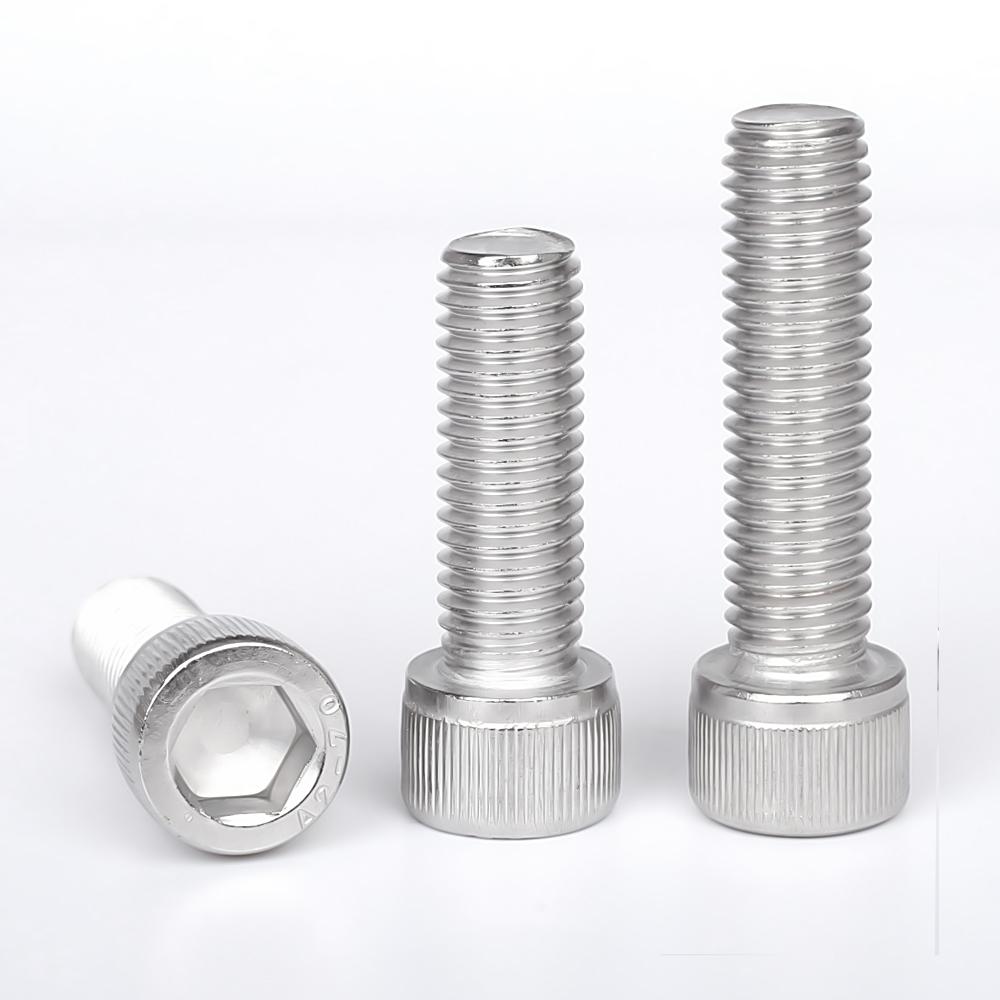
Hex socket cap screws often sit in places you rarely inspect—outdoor machinery, marine fittings, chemical processing lines. Once corrosion starts, threads seize, heads strip, and the whole assembly becomes a maintenance headache. A proper corrosion-resistant coating or alloy choice keeps that first pit from ever forming, so the screw retains its clamping force and clean removal years later.
The trick is matching the protection to the environment. Stainless steel works well in damp air and mild chemical exposure, but for salt spray or acidic fumes, a specialized plating like zinc-nickel or a duplex coating buys far more time. Even the geometry matters: a smooth socket and precision threads shed moisture instead of trapping it, while a thin protective film stops galvanic reactions when the screw meets a dissimilar metal.
What you get in return is not just longer service life, but predictable disassembly. A hex socket cap screw that still turns freely after five years on a saltwater dock saves the whole panel from being drilled out. That reliability comes from understanding corrosion not as a distant threat, but as a daily load the fastener must carry as surely as tension or shear.
Tensile Strength and Hardness: What Makes These Fasteners So Durable
Tensile strength gets thrown around like a buzzword, but for a fastener it means one concrete thing: the maximum pulling force the bolt or screw can take before it snaps. In high-end alloy steels, that number routinely exceeds 150,000 psi. A half-inch bolt made from properly heat-treated 4140 or 10.9-grade steel can hold the weight of a pickup truck before yielding. The secret isn't exotic chemistry—it's the grain structure. Quenching and tempering create a fine martensitic matrix where dislocations pile up and resist sliding, which delays fracture and gives the fastener its backbone.
Hardness plays a quieter but equally important role. It measures how well the surface resists indentation, which translates directly to thread integrity under repeated torque. A Grade 12.9 bolt lands between Rockwell C 39 and 44 for a reason: hard enough that the hex corners don't round off and the threads don't gall, yet soft enough to absorb impact without cracking. Cheap fasteners often skip the tempering step and end up with high hardness but a brittle, crack-prone surface. That's why a file test can fool you—a bolt that scratches glass may still fail in a real joint because its core is soft or its threads have microcracks.
Durability in the field comes from the balance between these two properties, not from maxing out either one. A fastener with huge tensile strength but low hardness will stretch and lose clamp load over time. A very hard but low-tensile fastener will snap without warning. The best manufacturers tune carbon content, add small amounts of chromium and molybdenum, and adjust the tempering temperature until the bolt holds torque, survives vibration, and still has enough ductility to bend slightly before breaking. That kind of tuned behavior is what separates a lasting joint from a recall.
Tips for Choosing the Correct Size, Pitch, and Drive Style
Start by measuring the thickness of the materials you're joining. The screw's threaded portion should fully engage the bottom piece by at least two or three full threads, but avoid so much extra length that the tip pokes through. If you're working with softwoods like pine, a coarse pitch bites better and reduces splitting. For hardwoods, sheet metal, or dense composites, switch to a finer pitch—it gives you more threads per inch and stronger hold without chewing up the fibers.
Drive style matters more than most people expect. Phillips heads are common, but they cam out easily under high torque. If you're using an impact driver or working in tight spots, a Torx or hex drive will save you frustration and stripped heads. Keep a small selection of both coarse and fine thread screws in your box, and test a few on an offcut before committing. That two-minute check tells you more about fit than any chart.
Installation Practices That Preserve Thread Integrity and Holding Power
Most thread damage happens long before the fastener ever sees a load. The moment a bolt is started at a slight angle, the first few threads begin to shave material away, and from there every turn compounds the problem. Rather than relying on feel alone, take the extra few seconds to back the fastener counterclockwise until you feel the subtle click of the thread lead dropping into place, then begin driving it in. This simple habit eliminates cross-threading and keeps the full engagement surface intact.
Cleanliness at the mating surfaces is just as critical as technique. Debris trapped between the bearing face and the clamped material creates a false torque reading, so the joint reaches its specified preload while the threads are still only partially seated. Wiping both the internal and external threads with a clean cloth, then applying the correct lubricant or anti-seize only where specified, ensures the torque wrench measures friction at the threads and not grit. Dry, unlubricated threads often yield inconsistent clamp loads, especially on plated or high-strength fasteners.
Finally, never reuse a fastener whose threads have already yielded. After removal, run a fingernail across the thread crests; if they feel sharp or you can see galling or flattening, the holding power is already compromised. For critical assemblies, replace bolts rather than chasing threads with a die, which removes material and weakens the cross-section. When a repair does require chasing, use a thread restorer rather than a cutting tap, since the restorer reforms the existing profile instead of cutting new metal away.
Where These Screws Excel: Marine, Chemical, and High-Moisture Environments
Marine environments punish ordinary fasteners quickly. These screws shrug off salt spray, tidal immersion, and constant dampness because their alloy composition resists pitting and crevice corrosion. Docks, bilge pumps, and deck hardware stay secure without rust streaks or seized threads after seasons of exposure.
In chemical plants and processing lines, corrosive fluids and vapors eat through standard steel in months. These screws offer dependable resistance to acids, solvents, and caustic cleaning agents. Their surface stays intact, preventing leaks and maintaining clamp load even when splashed or wiped down with aggressive disinfectants.
High-moisture settings like commercial kitchens, water treatment rooms, and outdoor HVAC units create constant condensation. Rather than wicking moisture into joints, these screws keep a stable oxide layer that blocks red rust and galvanic reactions. The result is fewer replacements and less downtime in places where wiping down or hosing off is part of the daily routine.
FAQ
Their resistance to rust and moisture keeps them reliable in rain, humidity, and salt air, while the recessed hex drive allows high torque without stripping.
Match thread diameter and length to the materials you're joining. The screw should pass through the first piece and bite into the second without bottoming out; add washers if the head sinks into soft material.
Most stainless grades, especially 18-8 and 316, hold their strength and resist scaling at moderate heat. For sustained high heat above 800°F, consult material specs because expansion and oxidation can affect performance.
The internal hex recess allows a key to sit deep in the head, reducing cam-out and letting you tighten in tight spaces where a wrench won't fit around the head.
No. 18-8 works well for general moisture, but 316 includes molybdenum, which gives better resistance to chlorides, saltwater, and chemical exposure.
Use a nickel-based anti-seize on threads, tighten slowly with hand tools, and avoid reusing fasteners in high-friction assemblies. Proper torque control also lowers seizure risk.
In most cases no. Periodic inspection for surface staining and re-tightening in vibration-prone joints is enough. If you notice tea staining on 304, a mild citric acid wash restores the passive layer.
Conclusion
A stainless steel hex socket cap screw only performs as well as the alloy behind it—and assuming all stainless grades behave alike is a costly mistake. For most general-duty fastening, 18-8 (304) stainless offers a solid balance of strength and rust resistance, but in chloride-heavy or chemical exposure, 316 stainless with its molybdenum addition becomes essential. The payoff shows up over years, not months: the thin passive oxide layer on 316 continuously self-heals after minor scratches, preventing crevice corrosion that would seize cheaper fasteners. Beyond corrosion, these screws earn their reputation through high tensile strength and hardness. A properly manufactured socket head allows for precise hex-key engagement, while the cold-worked threads resist deformation under heavy clamping loads. That combination is why they hold tight in equipment that endures vibration, temperature swings, and frequent disassembly.
Choosing the right screw means more than matching diameter—thread pitch, length, and drive style must fit the actual joint. Coarse threads give faster assembly and better grip in softer materials; fine threads provide higher tensile stress area and adjustability. For socket caps, a standard hex drive works well, but an Allen key with a worn tip will round the internal hex quickly, so investing in quality bits matters as much as the screw itself. During installation, stainless-on-stainless contact invites galling, so a nickel-based anti-seize or even a light machine oil on threads reduces friction and preserves thread integrity. Do not overtighten—torque values for stainless are typically lower than for alloy steel. In marine, chemical, and high-moisture environments, these screws excel because they resist crevice attack and maintain holding power without protective coatings that eventually flake off. When the alloy, pitch, and installation method all match the application, hex socket cap screws deliver decades of reliable, corrosion-resistant fastening.
Contact Us
Contact Person: Shane
Email: [email protected]
Tel/WhatsApp: 8613357785029
Website: https://www.wanluohardware.com