Best Quality Toilet Paper Rewinding Machine: Essential Features for Reliable Production
2026-10-04
In the tissue converting industry, few machines have as direct an impact on daily output quality as the toilet paper rewinding machine. While many manufacturers claim reliability, the gap between average and best-in-class performance becomes painfully obvious once production pressure rises. This is where DAXIN has carved out a reputation for building rewinding systems that don't just meet specifications—they keep running shift after shift without compromising roll tightness or embossing clarity. But what exactly separates a truly dependable rewinder from the rest? Below, we break down the essential features to look for, so you can make an informed investment instead of learning from costly downtime.
Precision Tension Systems That Stop Sheet Wrinkling Before It Starts
Sheet wrinkling rarely announces itself with a warning. It appears as a subtle wave near the roll center, then hardens into a crease that compromises coating adhesion, print registration, or lamination clarity. Precision tension systems address this at the source, using closed-loop feedback to measure actual web tension at multiple points along the path. Instead of relying on a single dancer roll or a fixed torque setting, these systems modulate nip pressure and unwind torque in real time, accounting for changes in roll diameter, line speed, and material stiffness. The result is a web that stays flat not because an operator is constantly adjusting, but because the system anticipates the moment a wrinkle would form and removes the excess energy before it transfers into the sheet.
What makes this approach practical is its focus on local tension peaks, not just average tension. Many wrinkles are born in the brief instant when the web leaves an idler or enters a coating station, where the tension gradient across the width differs by only a few percent. Precision systems use load cells embedded in segmented rollers or air flotation bars to detect these cross-machine variations, then apply differential braking at the unwind or adjust the angle of a steering roll to correct the path. By treating wrinkling as a dynamic instability rather than a static misalignment, the equipment prevents the defect without over-tensioning the sheet, which would introduce its own curl and stretch problems.
The payoff extends beyond visual quality. Once a sheet has wrinkled, the crease cannot be completely removed by downstream calendering or drying; the damage is already locked into the fiber orientation or film memory. Precision tension control means fewer rejected rolls, less edge trim waste, and the ability to run lighter gauge materials that were previously considered too sensitive for the line. For operations chasing higher throughput, these systems also allow faster ramp-up after splices and less babysitting during speed changes, because the tension logic is designed to learn the sheet's behavior over time and adjust its response curves accordingly. It's a shift from correcting wrinkles to never letting them develop in the first place.
Servo Motor Calibration for Uniform Roll Density Every Cycle
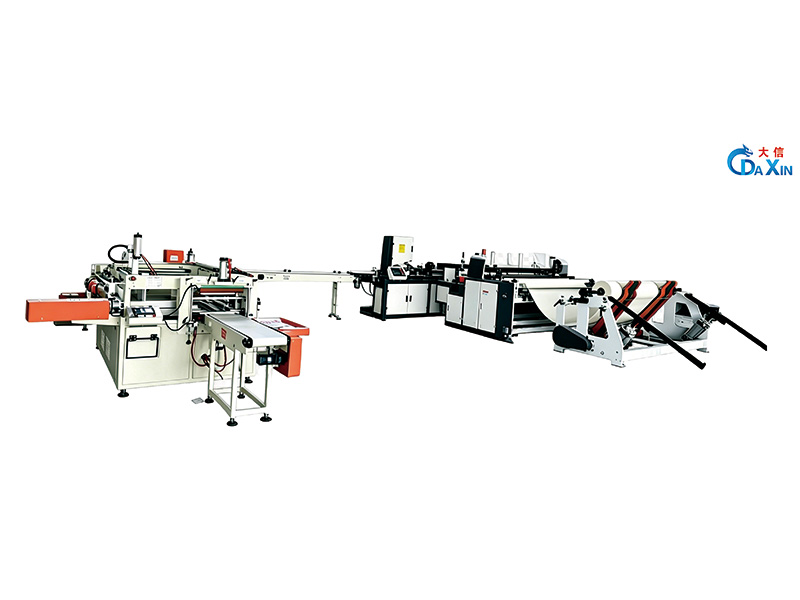
Achieving identical roll density from one cycle to the next starts with mapping the servo's torque response against actual material displacement. Rather than relying on a fixed position command, the calibration routine records encoder feedback at multiple compaction pressures and builds a small correction table. Those offsets are then applied in real time so the motor compensates for slight variances in fibre feed, humidity, or bearing friction before they show up as soft ends or hard centres.
During each winding cycle, the drive switches between velocity control for layering and torque-limited positioning for the final compacting stroke. Calibration sets the transition thresholds and the maximum allowable following error to keep the roll surface pressure within a narrow band. Periodic re-calibration, triggered by batch change or after a set number of cycles, resets these values without interrupting production, which keeps density repeatable enough to eliminate downstream slitting or unwinding surprises.
Quick-Change Embossing Units for Product Variety Without Downtime
Quick-change embossing units replace traditional bolted die mounts with a modular cassette system. Each cassette holds the embossing die, counterforce plate, and registration pins in a pre-aligned assembly. Swapping from one pattern to another takes less than 30 seconds, and no hand tool adjustments are needed. This is especially useful on packaging lines where logos, foil accents, or tactile patterns change frequently.
The real advantage shows up when producing short runs or seasonal designs. With conventional fixed tooling, a single design change can stop a press for twenty minutes or more. Quick-change cartridges let an operator pull one cassette, slide in the next, and resume embossing without touching the machine's main drive or temperature settings. The press maintains consistent depth and foil tension because each cassette carries its own calibrated shim stack.
Not all quick-change systems are equal. Look for hardened alignment rails, thumbscrew or cam-lock release mechanisms, and clear visual indicators that confirm the cassette is fully seated. Some units also feature integrated heating elements so a pre-warmed die reaches operating temperature immediately after insertion. For plants running multiple substrates, keeping a small library of loaded cassettes on a roll-around cart can cut changeover time from hours to minutes across a full shift.
Heavy-Duty Frame Construction That Eliminates Rewinding Vibration
The frame gets its rigidity from more than just plate thickness. Cross-members are welded into a stress-diverting lattice, and the mounting feet have isolation pads that prevent motor torque from resonating through the chassis. Even during fast rewind cycles, the structure stays planted and refuses to transmit chatter into the spool.
Instead of relying on a single weld bead, every load-bearing corner is boxed and gusseted. This removes the flex points that normally allow micro-vibrations to build up as the drum accelerates or brakes. The payoff is a steadier rewind, less noise, and fewer wear-related failures around the bearings and drive coupling.
Real-Time Splice Detection Sensors to Prevent Material Waste
In high-speed converting and printing lines, a missed splice can unwind hundreds of meters of perfectly good substrate before anyone notices. Real-time splice detection sensors change that equation by scanning the web continuously, flagging the exact moment a tape or overlap passes through. The signal triggers an immediate response, whether it's a marking system, an alarm, or an automated reject gate. What used to rely on operator vigilance now happens in milliseconds, cutting down on scrap that quietly eats into margins.
These sensors don't just catch obvious splices. They can distinguish between a thin, transparent tape and a thick butt splice, adjusting sensitivity to match the material and line speed. In film extrusion or laminating, for example, a sensor might ignore normal thickness variations but still pick up the subtle step change at a splice joint. That level of discrimination means fewer false stops and less waste from unnecessary line interruptions, which is often the hidden cost of overly cautious detection systems.
Beyond the immediate savings, real-time splice detection feeds data back to the winding or slitting operation. Teams can log every splice event, map where defects occur, and tune upstream processes to reduce the number of splices in the first place. Over time, the focus shifts from catching waste to preventing it at the source. The sensor becomes less of a watchdog and more of a diagnostic tool, turning a simple on/off trigger into a continuous improvement loop.
Tool-Less Maintenance Access Points for Faster Shift Turnarounds
On many production floors, shift changeovers still eat time because routine checks require a wrench, a screwdriver, or a search for the right bit. Tool-less maintenance access points change that. Spring-loaded latches, magnetic covers, and quick-release panels let an operator pop open a guard, inspect a filter, or clear a sensor without leaving the workstation.
The benefit shows up most clearly at handoff time. Instead of calling maintenance for a simple inspection, the outgoing operator can open the access point, wipe down a lens, or replace a worn wiper in under a minute. Some machines use color-coded levers and one-hand cam locks, so even a new shift worker can spot the right panel and open it without training on special tools.
Because the physical barrier to routine care drops, people actually do those small checks before handing over the line. That means fewer surprises at start-up and a much faster transition between crews. The machines stay in a known state, and the next shift doesn't burn its first half-hour chasing issues that could have been caught at the end of the last one.
FAQ
It comes down to consistent tension control, precise sheet perforation, and a sturdy frame that doesn't vibrate at high speed. Machines with servo-driven unwinds and automatic web guiding tend to hold tolerances far better than basic AC-motor setups, which means fewer roll rejects and less operator babysitting.
Look for automatic core feeding, glue-free tail sealing, and an intuitive HMI that lets operators adjust roll diameter and sheet count without digging through manuals. A closed-loop tension system is also crucial because without it you will see uneven roll density and frequent breaks when running lightweight or recycled paper.
Automation removes the variability that comes from manual adjustments. For example, an automated unwind stand with load cells keeps tension steady as the parent roll diameter shrinks, so the finished rolls maintain the same firmness from the first to the last log. That consistency is what separates a premium machine from a price-driven one.
Cheap bearings, flimsy side frames, and poorly aligned embossing rollers are typical culprits. They lead to edge misalignment, wrinkled paper, and frequent blade changes. In many budget machines, the perforating blade holder isn't rigid enough, so the perforation depth drifts after a few hours and causes tear-off complaints downstream.
Not always, but it often pays for itself. Embossing improves bulk and softness perception, and when done with synchronized steel-rubber rollers it can increase sheet thickness without adding fiber. If your market expects two-ply with visible patterns, choose a machine with separate embossing stations before the rewinding section, otherwise you will struggle to keep the plies aligned.
Check the wall thickness of the main side plates and the diameter of the winding drums. A solid frame usually weighs significantly more and uses stress-relieved steel. Run the machine at maximum rated speed for at least 30 minutes and watch for vibration near the perforation unit; any visible shaking there will translate into uneven cuts and shorter blade life.
Even a well-built machine needs a disciplined schedule, but high-quality designs reduce that burden. Look for centralized lubrication points, quick-change perforation blades, and sealed bearings. Machines with easy access to the winding area let technicians clean paper dust in minutes, which prevents buildup that eventually causes sensor errors and roller slip.
It should handle both, but no machine is truly adjustment-free. Top-tier models let you save recipes for different paper grades, adjusting tension, embossing pressure, and perforation depth automatically. Recycled paper tends to be weaker and dustier, so a machine with vacuum dust extraction and gentle web paths will run longer between cleanings and breaks.
Conclusion
A genuinely reliable toilet paper rewinding machine starts with the details that keep the line moving without constant babysitting. Precision tension systems deserve more attention than they usually get—they stop sheet wrinkling before it becomes a visible defect, saving operators from endless fine-tuning and reducing the amount of rejected product. Servo motor calibration works alongside that, delivering the same roll density cycle after cycle, which is what keeps retail customers from complaining about loose or overly tight rolls. And because product variety matters just as much as consistency, quick-change embossing units let a plant switch patterns without sacrificing half a shift to tooling swaps. That kind of flexibility is rare in older equipment, but it is exactly what modern buyers should expect.
The frame itself has to be heavy-duty; any vibration during rewinding shows up as uneven edges or poor roll formation, so a rigid structure is non-negotiable if you want clean, saleable rolls. Real-time splice detection sensors cut material waste by catching breaks before they turn into long stretches of scrap—one missed splice can eat through hundreds of meters of paper in seconds. Finally, tool-less maintenance access points make shift turnarounds faster because technicians can reach critical components without hunting for specialized tools or waiting on a maintenance cart. Together these features separate a machine that simply runs from one that runs predictably, day after day.
Contact Us
Contact Person: Sam Xie
Email: [email protected]
Tel/WhatsApp: 86-18938538530
Website: https://www.daxin321.com/